
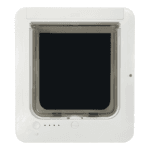
What happens when the batteries run out?
There is no universal power-loss behavior for an RFID pet door. The reader, lock and indicators may behave differently as power falls, and the last selected mode does not tell you how the latch will sit without power. Ask for the written behavior of the exact sample configuration. Then test entry from outside and exit from inside separately. Use a bench setup with no animal on either side.
A four-stage sample test
| Stage | What to check | What to record |
|---|---|---|
| Normal power | Try an enrolled tag and an unregistered tag. Check entry and exit in the selected modes. | Model, version, mode, tag type and result for each direction. |
| Low-power indication | Follow the manufacturer’s test instructions. Check how an ordinary owner would notice the warning and what movement is still possible. | Indicator behavior, warning location and observed access. |
| Power interrupted | With the flap clear, turn the sample off as described in the manual. Check the latch from both sides without forcing it. | Observed latch position and any documented manual release. |
| Power restored | Restore power as instructed. Try the enrolled and unregistered tags again and check the access mode. | Whether the original pairing and mode persist or need to be set again. |
Give retailers wording they can demonstrate
An owner who sees a warning needs to know what to replace, which way the pet can still pass, and what to check after restart. Avoid statements such as “automatically unlocks” or “keeps the last setting” unless the exact unit and configuration behave that way. If the sample and instructions disagree, keep the retail copy provisional and ask the supplier for written clarification and an updated sample if needed.
What to confirm on an HLC-PD-101 request
The HLC-PD-101 product page lists RFID collar-tag recognition as an option. Confirm that the quote and sample are for the intended version. An implanted identification microchip and a collar tag are different identifiers, so verify the supported identifier in the documentation. Ask for the power specification, documented manual operation, and a short record of the four stages above. Another manufacturer’s manual can help structure the questions, while the exact sample and its own instructions determine the answer.
