
Feeding one cat is usually straightforward. Feeding two, three, or more pets can quickly become a daily management problem. A fast eater may steal food, one cat may need a weight-control or veterinary diet, and a timid cat may avoid the bowl when another pet is nearby.
Traditional bowls and time-based automatic feeders can control when food is available, but they cannot always control which pet gets access. An RFID smart pet feeder adds identity-based access, helping each registered pet reach the meal intended for it.
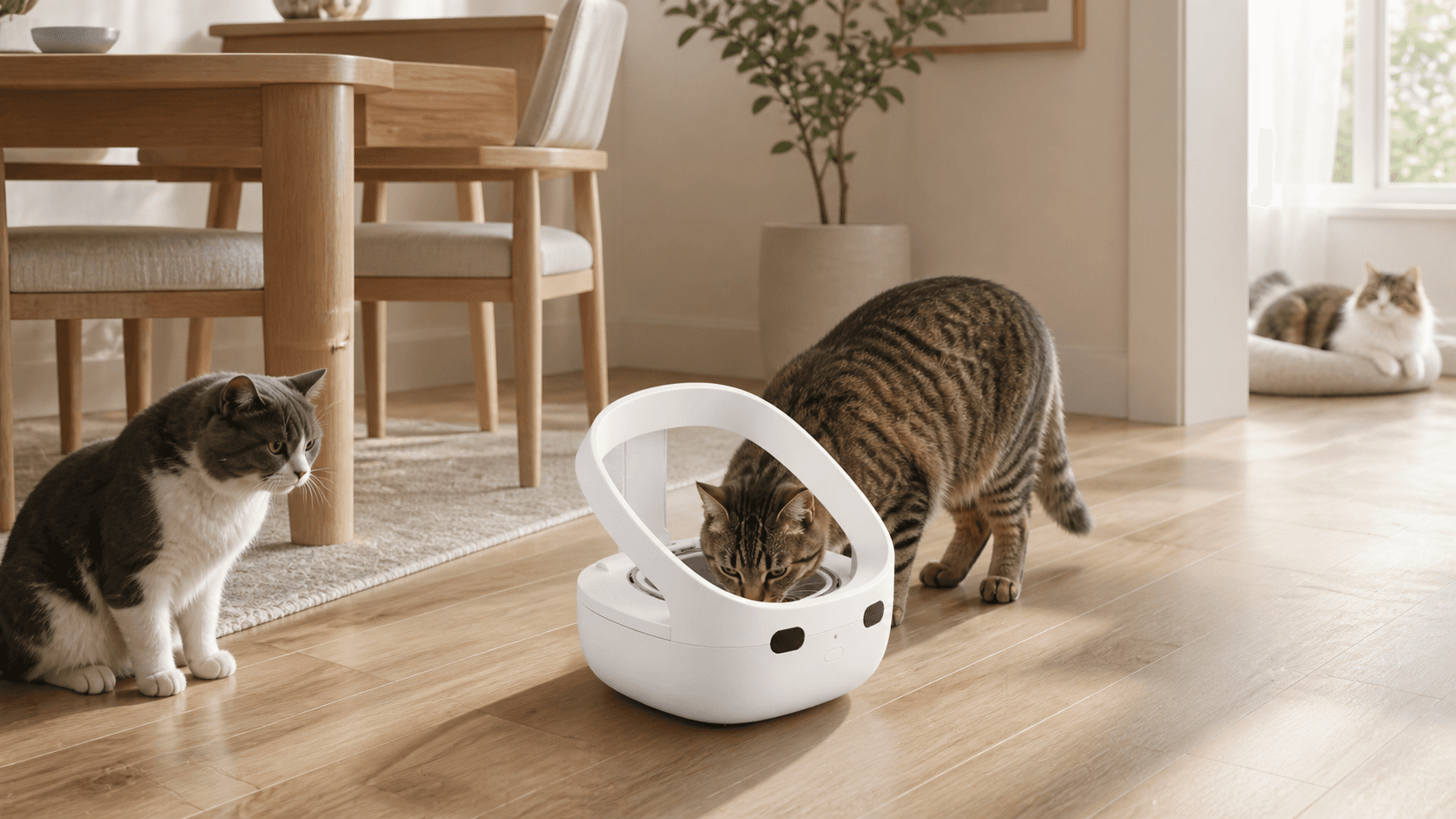
What Is an RFID Smart Feeder?
RFID stands for radio-frequency identification. In a compatible smart feeder, the technology is used to recognize an authorized pet before opening access to the food bowl. Depending on the feeder configuration and target market, identification may be provided through a compatible implanted microchip, collar tag, or ear tag.
When the registered pet approaches, the feeder recognizes its identity and opens the feeding area. If an unregistered pet approaches, access remains closed or the lid closes according to the selected configuration.
Compatibility matters: RFID frequency, recognition method, tag type, accessories, and regional requirements should always be confirmed before purchase or private-label development.
How Does an RFID Feeder Work?
- Register the pet. Pair a compatible chip or tag with the feeder.
- Recognize the approach. The system detects the authorized pet near the feeding zone.
- Open access. The lid opens so the registered pet can reach its meal.
- Secure the bowl. Access closes after the pet leaves or when an unauthorized pet approaches.
This identify–open–feed–close sequence changes an ordinary bowl into a personalized feeding station.
Five Multi-Cat Feeding Problems RFID Can Help Solve
1. Food Stealing and Meal Competition
In a shared feeding area, dominant or fast-eating cats may finish their own food and move immediately to another bowl. The result can be overfeeding for one pet and underfeeding for another. Identity-controlled access helps protect the intended meal and makes portion plans easier to follow.
2. Different Diets in the Same Home
Multi-pet households may need several formulas at the same time, including kitten or senior food, weight-management diets, veterinary-prescribed food, different protein sources, or separate cat and dog diets. An RFID feeder can help keep each formula assigned to the intended pet.
An RFID feeder supports daily routine management, but it does not replace veterinary diagnosis or treatment. If a cat shows reduced appetite, vomiting, lethargy, or unexpected weight change, consult a qualified veterinarian.
3. Disturbance for Timid Cats
A shy cat may stop eating when another pet waits beside the bowl. A protected feeding zone can create a calmer routine, especially when the feeder is placed in a quiet, low-traffic area and each pet is introduced gradually.
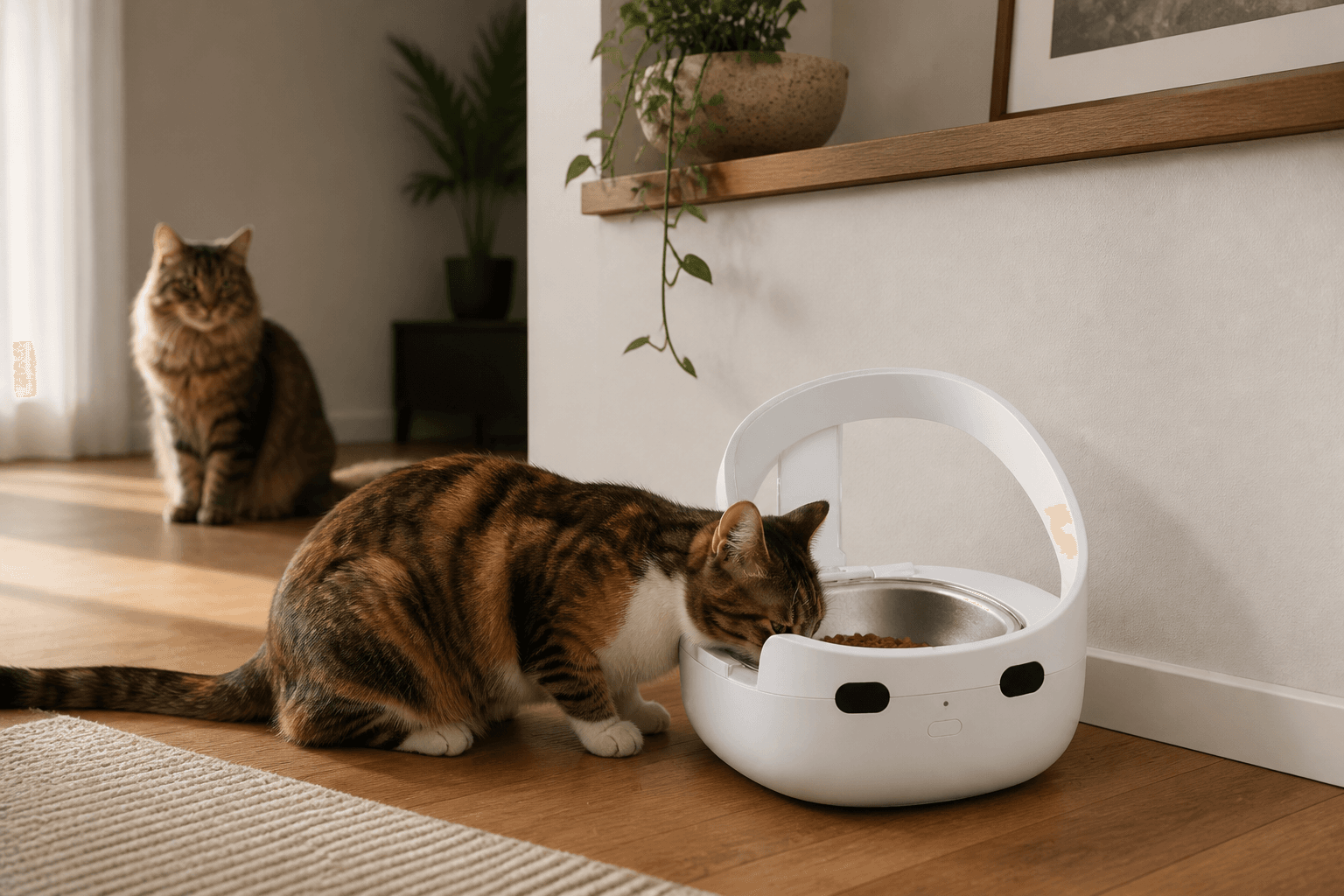
4. Wet and Dry Food Routines
A covered bowl can support flexible wet- and dry-food schedules by limiting unnecessary exposure between visits. Models with a cooling-pack compartment may help during planned wet-food use, but a cooling pack is not a substitute for refrigeration or safe food-handling practices.
5. Observing Feeding Habits
Selected app-enabled configurations may provide feeding records and care insights. These records can help owners notice changes in routine and give distributors a clearer product benefit to explain. Available data functions depend on the selected model, app, connectivity, and project configuration.
Who Benefits Most from an RFID Feeder?
- Homes with two or more cats or a mix of cats and dogs
- Households where one pet regularly steals another pet’s food
- Pets that require different life-stage, weight-control, or veterinary diets
- Timid cats that need a calmer, separate feeding routine
- Owners who combine wet and dry feeding
- Pet owners who want better visibility into feeding behavior
RFID Feeder vs. Traditional Automatic Feeder
| Feeding Need | Traditional Automatic Feeder | RFID Smart Feeder |
|---|---|---|
| Scheduled feeding | Yes, depending on model | Depends on configuration |
| Portion control | Common on dry-food models | Depends on feeder design |
| Identifies the intended pet | Usually no | Yes, with a registered compatible identity |
| Helps limit food stealing | Limited | Designed for controlled access |
| Wet-food support | Model dependent | Available on compatible bowl configurations |
| Best suited for | Managing when and how much | Managing who receives the meal |
For scheduled dry-food dispensing, explore our broader automatic pet feeder solutions. For homes where individual access is the main challenge, RFID control adds a different layer of management.
What to Check Before Using an RFID Feeder
Confirm Identification Compatibility
Do not assume that every implanted microchip or tag works with every feeder. Confirm the supported frequency, registration method, tag options, and regional configuration with the supplier.
Allow Time for Training
Some cats adapt immediately; others need a gradual introduction. Start with the feeder open, reward calm investigation, and introduce movement or closing functions in stages. Never force a nervous pet toward the device.
Choose the Right Location
Place the feeder on a stable, dry surface in a quiet area. Avoid clustering several feeding stations in a narrow corner where cats can block one another.
Maintain Food-Contact Parts
Clean removable bowls and food-contact parts according to the instructions. Wipe the housing and sensor areas regularly, and follow safe storage times for wet food.
Product Recommendation: Haolinchen RFID Smart Pet Feeder
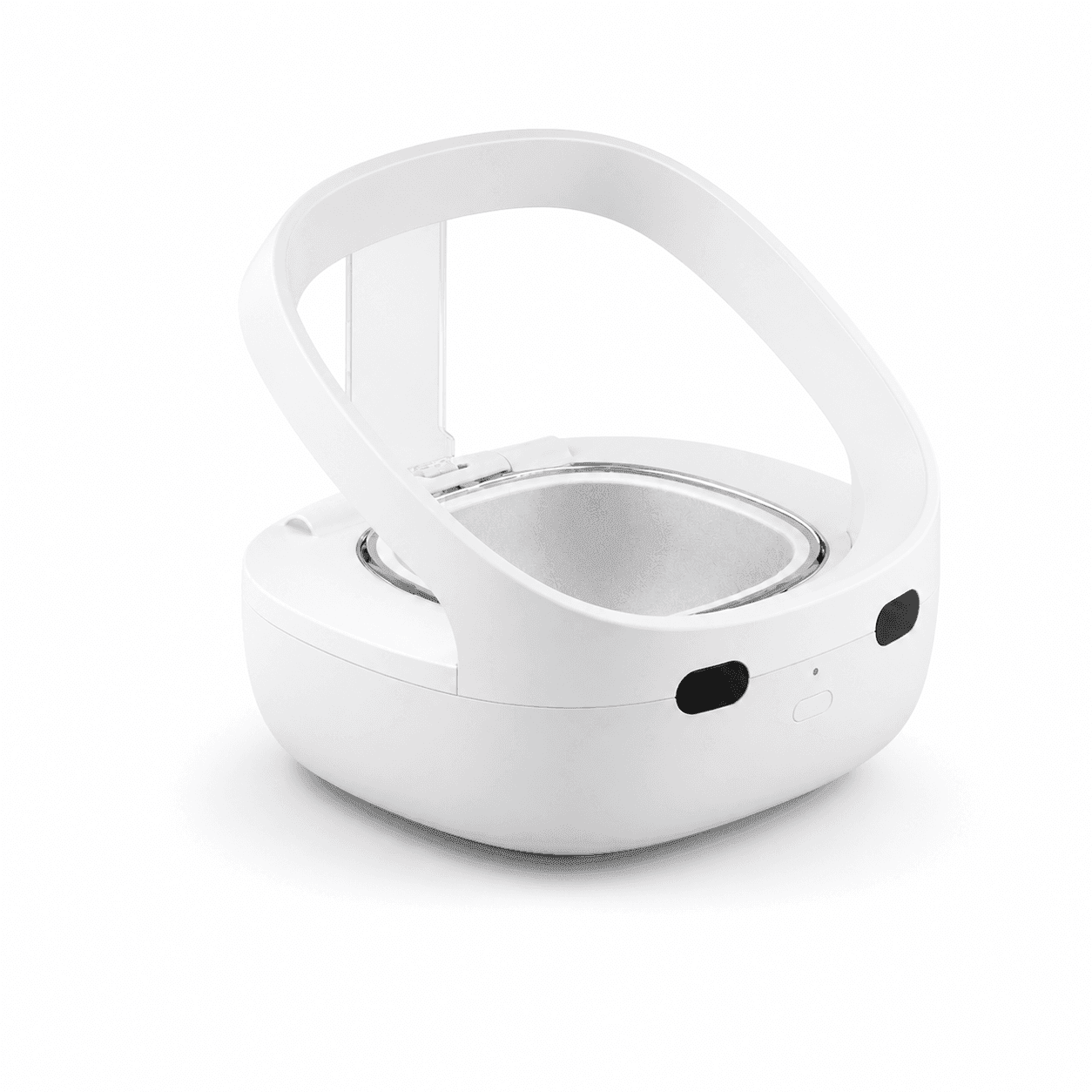
The Haolinchen RFID Smart Pet Feeder is designed to create a controlled feeding zone for an authorized cat or dog. Its covered bowl supports wet and dry food, while removable food-contact components simplify routine cleaning. Selected configurations can support compatible implanted microchips, collar tags, or ear tags, together with app-based feeding records and care insights.
For pet brands, distributors, and retailers, the platform can be evaluated for housing color, branding, packaging, accessories, recognition mode, power, connectivity, and selected functions. Final specifications are confirmed according to the target market and project requirements.
View the RFID Smart Pet Feeder specifications
RFID Feeder OEM/ODM for Brands and Distributors
A successful RFID feeder program requires more than an attractive housing. The identification standard, access logic, food-contact materials, cleaning design, app functions, packaging, and compliance plan must work together.
Haolinchen supports smart pet product OEM/ODM development from requirement review and engineering confirmation through sample validation and controlled production. Buyers can also review our quality and compliance process before beginning a project.
Conclusion
An RFID smart feeder is not simply an automatic lid. Its main value is identity-based feeding: helping the right pet reach the right meal. In multi-cat homes, that can mean less food competition, better protection for special diets, calmer feeding for timid cats, and clearer daily routines.
If you are developing a private-label RFID feeder or planning a multi-pet feeding product range, request a quote from Haolinchen or contact our OEM/ODM team to discuss compatibility, customization, sampling, and target-market requirements.