In multi-cat households, pet owners often encounter the problem that one cat is always stealing food from another. Cats that eat quickly may eat more and more, while cats with gentler temperaments, older cats, or those requiring special diets may not get enough food. The feeding of cats in multi-cat households often takes owners a lot of time when preparing and distributing meals.
Traditional cat bowls and regular automatic feeders only solve the problem of "timed feeding," but they cannot identify which cat is eating. RFID smart pet feeders, through identification technology, provide a more precise way to manage feeding for multi-cat households. This article will discuss how RFID technology can help multi-cat households achieve more intelligent and personalized customization requirements. This is a landmark technological innovation for both dealers and cat owners.
Article Quick Navigation
Select any section below to jump directly to that part of the article.
| Article Section | What You Will Learn |
|---|---|
| 1. What Is an RFID Smart Pet Feeder? | How 13.56 MHz RFID identification controls food access. |
| 2. Reducing Food Stealing in Multi-Cat Homes | Why authorized access creates clearer feeding boundaries. |
| 3. Personalized Feeding for Different Cats | How separate diets support cats with different needs. |
| 4. Keeping Food Protected with a Sealed Lid | How the lid reduces unnecessary food exposure. |
| 5. Who Benefits Most from an RFID Feeder? | Five common household and feeding scenarios. |
| 6. Helping a Cat Adapt to the Feeder | A gradual six-step introduction process. |
| 7. What Buyers Should Check | Recognition, safety, materials, OEM/ODM and quality control. |
| 8. RFID vs. Regular Automatic Feeders | The difference between food access and scheduled dispensing. |
| Conclusion | Key takeaways for pet owners, brands and distributors. |
1. What Is an RFID Smart Pet Feeder?
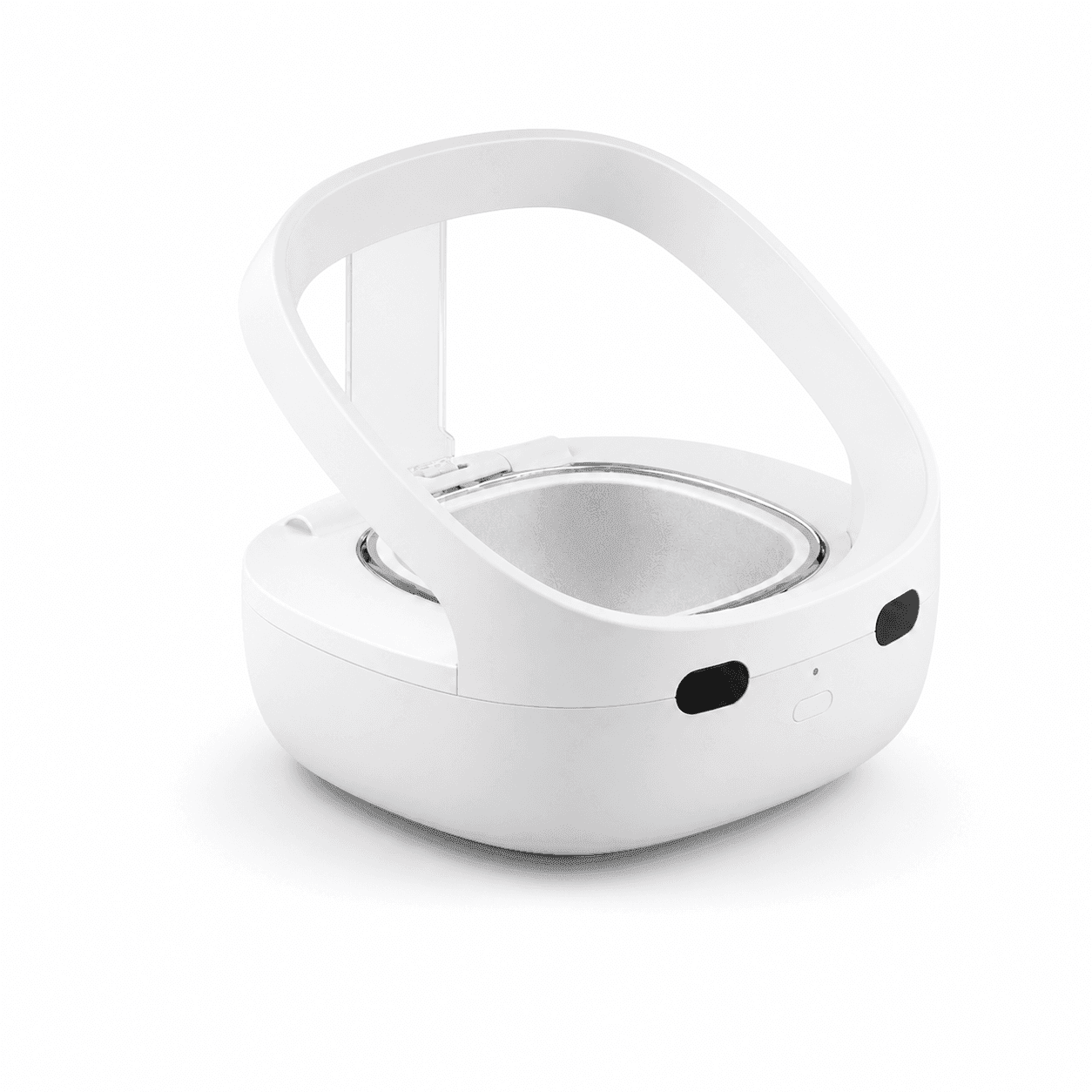
RFID is short for "Radio Frequency Identification" technology. RFID smart pet feeders typically identify cats by the RFID tags they wear.
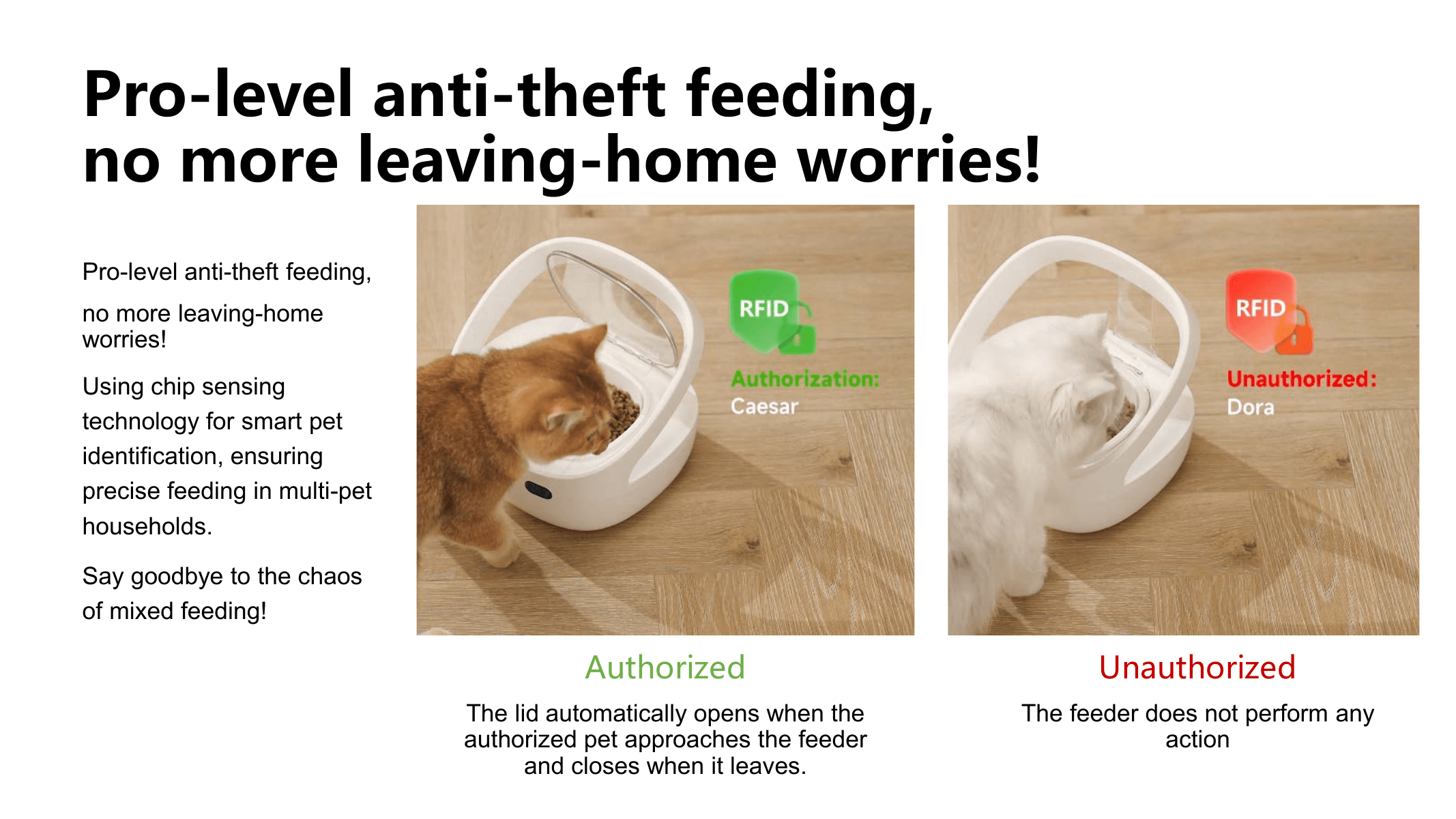
Taking the 13.56 MHz RFID identification scheme as an example, when a cat wearing an authorized tag approaches the feeder, the device will recognize the tag and automatically open the cover; when the cat leaves, the cover will automatically close. If no authorized cat approaches, the feeder will remain closed.
This design allows the feeder not only to "store food" but also to determine "which cat can eat it".
To review the product structure and access-control design, see the RFID Smart Pet Feeder.
2. How Can RFID Technology Reduce Food Stealing in Multi-Cat Homes?
In multi-cat households, the personalities and eating speeds of different cats usually vary significantly.
Some cats eat quickly and will try to steal food from other cats after finishing their own; some cats are timid and will leave when other cats approach; and some cats need to eat cat food with specific formulas, different calories, or different flavors.
RFID feeders use an "authorized access" system to match food with a designated cat. Unauthorized pets cannot easily access the food in the bowl, helping reduce food stealing and cross-feeding.
- Cats fighting over food
- One cat eats the food of multiple cats
- Specially formulated cat food was accidentally eaten by other cats
- The timid kitten was unable to eat normally
- The owner cannot determine the actual amount of food each cat is eating.
It's important to note that RFID feeders cannot replace the owner's observation, but they can help establish clearer feeding boundaries for multi-cat households.
3. Helping Different Cats Achieve Personalized Feeding
Cats of different ages, sizes, and lifestyles have different food needs.
For example, kittens, adult cats, and senior cats may need different types of cat food; cats in the weight management stage need to control their calories; and some cats may need to eat specific formula food under the advice of a veterinarian.
If all cats share an open bowl, it's difficult for owners to ensure each cat eats only its designated food. RFID feeders can reserve specific food for specific cats, helping owners implement more personalized feeding plans.
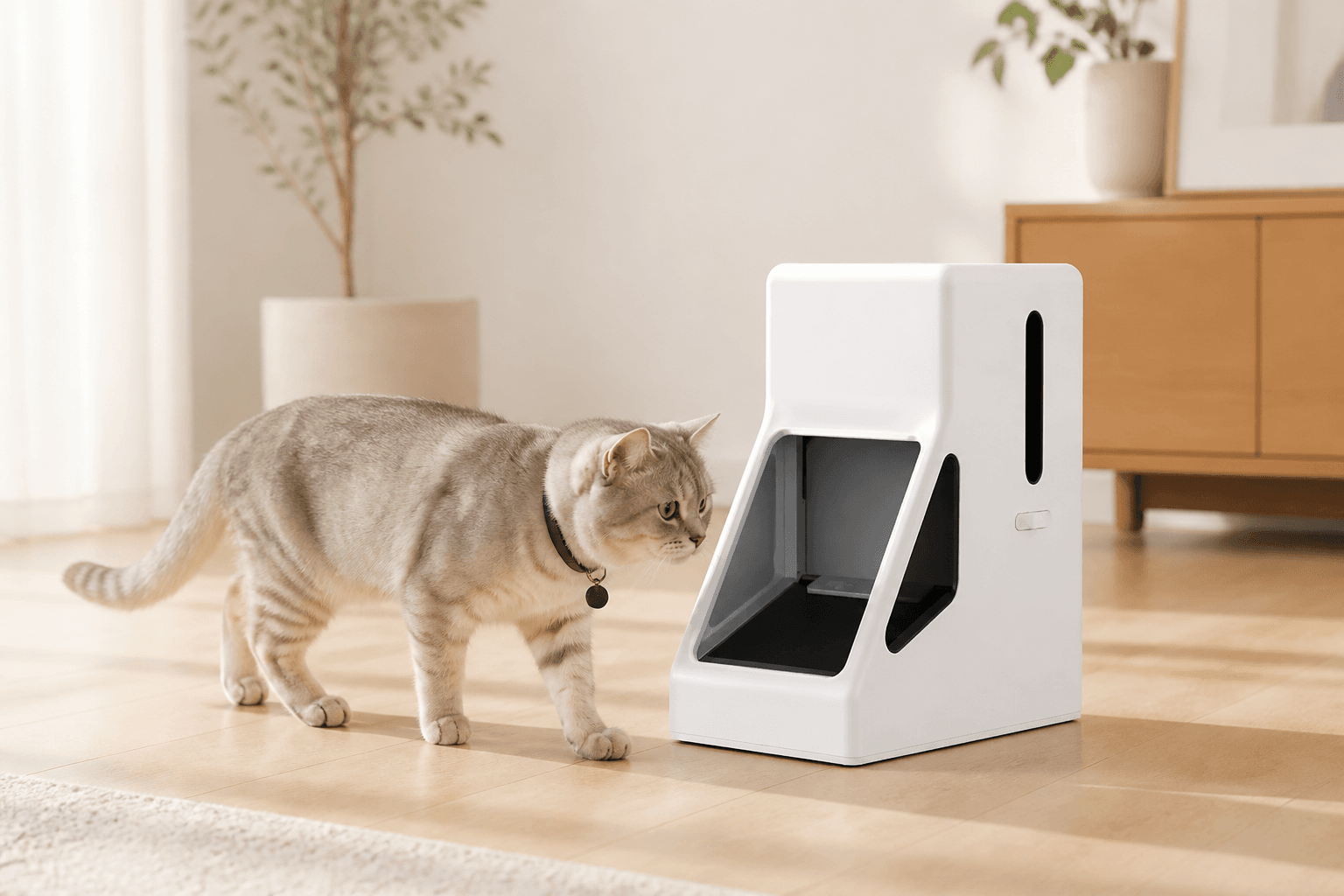
Common use cases include:
- Kittens and adult cats live together
- Adult cats and senior cats live together
- Different cats eat different brands or formulas of cat food
- One cat needs its food intake controlled, while the other cat needs increased nutrition
- One cat eats dry food, and the other cat eats wet food
- Families with multiple cats need to reduce cross-feeding.
If your cat has health or nutritional problems, the specific type of food and amount of food should still be determined based on your veterinarian's advice.
4. How Does a Sealed Lid Help Protect Food?
Food in traditional open bowls is exposed to air for extended periods, making it susceptible to dust, fur, insects, and environmental odors. Prolonged exposure to room temperature can also affect the freshness and palatability of wet food.
The RFID feeder with a sealed lid only opens when an authorized cat approaches and automatically closes after the cat leaves, thus reducing prolonged food exposure.
This structure can help:
- Reduce the amount of dust and pet hair that gets into food
- Reduce the chances of other pets coming into contact with the food
- Reduce the spread of odor from wet grains
- Helps food maintain better palatability
- Make the dining area look cleaner.
For products that support both dry and wet food, buyers also need to pay attention to whether the food bowl is easy to disassemble, clean, and replace.
5. Which Households Benefit Most from RFID Feeders?
RFID smart feeders are particularly suitable for the following use cases:
1. Multi-cat households
When two or more cats live together, RFID identification can help owners separate each cat's food, reducing food stealing and cross-feeding. Authorized RFID tags allow owners to create a more personalized feeding routine for each cat.
2. Families where cats and dogs live together
Some dogs may be interested in cat food. An access-controlled lid can reduce the chance of other pets reaching the cat's meal.
3. Cats that require food intake management
Owners can place a measured portion in the RFID feeder, reducing the uncertainty caused by another pet stealing food. Cats on different feeding plans can receive their assigned food more consistently; any medical or prescription diet should still follow veterinary advice.
4. Cats that require special food
If a cat needs to eat a specific formula food, RFID identification can help reduce the chance of other pets accidentally ingesting it.
5. Cats that prefer to eat small, frequent meals.
Sealed feeders keep the food closed between feedings, making them suitable for cats that prefer to eat in multiple small meals.
6. How Long Does It Take for a Cat to Adapt to an RFID Feeder?
Some cats adapt quickly to the automatic opening and closing mechanism, while more cautious cats may require a gradual training process. Please note that different cats will adapt to the product at different rates.
We recommend proceeding as follows:
- Place the feeder in a familiar feeding spot for your cat
- Keep the lid open initially to allow the cat to become familiar with the new food bowl
- Put your cat's favorite food or treats in the food bowl
- Gradually implement slower opening and closing speeds
- Allow the cat to get used to the device's sound and the movement of the lid
- Once the adaptation is complete, then switch to normal recognition mode.
Do not force your cat near the device during training. Keeping the environment quiet, using rewards, and giving your cat enough time to adjust will usually yield better results.
7. What Should Buyers Check When Choosing an RFID Pet Feeder?
For pet brands, distributors, and wholesale buyers, it's not enough to just focus on product appearance and price; the following aspects should also be carefully evaluated:
| Inspection items | Content that needs to be confirmed |
|---|---|
| RFID identification | Frequency, recognition distance, response speed, and number of licenses |
| Anti-food-stealing effect | Keep off when unauthorized pets approach |
| Opening and closing safety | Does it have a slow-closing or anti-pinch design? |
| Food compatibility | Does it support both dry and wet rations? |
| Sealed structure | Does closing the lid reduce food exposure? |
| Cleaning methods | Are the food bowl and lid removable for cleaning? |
| Material | Materials and testing documents for food contact parts |
| Power Solution | Battery type, battery life, and low battery warning |
| Tag Configuration | Standard configuration quantity and additional tag purchase method |
| OEM/ODM | Logo, colors, packaging, and instruction manual customization |
| Quality control | Opening and closing life, identification test and shipment inspection |
| After-sales service | Warranty, Spare Parts and Defective Product Handling Plan |
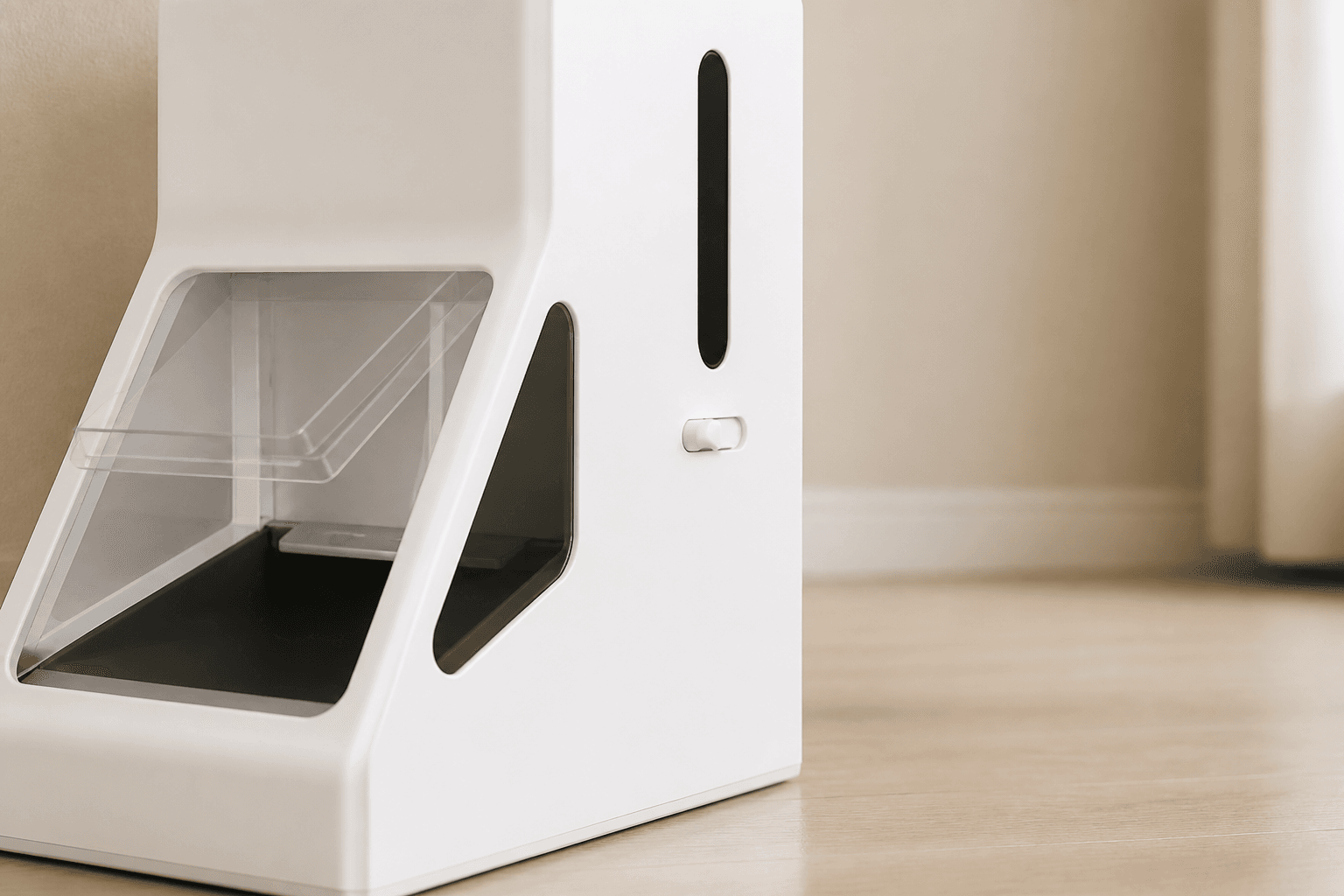
For private-label requirements, review our pet product OEM/ODM customization services and quality and compliance process.
8. RFID Feeder vs. Regular Automatic Feeder: What Is the Difference?
Ordinary automatic feeders mainly solve the problem of dispensing food at fixed times and in fixed quantities, making them suitable for automatically providing dry food when the owner is not at home.
The focus of RFID feeders is pet identification and food access control. They don't necessarily dispense food automatically, but rather ensure that specific food is consumed only by designated pets whenever possible.
In short:
- Ordinary automatic feeders solve the problem of "when to feed"
- RFID feeders solve the problem of "who should eat this food"
- Feeders with built-in cameras solve the problem of "how the owner can check on the feeder remotely"
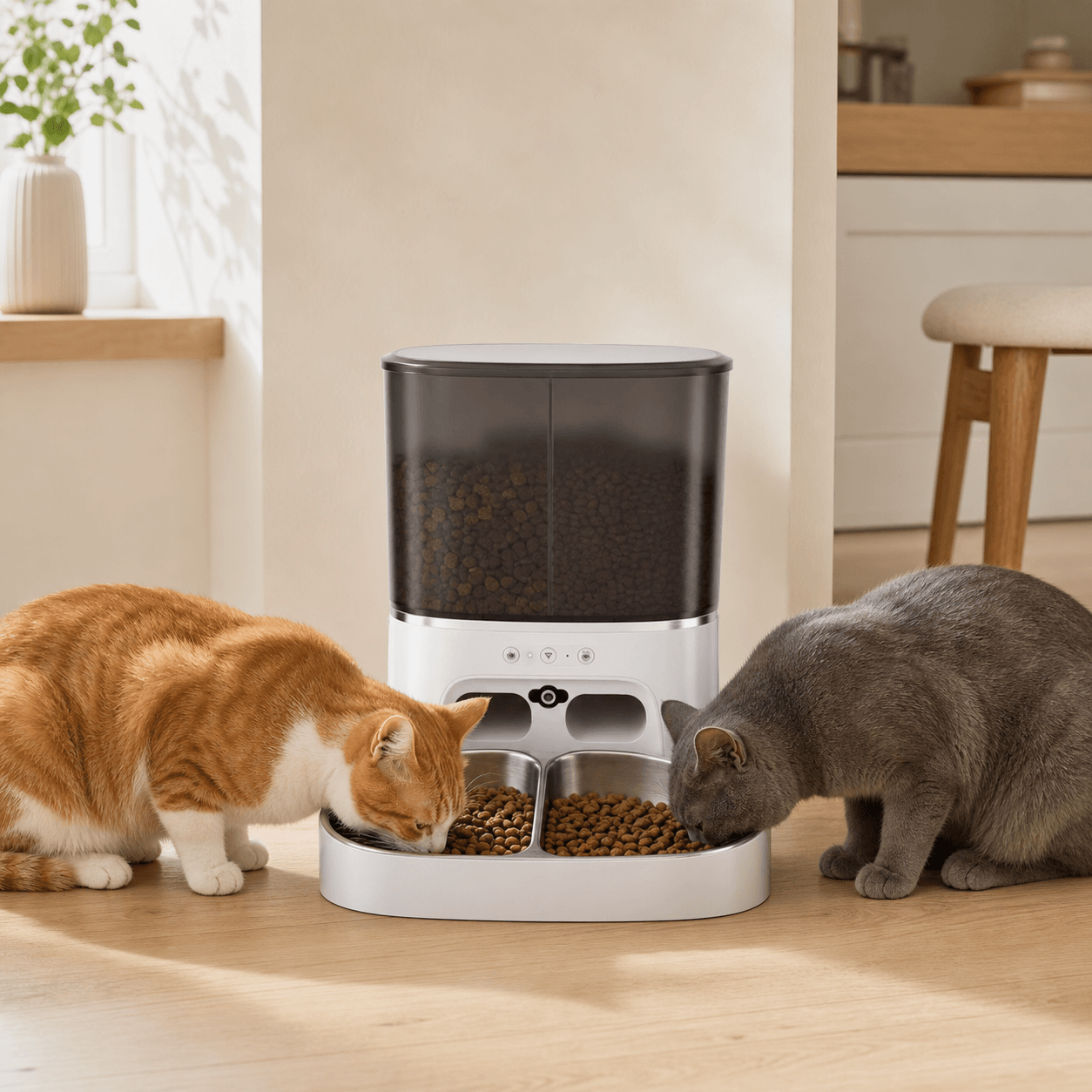
- The double-bowl feeder solves the problem of "how to feed multiple pets at the same time".
Brands can choose different product solutions based on the needs of their target customers. Compare more options in our automatic pet feeder product range or read the OEM and wholesale buyer guide.
Conclusion
RFID technology has transformed pet feeders from traditional food containers into personalized feeding tools that can identify the pet.
For multi-cat households, it can help reduce food fighting, cross-feeding, and difficulties in food management; for pet brands and distributors, RFID feeders also represent a further development of smart pet products from "automation" to "personalization".
A truly excellent RFID feeder not only needs stable identification, but also needs to take into account the safety of opening and closing, sealing effect, material safety, ease of cleaning, and the cat's adaptation experience.
Haolinc specializes in the customization, production, and wholesale of pet supplies. We possess advanced production technology and comprehensive after-sales customer service.
If you are looking for wholesale, distribution, or OEM/ODM customization solutions for RFID pet feeders, submit your project requirements and request a quote. Share your target market, expected quantity, branding needs and compliance requirements so our team can review the project.
Looking for an RFID Pet Feeder for Your Brand?
Tell us your target market, estimated order quantity, branding requirements and preferred packaging. We can review RFID feeder samples, private-label options, compliance documents and bulk production requirements.