When distributors, importers, or pet brands are looking for automatic pet feeder manufacturers, the most common mistake they make is comparing product prices too early.
For traditional pet bowls, procurement risks mainly focus on materials, appearance, and packaging; however, automatic pet feeders involve mechanical Structures, motors, electronic controls, Wi-Fi or RFID modules, apps, food contact materials, and power systems.
If product output is unstable, the app frequently disconnects, or the packaging cannot withstand transportation, even if the purchase price is very low, subsequent returns, negative reviews, after-sales service, and channel compensation may still consume the distributor's profits.
Currently, B2B supply pages on Google repeatedly emphasize MOQ, OEM/Private Label, samples, delivery time, certification, and after-sales support. This indicates that buyers truly need more than just a product quote; they need a solution that can reliably enter the market and ensure continuous replenishment. The MOQ published by different suppliers varies from tens to hundreds or even thousands of pieces, meaning that MOQ must be determined in conjunction with the specific model and customization scope, and cannot be based solely on the lowest number on the promotional page. This article will introduce pet feeder distributors to how to choose a reliable factory through a series of introductions.
Quick Procurement Checklist
| Inspection items | What the Distributor Must Confirm | Major Risk If Ignored |
|---|---|---|
| Manufacturer identity | Factory address, production lines, R&D and quality control capabilities | Finding a middleman makes it impossible to trace the problem. |
| Product Model | Time to full production, sales market and historical orders | New models have many problems and unstable delivery. |
| Food-dispensing system | Food jams, error, pellet compatibility and continuous testing | Returns, unfed pets |
| Power System | Power failure protection, battery backup and recovery logic | Stop feeding after power outage |
| App and Connectivity | Platform ownership, server, maintenance, and privacy responsibilities | The app will no longer be maintained after the product is sold. |
| OEM customization | Logo, colors, packaging, instructions and Firmware | The customized content does not match the quoted price. |
| MOQ and Price | MOQ and additional fees for different customization levels | The actual cost was much higher than the initial quote. |
| Certification Compliance | Specific model, wireless module, and target market documents | Customs clearance, platform review, or recall risks |
| Quality control | Incoming material, production, functional and outgoing inspection | Batch quality is inconsistent with sample |
| Packaging and Transportation | Drop, vibration, outer carton and accessory securing | Damage during long-distance transport |
| After-sales support | Warranty, Spare Parts, Defective Products and Technical Response | After-sales costs are uncontrollable |
| Supply capacity | Production capacity, peak season scheduling and delivery time for repeat orders | Out of stock and declining sales rankings |
Haolinc Automatic Pet Feeder Model Comparison
Distributors should shortlist a platform according to the sales channel, target user, and required features, then confirm samples, MOQ, packaging, and market-specific configuration with the manufacturer. The details below come from the current product pages; final kibble compatibility, accessories, and customization must be based on the approved sample.
| Model | Capacity | Control and Core Configuration | Food Type | Recommended Buyer Direction |
|---|---|---|---|---|
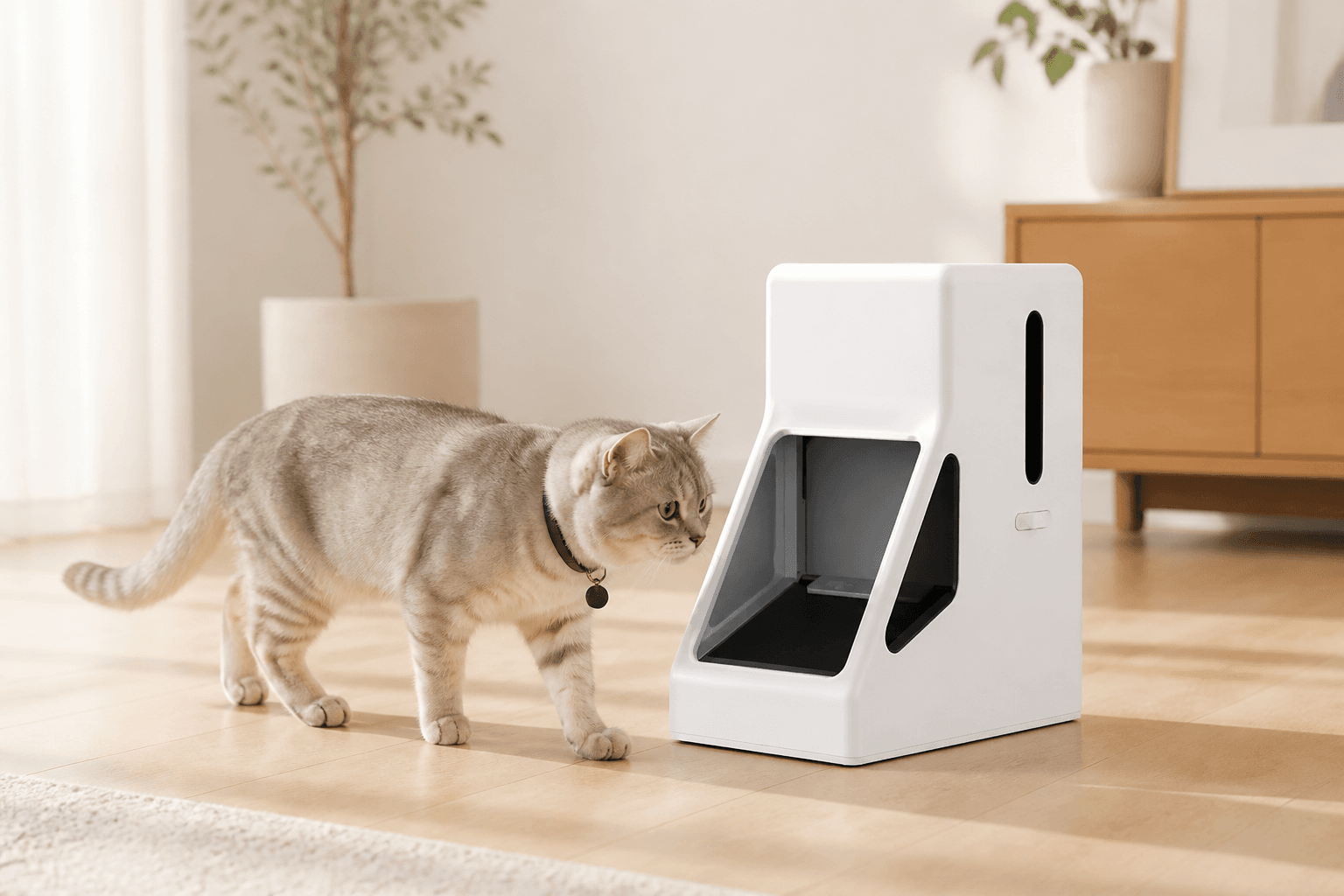
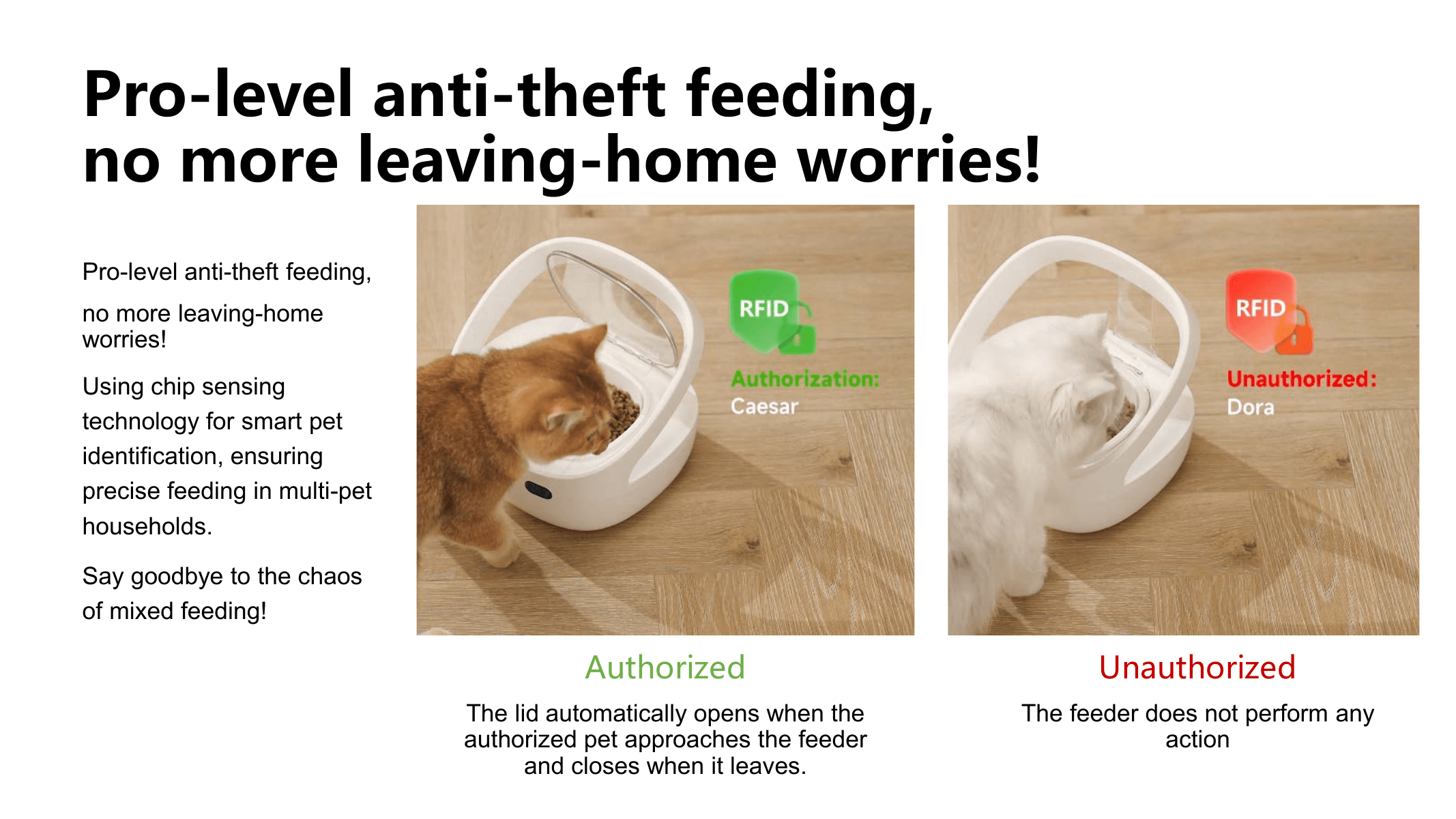
| RFID controlled-access platform | Confirm by project configuration | RFID / microchip or tag configuration | Wet and dry food | Multi-pet homes, prescription diets, and individual food access |
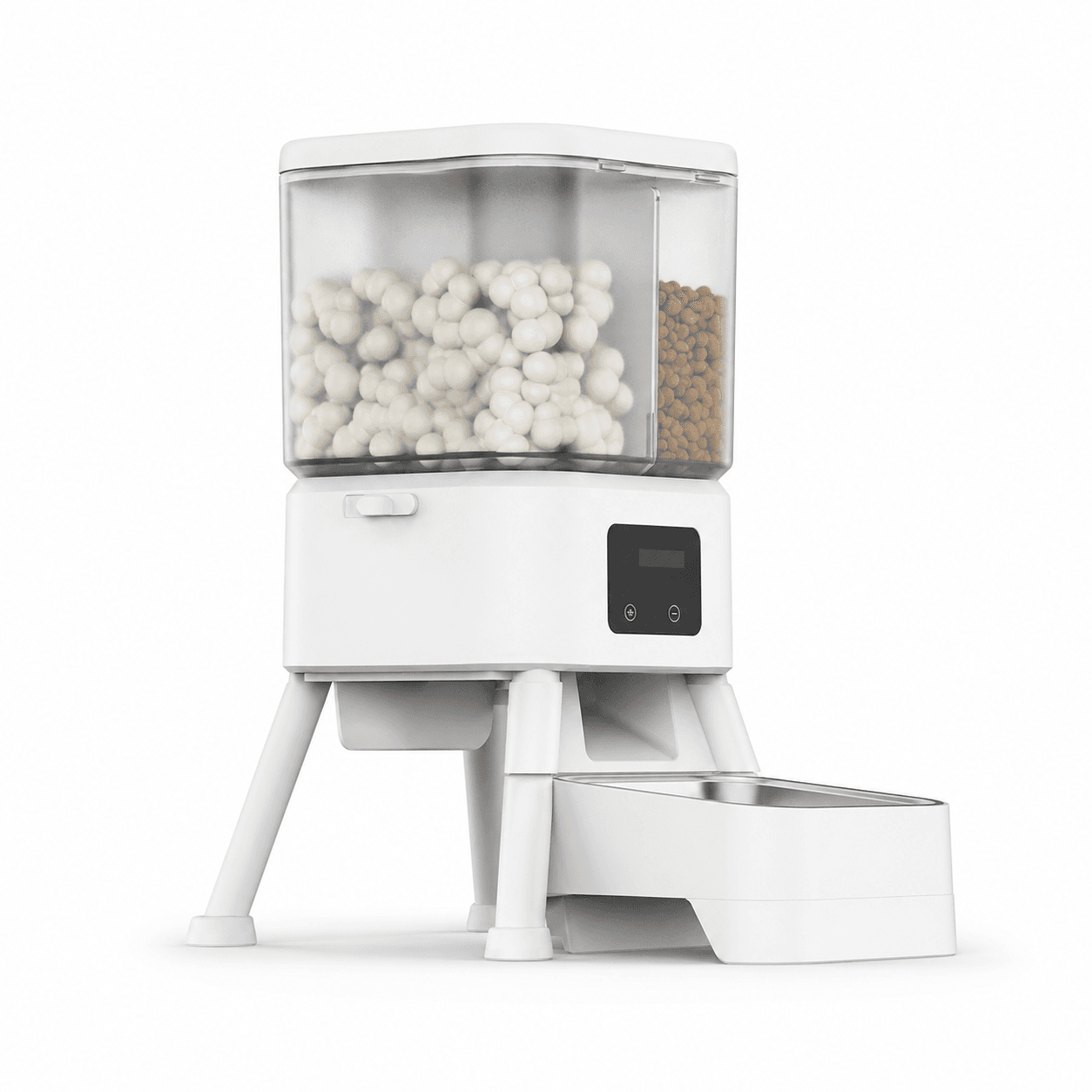
| PTM-90A1 | 4 L | Wi-Fi + RFID, 5 V / 2 A | Dry food; verify kibble compatibility with the approved sample | Brands that need both remote control and pet-specific access |
| PT03S | 5 L | App, 150-degree adjustable camera, two-way video and voice | Confirm with the approved sample and final configuration | Channels focused on remote pet monitoring, interaction, and video features |
| PTM-20A1 / PTM-20A3 | 2 L + 2 L | Button / Wi-Fi versions, 5 V / 1 A | Dual hoppers with separate food paths | Programs combining main food, treats, or nutritional supplements |
| XWSQ01 | 5 L | Button control, Type-C 5 V or four AA batteries | 3-13 mm dry, non-sticky kibble | Two-pet households and entry-level dual-bowl timed feeding |
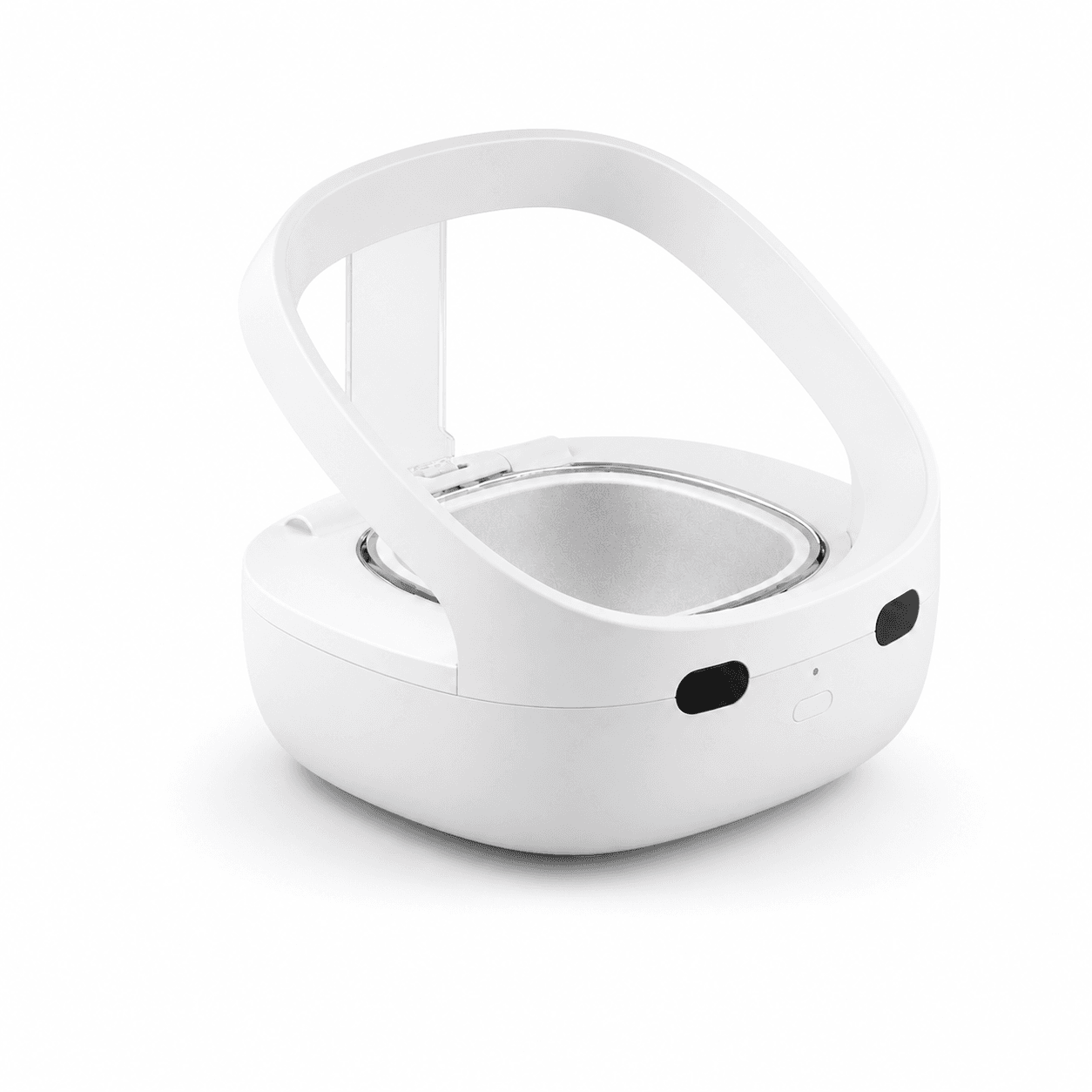
RFID Smart Pet Feeder
Multi-pet homes, prescription diets, and individual food access
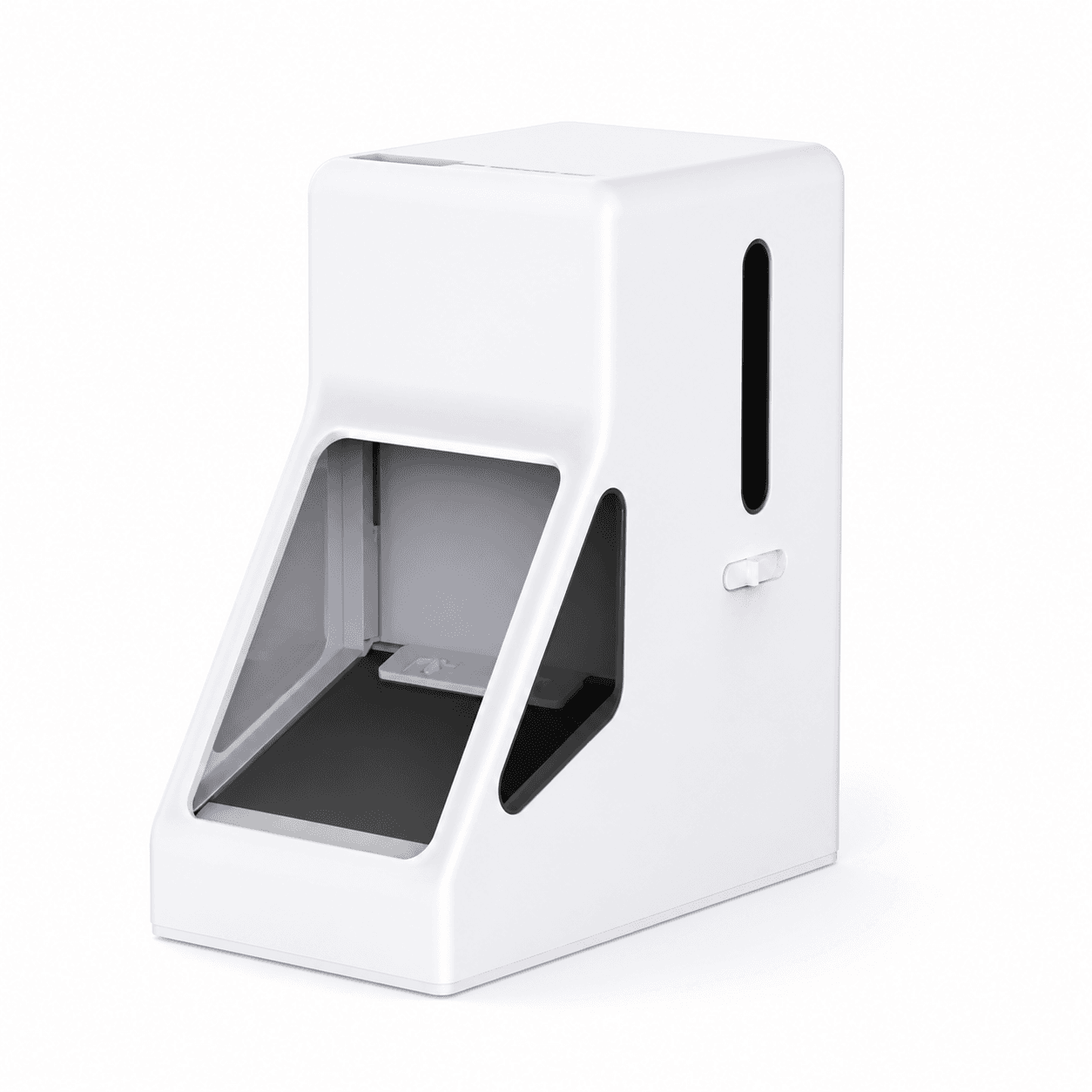
PTM-90A1 4L RFID Smart Pet Feeder
Brands that need both remote control and pet-specific access
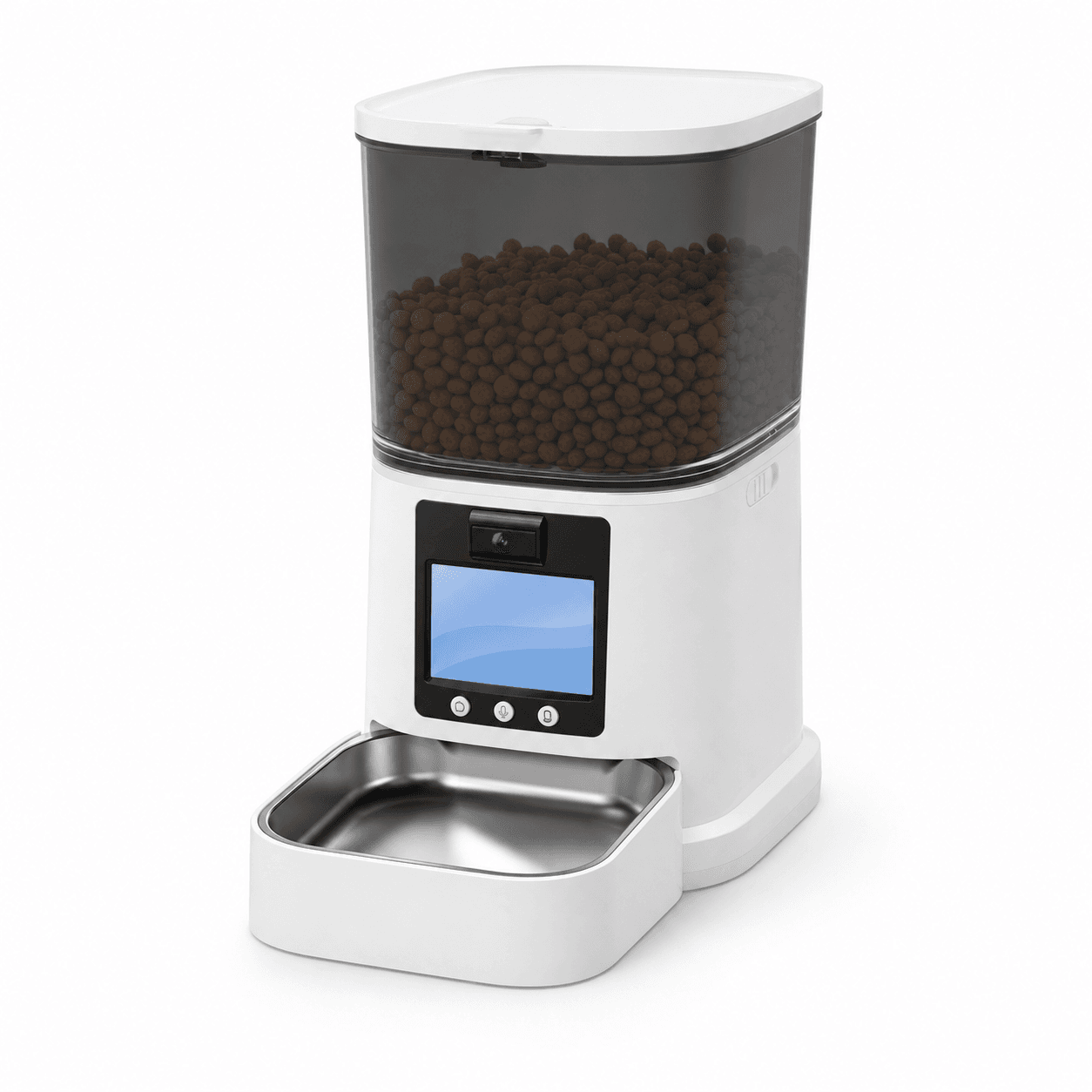
PT03S 5L Smart Camera Automatic Pet Feeder
Channels focused on remote pet monitoring, interaction, and video features
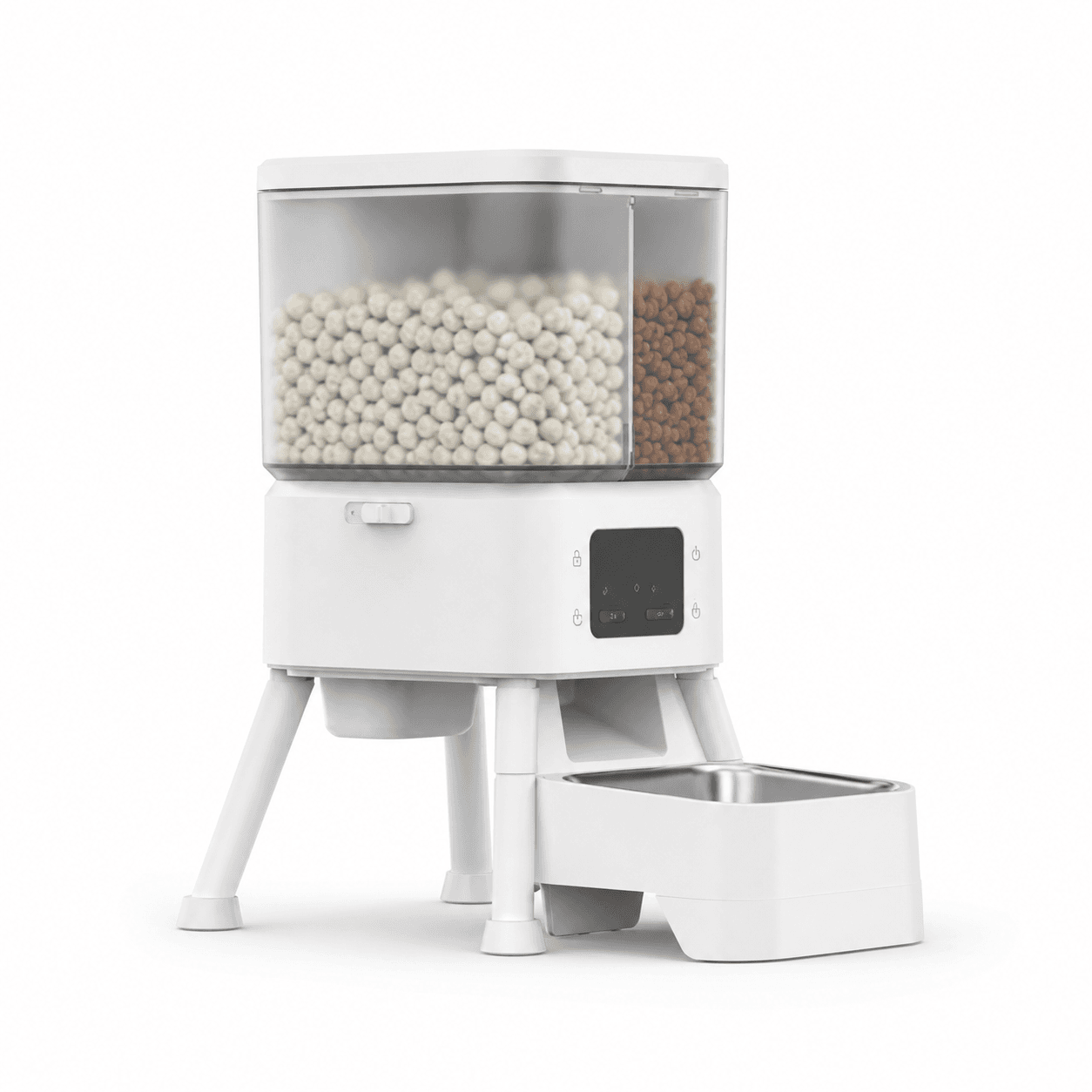
PTM-20A1/20A3 Dual-Grain Smart Pet Feeder
Programs combining main food, treats, or nutritional supplements
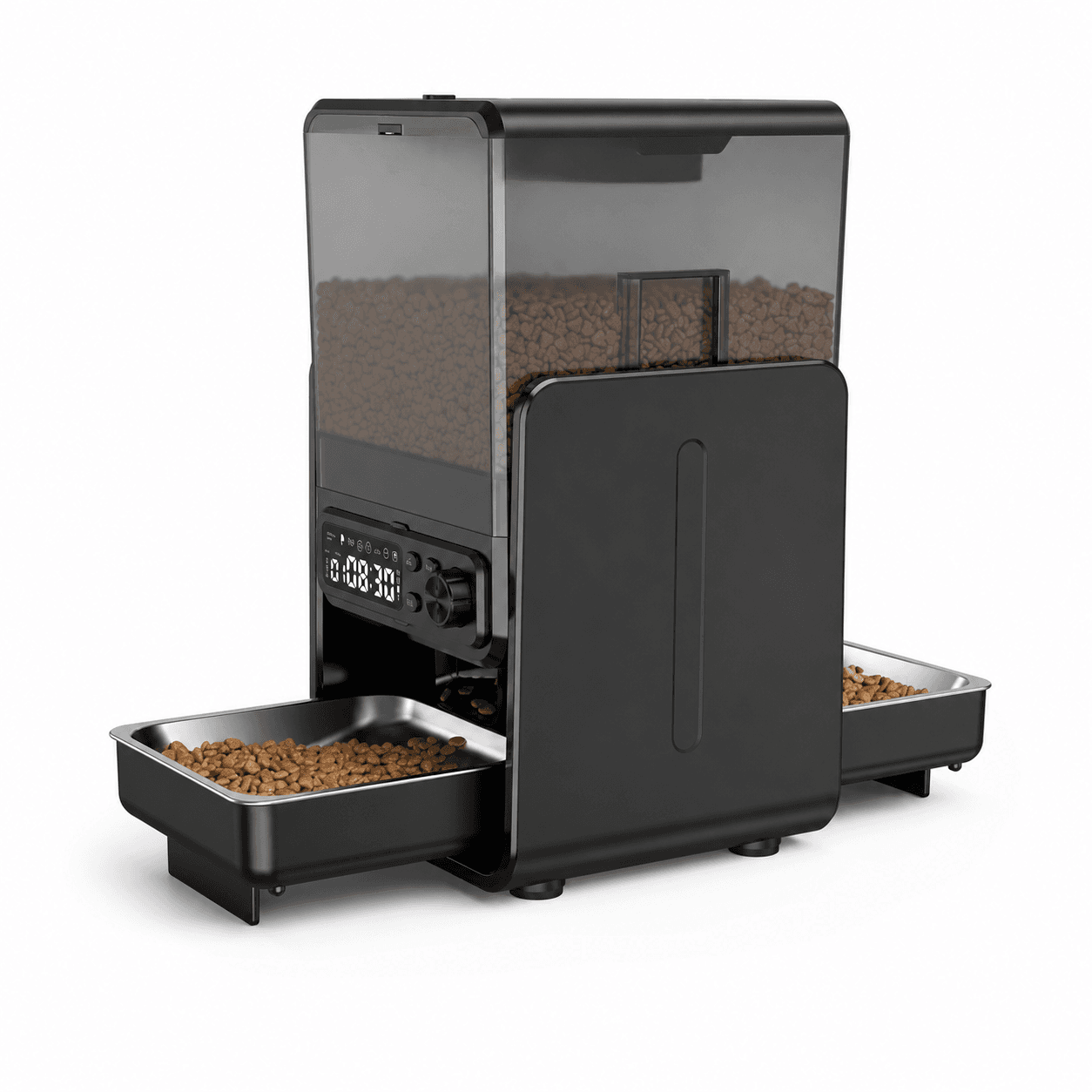
XWSQ01 5L Dual-Bowl Automatic Pet Feeder
Two-pet households and entry-level dual-bowl timed feeding
1. Define the Target Market Before Selecting a Model
Before contacting the manufacturer, distributors should complete a purchase request statement instead of simply sending a message like, "Please give me a quote for the automatic feeder."
At least the following needs to be confirmed:
- Which countries or regions are the products mainly sold to?
Targeting pet brands, Amazon, independent websites, or brick-and-mortar retail?
- What is the target retail price?
- Is it primarily intended for cats, small dogs, or medium-sized dogs?
- Do we need a single-bowl, double-bowl, or dual-hopper Structure?
- Do you need Wi-Fi, a camera, or RFID?
- What are the product capacity and acceptable packaging dimensions?
What are the initial order quantities and the projected annual procurement volume?
- Do you need a customized logo, packaging, instruction Instruction Manual, and app?
Different target markets will lead to different procurement priorities.
Amazon sellers typically focus more on negative review rates, packaging size, installation difficulty, and selling point differentiation; offline distributors focus more on product display, instruction Instruction Manuals, spare parts, and after-sales service; while brand customers focus more on appearance differences, app ownership, intellectual property rights, and long-term product planning.
Without first determining the sales scenario, manufacturers may recommend the model with the most inventory rather than the model best suited for the distributor channel.
2. Prioritize Platforms with a Stable Mass-Production History
The “latest model” does not necessarily mean the “model most suitable for bulk purchase”.
The distributor should ask:
- When will this model begin mass production?
- In which markets have they already been sold?
- Are there records of continuous production and repeat orders?
- What are the most common after-sales issues currently?
- What structural upgrades have been made to the product?
- How many times have the Firmware and app been updated?
- Is there an certification documents with the same configuration?
- Are there alternative suppliers for key components?
Mature models have typically undergone multiple rounds of user feedback and structural adjustments, making it easier to identify potential problems.
For distributors preparing for a rapid market entry, the risk of using a mature platform with added logos and packaging is generally lower than developing a completely new product from scratch. In-depth ODM development is only suitable when the brand has validated market demand and has sufficient budget and time.
3. Food-Dispensing Reliability Matters More Than Feature Count
The most basic task of an automatic pet feeder is to dispense food consistently according to the set time and amount.
Cameras, voice control, apps, and lights can enhance a product's appeal, but if the core feed system is unstable, other features cannot compensate for its shortcomings.
When distributors test samples, they should focus on checking the following items.
1. Accuracy of food dispensing
Don't test only once.
It is recommended to run the program 20 to 50 times at each of the multiple feeding settings, record the actual weight of food dispensed each time, and calculate:
- Average dispensed weight
- maximum deviation
- minimum deviation
- Continuous dispensing consistency
- Difference in the distribution of left and right bowls
The "serving" on the product page is not an internationally standardized unit of weight. Distributors must confirm approximately how many grams constitute a serving and how the error is affected by the shape and density of the pet food.
2. Compatibility with different types of kibble
Recommended test:
- Small round kibble pieces
- Medium-sized kibble pieces
- Flat or triangular particles
- Pet food with a high surface oil content
- Mixed Kibble Types
- Particles close to the manufacturer's specified maximum size
It is necessary to observe whether there is food jamming, idling, excessive food dispensing, insufficient food dispensing, or food residue in the food passage.
3. Anti-food jamming design
Need to confirm with the manufacturer:
- Does the motor reverse after encountering resistance?
- Is there a food blockage detection?
- Will an abnormal alert be sent to the app?
- Should the next plan be implemented after the food jam?
- Can the user handle the issue without disassembling the device?
Can the food supply remain stable even when there is only a small amount of pet food left in the food bin?
For distributors, what's truly valuable isn't the "never jams feed" claim, but rather how the equipment detects, handles, and alerts them to feed jams.
4. Test Power-Outage, Network-Outage, and Fault Scenarios
Smart feeders cannot rely on the internet for all their basic functions.
Sample testing should at least cover:
- UnPlug the power adapter
- Remove the spare battery
- Turn off home Wi-Fi
- Replace router
- App Logout
- Offline mobile phone
- Device restart
- Running continuously for several days
- Power and network restored
Key points to confirm:
- Is the local feeding schedule saved on the device?
- Will food still be delivered on time after the internet outage?
- Should the feeding plan be repeated after the network is restored?
- Did the time shift after the power outage?
- Which functions will stop when powered by battery?
- Can the user Instruction Manually feed the food using the device buttons?
Products that cannot function at all without internet access are prone to negative reviews and after-sales complaints. Security is a crucial selection criterion for customers.
5. Verify Food-Contact Materials by Component
The components in an automatic pet feeder that actually come into contact with the pet food typically include:
- inner wall of the food hopper
- Dispensing impeller
- Food chute
- food bowl
- Seals
- Coated or plastic parts that come into contact with pet food
Distributors cannot simply accept the statement "using food-grade materials".
Further confirmation is needed:
- What materials are used in specific components?
- Material suppliers and brands
- Which component does the test report correspond to?
- Test conditions and target market
- Was the material supplier re-verified after the change?
- Material specifications for stainless steel food bowls
Are there any risks of odor, deformation, or migration in the plastic parts?
The US FDA regulates food contact substances based on the materials, intended use, and conditions of use; therefore, "FDA" cannot be simply used as a universal certification mark applicable to the entire feeder. (FDA Food Contact Materials Guidelines)
6. Break Down the OEM Customization Scope
"Supporting OEM/ODM" does not mean that all projects can be completed under the same MOQ.
| Customization Item | Details to Confirm |
|---|---|
| Logo | Location, size, color, screen printing or other processes |
| Product Color | Standard colors, spot colors, color difference standards, and MOQ |
| Packaging | Color box, inner lining, outer carton and printing quantity |
| Instruction Manual | Language, layout, warning messages, and regulatory content |
| Label | Model, voltage, importer and certification marks |
| Plug | US, EU, UK, or Australian standards |
| Accessories | Feeding bowl, desiccant, batteries, adapter, and cleaning brush |
| App | Name, icon, interface, server, and maintenance |
| Firmware | Food-dispensing logic, notification methods, and exception handling |
| Structure | Do we need molds, R&D, and retesting? |
All customization requirements should be included in the quotation, sample confirmation, or order contract, and should not be kept only in chat history.
7. Compare MOQ Together with the Customization Level
Supply information on Google shows that the minimum order quantities (MOQs) published by different manufacturers vary greatly: trial orders, standard wholesale, logo customization, packaging customization, and deep ODM usually correspond to different MOQs. This is why distributors cannot directly compare two "minimum MOQs".
It is recommended to split MOQ into:
- Neutral Packaging MOQ
- Standard Color MOQ
- Logo Customization MOQ
- MOQ for Custom Color Boxes
- MOQ (Special Color) products
- App Custom MOQ
- Firmware Modification MOQ
- Structure and mold development MOQ
Also ask:
- Sample Fees
- Custom sample making fee
- Printing plate fee
- Design Fees
- Mold Costs
- Certification Supplement Fees
- Inspection fees
- Spare parts cost
- Packaging and shipping costs
A low purchase price does not equate to a low total project cost. What distributors really need to compare is the overall cost after the product is implemented and the potential profit margin.
8. Set Quality Standards That Can Be Written into the Purchase Order
Write incoming-material, in-process, functional, and pre-shipment inspections into the purchase order or quality agreement. Review Haolinc Quality & Compliance and confirm the inspection plan for the selected model.
Distributors should not only demand "100% inspection before shipment," but should also ask clearly what is being inspected, how to determine whether it is qualified, and how the results are recorded.
It is recommended that quality control should include at least:
Incoming material inspection
- motor
- motherboard
- sensor
- power adapter
- plastic parts
- Stainless steel food bowl
- Packaging materials
Production process inspection
- Assembly clearance
- Line connection
- screw torque
- Food hopper sealed
- motor operation
- Buttons and Display
- Wi-Fi pairing
- Camera and voice
Finished product function check
- Timely food distribution
- Manual food dispensing
- Continuous food dispensing
- Power outage recovery
- App connection
- Abnormal alert
- Battery powered
- Noise and vibration
Outbound inspection
- Appearance
- quantity
- Accessories
- Label
- barcode
- Instruction Manual
- Color box
- Outer box
- Sampling Inspection Plan
- Drop or transport test
It is best to confirm a "approved reference sample" before mass production and use the approved reference sample's Structure, color, accessories, Firmware version, packaging, and labels as the basis for inspection.
9. After-Sales Capability Determines Long-Term Distributor Profit
The profit margin of automatic feeders cannot be judged solely by the difference between the purchase price and the selling price.
Also deducted:
- Return costs
- Cost of reissue
- Customer service costs
- Platform compensation
- Increased advertising costs due to negative reviews
- Spare parts inventory
- App maintenance
- Firmware upgrade
- Product recall risk
Distributors need to confirm with the manufacturer in advance:
- Warranty period
- Defect rate calculation method
- What evidence is needed for defective products?
- Replenishment, refund, or order deduction?
Do you provide spare parts such as motors, feeding bowls, and adapters?
- Response time for software issues
- Are there after-sales operation videos?
- Do you provide fault code descriptions?
- Should batch records be retained?
- Can the production batch be traced based on the serial number?
A manufacturer that is truly suitable for long-term cooperation should not only be able to deliver products, but also be able to quickly locate problems when they occur.
10. Complete Three Approval Rounds Before Bulk Ordering
Round 1: Basic Sample Testing
Verify functionality, Structure, feed output, app, power supply, materials, and cleaning experience.
Round Two: Customized Sample Confirmation
Check the logo, color, packaging, labels, instructions, accessories, and Firmware version.
Third round: Pre-Production Sample confirmation
Confirm the materials, components, software versions, packaging, and inspection standards to be used in the final mass production.
After three rounds of confirmation, mass production will be approved.
Do not place bulk orders before sample issues are resolved, simply because of tight delivery schedules. Spending a few extra days resolving issues upfront is usually cheaper than dealing with returns after the product has been launched.
11. Why Work with Haolinc?
As a factory with over ten years of manufacturing experience, we are deeply rooted in the pet supplies market, continuously updating our product technology while providing pet products that satisfy our customers. Choosing a reliable supplier means choosing a long-term partner.
We have extensive experience in customization. We support OEM customization; please contact our sales staff for any product needs, and we will resolve your issues within 24 hours. Our RFID feeders are currently very popular in the market, and their technology far surpasses that of other products on the market. Feel free to visit our feeder product page for more information: view the automatic pet feeder range