
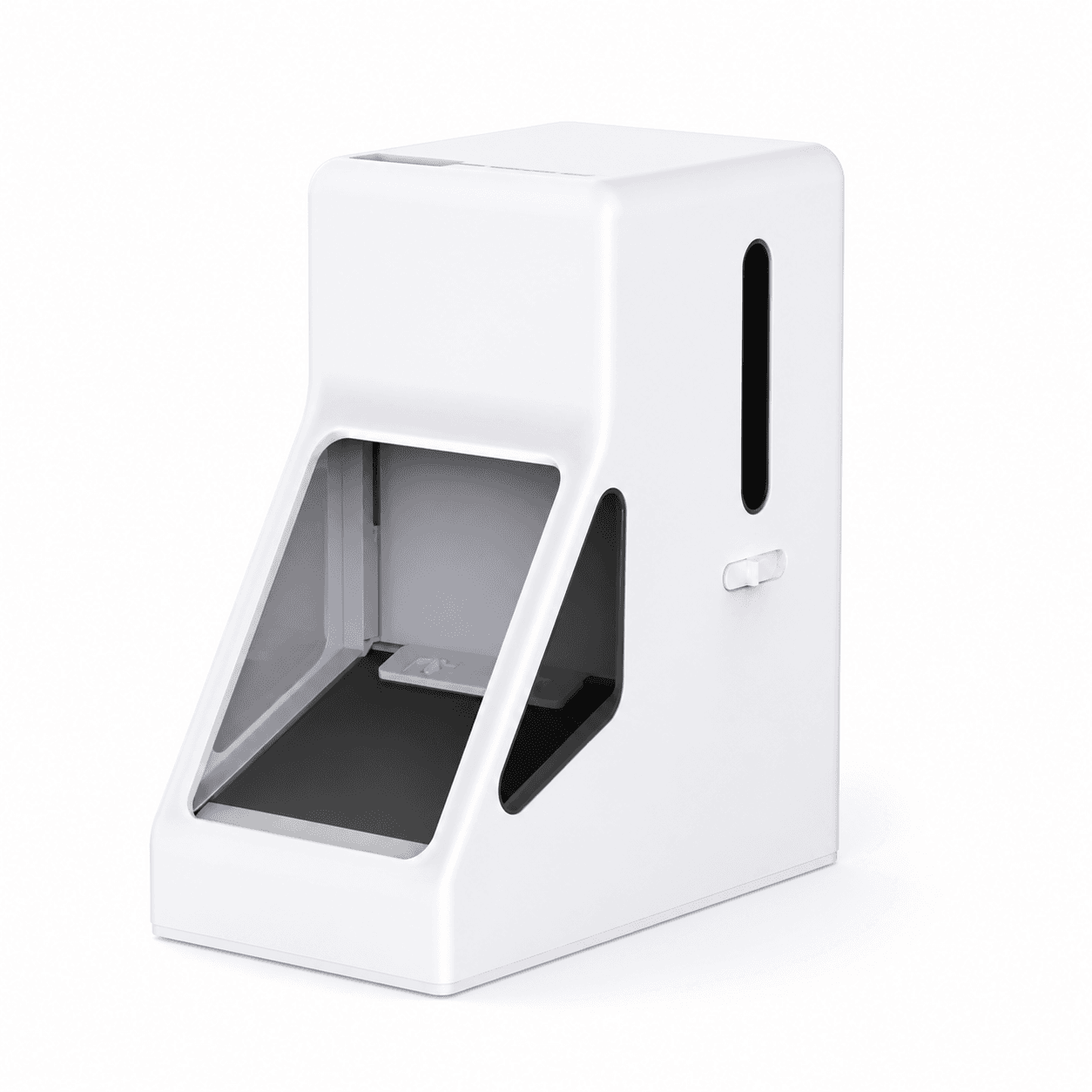
When choosing an automatic feeder manufacturer, you shouldn’t just compare the unit price of the product.
Quick supplier evaluation checklist
| Check area | What buyers need to confirm |
|---|---|
| Manufacturer identity | Factory, production, engineering, and quality-control capabilities |
| Product models | Mature mass-produced models and suitability for the target market |
| Reliability | Kibble-jam, service-life, power-outage, and offline testing |
| Missed-feeding prevention | Dispensing detection and fault-handling mechanisms |
| Materials | Food-contact materials and removable, washable structures |
| App | Ownership, maintenance, servers, data security, and privacy |
| OEM/ODM | Logo, packaging, app, configuration, and feature customization |
| Commercial terms | MOQ, samples, tiered pricing, and additional fees |
| Certification | Documents for the exact model, configuration, and target market |
| Quality control | Incoming, production, functional, and pre-shipment inspections |
| After-sales support | Warranty, spare parts, and defective-product handling |
| Supply stability | Capacity, lead time, and consistency of repeat orders |

Automatic feeders involve food contact materials, kibble dispensing mechanisms, motors, sensors, and power systems; some smart models also include WiFi, cameras, RFID identification, and mobile apps. Instability in any of these components can lead to feed jams, missed feeds, connection failures, returns, and damage to the brand’s reputation.
For distributors, importers, pet brands, and retailers, the real question shouldn’t be:
How much does this feeder cost?
Instead, it should be:
“Can this supplier consistently provide safe, reliable products that are suitable for the local market?”
Having a reliable partner means having a long-term, stable supply channel, high-quality products, and ongoing order services.
Before ordering samples or confirming a bulk order, it is recommended to confirm the following 12 questions with the automatic feeder supplier. This article will help you clarify how to choose a suitable supplier from a wholesaler’s perspective.
1. Are you a genuine manufacturer or a trading company?
Trading companies aren’t necessarily incompatible with cooperation, but buyers need to know whether they can control the production process or are entirely dependent on external factories. Unclear responsibility often slows down the process when technical problems arise with the product.
Suggested Inquiry:
- Does it own its own production or assembly facilities?
- Which components are manufactured in-house?
- Which components are supplied by external suppliers?
- Who is responsible for product engineering design and quality control?
A qualified automatic feeder manufacturer should be able to clearly explain the production process, testing standards, and responsibilities of all parties involved. They should also be able to provide immediate remedial action should any problems arise.
Don’t judge a supplier’s strength solely by the quantity of their product catalog. A factory with a clear quality control process and timely engineering support is likely more reliable than a large distributor that cannot explain how its products are tested.
2. What are some mature, mass-produced automatic feeder models currently available?
The models shown in the product catalog may not all be ready for stable mass production. Some newly developed products generally have technologies that are more advanced than current products. Some products may still be in the concept, prototyping, or testing stages.
Distributors need to confirm which products are already mature and in mass production, and which still require further development and validation.
Common types of automatic feeders include:
| Product Type | Key selling points | Suitable sales channels |
|---|---|---|
| Button timer model | Simple to operate and low price | Traditional retail and entry-level market |
| WiFi Smart Version | App remote control and feeding records | E-commerce and smart pet brands |
| Camera version | Video surveillance, voice interaction | Mid-to-high-end e-commerce and retail channels |
| RFID feeder | Preventing food hogging and individualized dietary management | Multi-pet families and the pet health market |
| Double bowl feeder | Two dining areas are provided. | Multi-cat or multi-pet households |
| Dual-hopper feeder | Staple foods, snacks, or nutritional supplements should be stored separately. | Nutritional management and differentiated product lines |

It is recommended to request the supplier to provide a automatic pet feeder product comparison, including:
- capacity
- Product dimensions
- Applicable food types
- Supported grain sizes
- Feeding function
- Power supply method
- Wireless connectivity
- Accessories
- Customized projects
- Compliance documents available
- MOQ
- Expected production cycle
A clear product comparison chart helps distributors select products based on their target market, rather than simply choosing the model with the most features. Explore our mature feeder platforms and configurations: automatic pet feeder manufacturerhen
3. What reliability tests has the product undergone?
Reliability directly impacts consumer reviews, return rates, and distributors’ willingness to reorder.
The fact that a sample unit functions correctly in a short demonstration does not guarantee its long-term stability. Therefore, buyers need to verify whether the product has undergone continuous operation testing.
Common test items include:
- Continuous kibble dispensing test
- Motor life test
- Button or cover opening and closing life test
- Compatibility test of different grains
- Consistency test of each kibble dispensing weight
- Low-food and empty-hopper test
- Power outage and power restoration test
- Backup battery test
- WiFi disconnection and reconnection test
- High temperature and high humidity environment testing
- Packaging drop and shipping tests
All testing conditions should be confirmed based on the specific model, product configuration, and sales market.
4. How does the product prevent food jams and missed feedings?
Food malfunctions not only affect the user experience but can also cause pets to miss scheduled meals, leading to returns and negative reviews. This is a bad thing for both parties.
The supplier should be able to clearly explain:
- What kibble-size range does the product support?
- How to design the kibble dispensing structure
- Will irregular or larger particles clog the outlet?
- Will the motor reverse or try again after the food gets stuck?
- Can the equipment detect abnormal kibble dispensing?
- Will the app send alerts about food shortages or food delivery failures?
- Does scheduled feeding continue after WiFi is disconnected?
- Does it support battery backup power?
Different types of products require different solutions. Basic button-based models may not need an app, while smart connectivity models should have a reasonable basic operating mechanism in case of network outages or server malfunctions.
Distributors should also test samples using pet food commonly found in the local market.
Products tested using only one type of small, round kibble may produce different dispensing results when faced with flat, oily, irregular, or large kibble pet food. Our RFID feeder page includes test videos covering different kibble sizes and power-outage scenarios: PTM-90A1 4L RFID Smart Pet Feederhen.
Before mass production, it is recommended to include the supported grain particle range and output standards in the product specification sheet.
5. What materials are used for food contact parts?
Food contact materials and ease of cleaning affect consumer trust and the number of after-sales issues.
We recommend confirming the materials of the following components:
- Food hopper
- Kibble dispensing channel
- food bowl
- Food bowl support
- sealing components
- Detachable internal structure
6. Who develops and maintains the app?
For smart feeders, the app itself is part of the product.
Even if the hardware is functioning properly, consumers may still give negative reviews if the app frequently disconnects, has difficulty connecting, or lacks technical support.
Common app solutions include:
| App Solution | advantage | Precautions |
|---|---|---|
| Public App | Low cost and fast deployment | Low brand recognition |
| White Label App | It can showcase the dealer's brand. | Setup and maintenance fees may apply. |
| Fully Customized App | Stronger brand and functional control capabilities | The development cycle is long, and the costs and maintenance requirements are high. |

If the product has a camera and microphone, you also need to pay close attention to account security, privacy protection, and data processing methods.
Products with wireless functions such as WiFi and RFID may also involve wireless equipment and network security requirements of the target market, which need to be confirmed based on the specific model and the country of sale.
7. What OEM and ODM customization services can you provide?
For wholesalers, OEM customization is very important. Many buyers require private labeling and other customization options. Below are some common customization requests for your reference:
Basic OEM/ODM
- Product logo
- Standard color selection
- Brand label
- barcode
- Customized packaging
- Multilingual instruction manual
Product configuration customization
- Power adapter and plug
- Accessory Combination
- Food bowl materials
- WiFi or button configuration
- Camera or RFID function
- App interface
- Packaging structure
ODM Development
- New product appearance design
- Product structure modification
- Electronic system development
- Firmware function modification
- New mold development
- Customized accessory development
- Custom app features
8. What do MOQ, samples, and quotation include respectively?
The lowest unit price on an advertisement or quotation is not necessarily the final procurement cost.
Before comparing quotes, you need to confirm whether the price includes:
- food bowl
- power adapter
- power cord
- Battery-related components
- RFID tags
- Camera configuration
- Product packaging
- User Manual
- Other accessories
- Logo
- App fees
- Export outer box
Suggested Inquiry:
- What is the MOQ for neutral standard products?
- What is the MOQ for a custom logo?
- Does customized packaging require a higher order quantity?
- What is the price of the sample?
- Can the sample fee be refunded after placing a bulk order?
- How long does it take to prepare the samples?
- Are there any engineering or setup fees?
- Are there tiered pricing options for large orders?
- Are certification, mold, and app fees calculated separately?
Distributors should not only compare the ex-factory price, but should also calculate the total landed cost:
Product cost + customization fee + packaging fee + testing fee + inspection fee + transportation fee + import tax + local delivery cost + after-sales reserve cost
When making your first purchase, it’s usually safer to test a small number of selected models than to buy a large quantity of unverified products at once.
9. What compliance documents can be provided for specific models?
Phrases like “with CE certification” or “with FCC certification” are not sufficient on their own.
The required compliance documentation for a product depends on:
- Specific model
- Power configuration
- wireless module
- RFID frequency
- Camera and microphone functions
- Country of sale
- Packaging and labeling
- Intended use of product
Distributors should require suppliers to provide documentation that is completely consistent with the purchased configuration, and should pay particular attention to verifying the following:
- Product model
- Applicant or Manufacturer Name
- Product photos
- wireless module
- power adapter
- Test standards
- Report issuance date
- Laboratory information
The compliance scope may differ for versions with WiFi, RFID, cameras, and basic buttons. Changes in product configuration may also necessitate a re-audit or additional testing.
A more rigorous expression is recommended:
Relevant test reports and conformity documents need to be confirmed item by item before placing an order, depending on the specific model, configuration, and target market.
Do not accept only screenshots of certification marks, and do not assume that all products in the same series can share the same report.
10. How is quality controlled during mass production?
A sample meeting quality standards does not necessarily mean that the batch of products will be completely identical to the sample.
Suppliers should be able to explain their quality control process from raw materials to final shipment.
Common processes include:
- Incoming material inspection
- Component and assembly inspection
- Grain dispensing function test
- Power and charging checks
- WiFi, RFID, or camera functionality testing
- Aging or continuous operation test
- Visual inspection
- Parts verification
- Packaging inspection
- Pre-shipment inspection
The dealer also needs to confirm:
- Should the standard samples confirmed by both parties be retained?
- Should the Bill of Materials (BOM) be locked before mass production?
- How should we manage the replacement of parts?
- How are defective products recorded and tracked?
- What standards are used for outgoing shipment sampling inspection?
- Do you accept third-party inspection?
- Does the product have a batch number or serial number?
For smart products, quality inspection should not only check the hardware, but also the app, wireless connectivity and firmware functionality.
Key quality requirements should be written into purchase orders or quality agreements, and should not be based solely on verbal promises.
11. What kind of after-sales and spare parts support can you provide?
After-sales costs directly affect the actual profits of distributors.
Products with a slightly lower purchase price may ultimately be more expensive than products with a higher purchase price but stable quality if they incur a large number of returns, replacements, and customer service costs.
Recommendation for confirmation:
- Product warranty period
- Defective-product assessment criteria
- What evidence is needed to apply for after-sales service?
- Response time to technical issues
- Replacement, exchange, or payment deduction methods
- Spare parts supply status
- Who is responsible for app-related issues?
- How to handle batch quality issues
- Do you provide troubleshooting materials?
- Do you provide installation, connection, and cleaning videos?
Common spare parts may include:
- power adapter
- power cord
- food bowl
- Desiccant box
- Food hopper lid
- RFID tags
- Kibble dispensing components
- sealing components
It is also necessary to inquire whether spare parts can still be supplied after the product is discontinued or upgraded.
For bulk orders, it is recommended to negotiate the spare parts ratio or after-sales compensation plan in advance so that dealers can solve simple problems locally instead of replacing the entire product every time.
12. Are production capacity, delivery time, and order replenishment capabilities stable?
After a product is successfully sold, the distributor will still face the issue of restocking.
If suppliers cannot maintain consistency in color, materials, electronic components, accessories, or packaging, it can affect the consumer experience and the stability of the retail channel.
Recommendation for confirmation:
- Standard order production cycle
- Customized order production cycle
- Peak season production capacity
- Key component inventory
- Supplementary order delivery period
- MOQ for order replenishment
- Packaging consistency
- Product color consistency
- Parts change notification process
- Product planned supply cycle
Before mass production, the following should be identified and saved:
- Product specifications
- BOM
- Color Standard
- Logo position
- Packaging design draft
- Parts list
- User Manual
- Quality inspection standards
- Standard samples confirmed by both parties
If a component must be replaced, the supplier should notify the buyer first and only put it into use after obtaining confirmation.
Distributors with long-term procurement plans can also provide rolling sales forecasts to suppliers to help both parties prepare materials and peak season production capacity in advance.
Conclusion
The most suitable supplier is not necessarily the one with the lowest unit price or the most features.
A reliable manufacturing partner should help distributors:
- Choose the appropriate model based on the sales channel.
- Verify product reliability before mass production
- Documents required for identifying the target market
- Create packaging and instructions suitable for the local market.
- Controlling mass production quality
- Handle after-sales issues promptly
- To provide a stable supply for subsequent replenishment orders
It is recommended to first request a automatic pet feeder product comparison from the supplier, and then select 2-3 products suitable for the local market for sample testing.
During testing, local pet food commonly used by consumers was used, and product specifications, compliance documents, packaging, app, quality inspection requirements, and after-sales terms were confirmed in writing before placing bulk orders.
These steps can help distributors reduce procurement risks, decrease returns, and protect brand reputation, while also building a more stable foundation for long-term cooperation and continuous order replenishment.
Looking for an automatic feeder manufacturer?
Haolinchen boasts over a decade of experience in manufacturing pet supplies, focusing on providing distributors with high-quality litter boxes, pet trackers, pet water fountains, and pet feeders. Trust our capabilities and experience in pet supplies.
We support OEM customization and can further confirm the logo, color, packaging, instruction manual, accessories, and smart functions according to specific model and project requirements.
Please tell us your target market, sales channels, required functions, and expected purchase quantity. We can assist in recommending suitable products and provide samples and quotation proposals.
If you have additional requirements, please contact our sales team. Our sales team will contact you within 24 hours to provide you with a solution.
