

For distributors, retailers, Amazon sellers and private-label brands, water fountains appear mechanically simple. In practice, they combine continuous water circulation, food-contact materials, electrical parts, consumables, cleaning behavior and pet acceptance. Small design weaknesses can become recurring support costs after thousands of units enter homes.
This guide provides a repeatable sample-approval process. For MOQ, customization, packaging and supplier questions, also use Haolinc’s Cat Water Fountain OEM, Wholesale & Private Label Guide.
1. Freeze the Exact Sample Configuration
Before testing, record the model, material, capacity, pump, filter, power adapter, cable, battery if applicable, firmware, accessories, packaging and manual. Photograph every part and label the sample. If the bulk order will use a different pump or filter media, the current unit is not a final approval sample.
| Configuration Item | What to Record | Why It Matters |
|---|---|---|
| Pump | Supplier, model, voltage, flow setting, cable and protection logic | Pump changes affect noise, flow, life and dry-run performance. |
| Filter | Dimensions, media layers, supplier, replacement interval and retail pack | Consumable cost and availability influence reviews and repeat purchases. |
| Materials | Stainless-steel grade or plastic resin, seals and food-contact components | Materials affect hygiene, corrosion, odor and compliance. |
| Power system | Adapter, plug, cable, battery, charging base and electrical separation | Destination-market and safety requirements depend on the exact configuration. |
| Package | Accessories, manual, spare parts, labels and carton structure | The retail package—not a loose engineering unit—must survive transport and first use. |
2. Test Water Flow, Pump Restart and Service Life
Fill the fountain at minimum, mid and maximum levels. Measure whether the flow reaches the intended outlet, remains stable and avoids excessive splash. Cycle the power repeatedly and confirm that the pump restarts without manual repositioning.
- Run continuously for multiple days with scheduled inspections.
- Record flow at the start and after residue begins to accumulate.
- Check whether air locks occur after refilling or power loss.
- Observe pump vibration against the reservoir and housing.
- Inspect cable strain, impeller access and replacement procedure.
- Ask for pump life-test method, sample size and failure definition.
For bulk approval, require a defined pump incoming-inspection and functional test rather than relying only on the finished fountain’s visual inspection.
3. Measure Noise in a Realistic Room
“Quiet” is not a complete specification. Test in a quiet room on hard tile, wood and a typical counter or mat. Measure at a fixed distance and record the water level, outlet configuration and background noise. Listen for pump hum, resonance, splashing, dripping and intermittent air intake.

4. Verify Low-Water Detection and Dry-Run Protection
Allow the water level to fall gradually while the fountain operates. Record the level and time at which the warning, reduced flow or shutdown occurs. Repeat with residue, a partially blocked inlet and an incorrectly seated pump.
For the PTM-TL100 Smart Pet Water Dispenser, specifically test the confirmed low-water reminder and intelligent dry-burn protection. After protection activates, refill the reservoir and verify whether the pump restarts automatically or requires a user action. The manual and product page must explain that behavior.
5. Test Leaks, Seals and Water-Electricity Separation
Place absorbent paper under the filled fountain and inspect after operation, cleaning, refilling and movement. Check seams, water-level windows, cable exits, charging contacts, pump connections and the joint between upper and lower parts.
- Operate on a slightly uneven surface within the intended use condition.
- Fill to the maximum mark and simulate common customer overfilling.
- Move the fountain carefully while filled to identify spill paths.
- Remove and reinstall seals several times.
- Check condensation and splash near electrical contacts.
- Inspect after carton drop and vibration testing.
The PTM-6131 Thermostatic Smart Pet Water Dispenser identifies water-electricity separation as a product feature; verify it on the final pump, charging and reservoir configuration.
6. Evaluate Filtration as a Consumable System
A filter is both a performance component and an after-sales product. Confirm dimensions, orientation, flow resistance, media retention, packaging, shelf storage and supply continuity. Run the fountain with hair and representative food particles to observe bypass paths and premature blockage.
| Filter Question | Buyer Evidence | Commercial Impact |
|---|---|---|
| Does water bypass the filter? | Dye or particle-flow observation in the assembled unit | Weak filtration claims and customer complaints |
| How often is replacement required? | Test conditions plus water-quality assumptions | Lifetime cost and subscription/consumable planning |
| Can users install it incorrectly? | Unassisted replacement test | Support volume and reduced performance |
| Will filters remain available? | Supplier, tooling, MOQ, lead time and alternate-source plan | Customer retention and product-line continuity |
| How is a replacement pack labeled? | Model compatibility, quantity, storage and instructions | Cross-selling and marketplace accuracy |
7. Audit Cleaning, Residue Traps and Reassembly
Give the proposed manual to a tester who has never seen the product. Time disassembly, washing, drying and reassembly. Record the tools required, non-washable parts, sharp edges, narrow channels and areas where hair or biofilm can accumulate.
Detachable design is a confirmed direction across current TY08, TY09 and TY10 pages, but buyers should still verify the actual number of parts and how easily the pump and water-level window can be cleaned. Repeat cleaning cycles to inspect scratches, finish changes, seal wear and incorrect assembly risks.

8. Confirm Materials, Surface Finish and Corrosion Resistance
Request material declarations for all water-contact parts, not only the visible tray. For stainless-steel models, confirm the grade and inspect edges, welds, polishing, discoloration and contact between dissimilar materials. Run repeated wet/dry and cleaning cycles using the intended instructions.
Review documentation against the destination market and final configuration. The Smart Pet Product Certification Guide for US and EU Buyers helps organize the compliance discussion, while model-specific legal advice and testing remain necessary.
9. Observe Real Cats and Dogs Using the Fountain
Technical flow does not guarantee pet acceptance. Observe approach, drinking posture, whisker contact, paw interaction, splashing and whether the fountain moves during use. Test representative cat and dog sizes for the intended market.
- Record time to first approach and first drink.
- Compare faucet, flower and open-surface outlets where relevant.
- Observe whether the sound or reflected surface causes hesitation.
- Check bowl height and comfortable head position.
- Measure water displaced onto the surrounding floor.
- Do not make hydration or health claims beyond the available evidence.
10. Test Cordless, Thermostatic and UVC Configurations Separately
Advanced features need their own acceptance tests. For a rechargeable fountain, define the pump mode, duty cycle, battery capacity, charging conditions, alert behavior and usable runtime. Separate standby from continuous-circulation claims.
For the PTM-6131’s confirmed thermostatic, wireless UVC pump and 4400 mAh rechargeable configuration, verify temperature behavior, charging protection, cordless runtime, pump/UVC operation and the exact instructions. Do not assume that UVC operation alone supports a broad sterilization claim; wording should match test evidence and market requirements.
11. Run Final-Packaging and Transport Tests
Pack the exact retail unit with the production adapter, pump, filter, accessories and manual. Conduct the agreed vibration, drop and stacking tests based on the actual route and channel. After testing, inspect the fountain for dents, cracked windows, displaced pumps, damaged cables and hidden leaks.
Then operate the same unit. A package can look intact while the pump mount, seal or electronic part has shifted. Confirm carton dimensions, gross weight, pallet quantity, barcode placement, replacement-filter labeling and multilingual warning requirements before printing.
12. Haolinc Water Fountain Model Comparison
The table below uses confirmed information from current product pages. Final voltage, plug, pump, filter, adapter, accessories, packaging and compliance scope must match the approved purchase specification.
| Model | Confirmed Product-Page Direction | Priority Sample Tests |
|---|---|---|
| PTM-TL100 | 2.2 L reservoir, continuous filtration, visible min/max level, low-water reminder, intelligent dry-burn protection and detachable design | Low-water detection, dry-run protection, pump restart, water-level visibility and daily cleaning |
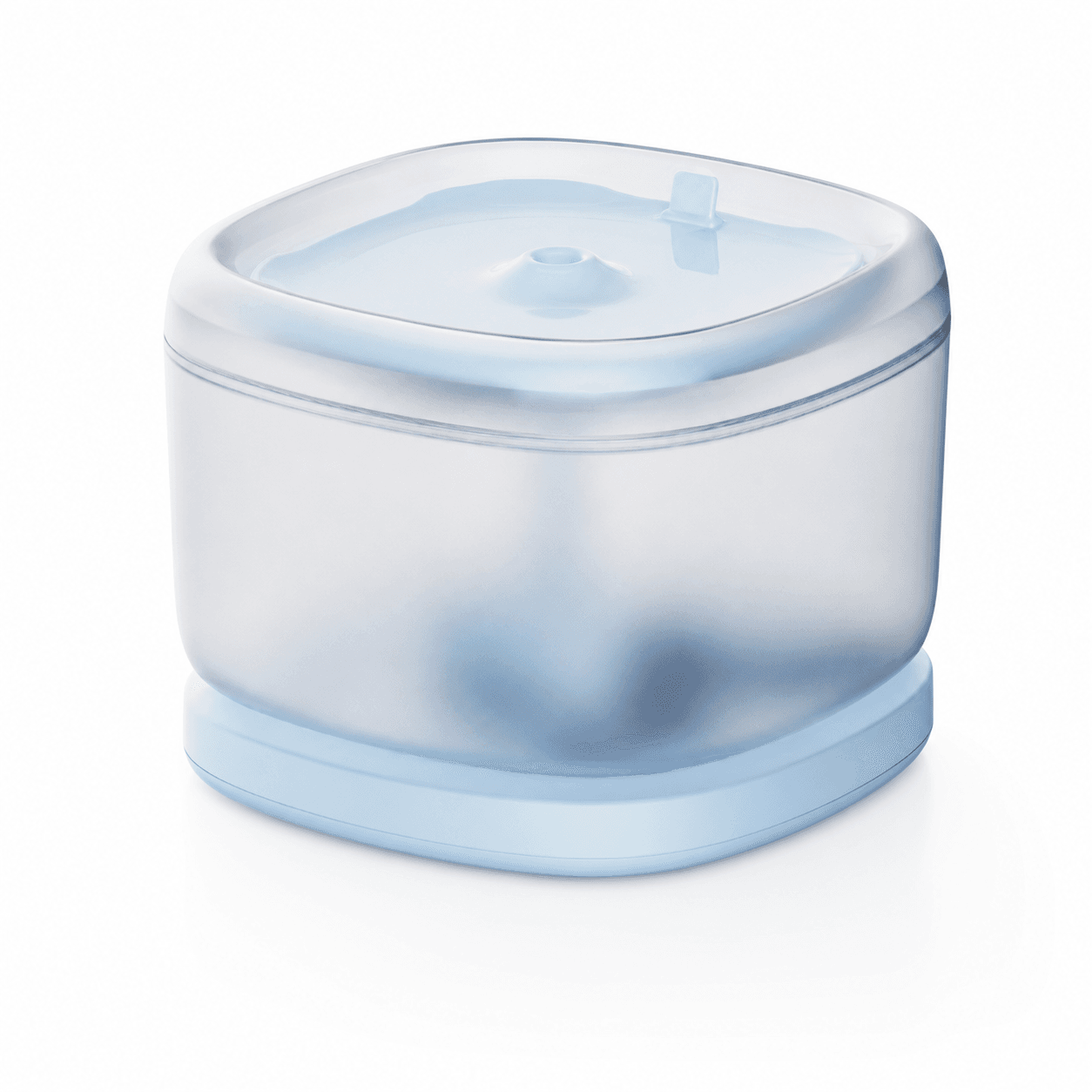
| PTM-6131 | 2.5 L translucent reservoir, thermostatic water care, wireless UVC sterilization pump, circulation filtration, water-electricity separation and 4400 mAh rechargeable configuration | Temperature behavior, UVC/pump configuration, charging, cordless runtime, battery protection and water-electricity separation |
| TY08 | 304 stainless steel drinking surface, ultra-quiet circulation pump, detachable design, triple-stage filtration and cleaning brush in the confirmed configuration | Pump noise, stainless-steel finish, filtration fit, residue traps, cleaning access and carton protection |
| TY09 | 2.2 L capacity, 304 stainless steel, visible water-level window, quiet circulation pump, triple filtration and detachable cleaning | Window sealing and visibility, pump noise, filtration, cleanability and 2.2 L use cycle |
| TY10 | 3.2 L capacity, 304 stainless steel, faucet outlet, round water-level window, quiet pump, triple filtration and detachable design | Faucet flow, splash control, window sealing, pump noise, filter life, stability and shipping protection |
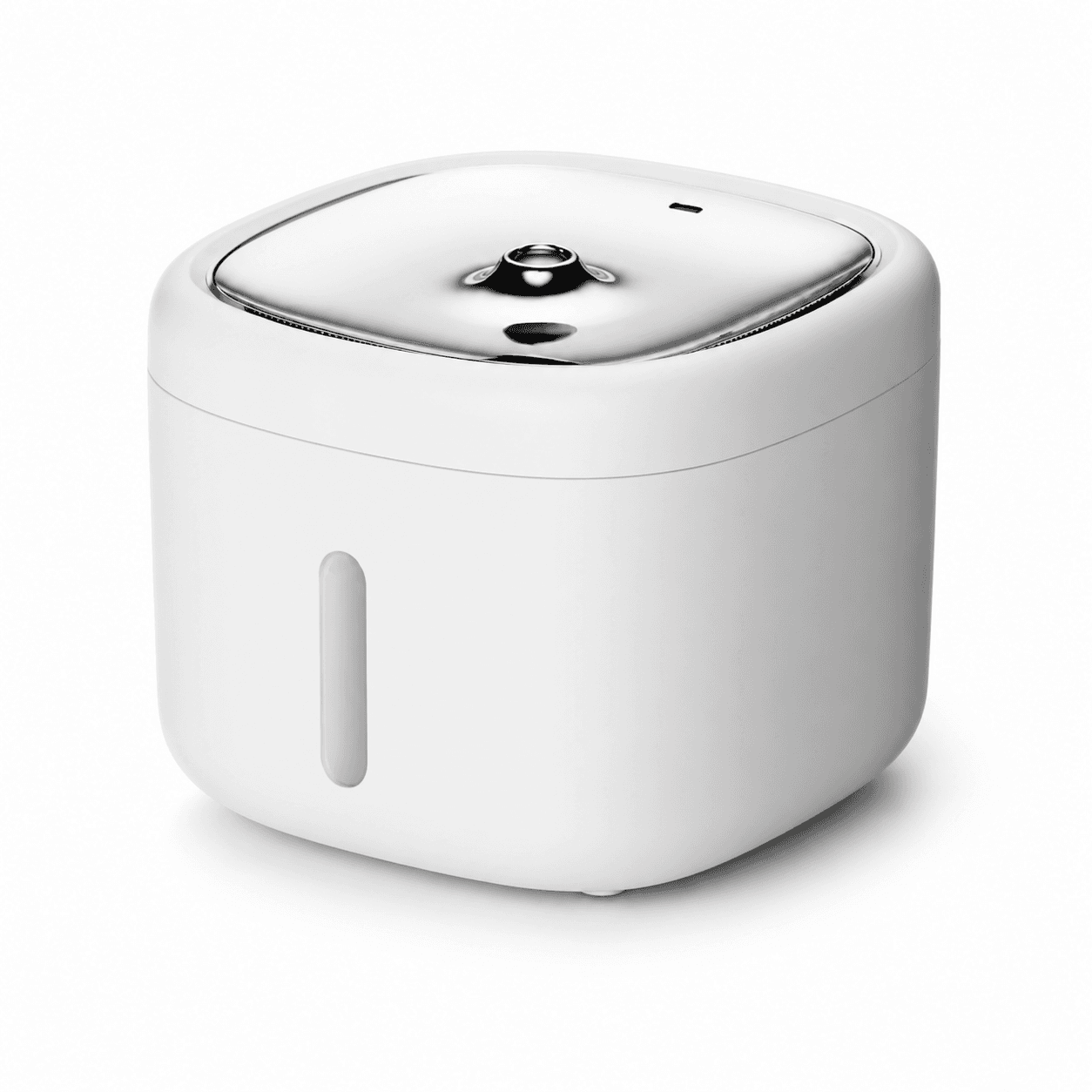
PTM-TL100
Prioritize low-water reminder, dry-burn protection, restart logic, water-level visibility and detachable cleaning.

TY10 Round Window
Prioritize faucet flow, splash, 3.2 L use cycle, water-level window sealing, pump noise and packaging protection.
13. Write the Pass/Fail Standard and Keep a Golden Sample
A report should not simply say “fountain works.” Record the test condition, sample identity, measured result, acceptable limit, evidence and approver. Define limits before viewing the result to reduce subjective approval.
| Approval Area | Required Evidence | Bulk-Order Control |
|---|---|---|
| Pump and flow | Restart, continuous-run, low/high water and blockage observations | Approved pump specification and production functional test |
| Noise | Fixed room, surface, distance and water-level measurements | Sampling plan plus abnormal-vibration rejection standard |
| Leak/electrical | Seal, window, cable/charging and post-transport checks | Leak test and electrical inspection on the agreed sample size |
| Filter | Flow, bypass, installation, replacement and supply data | Locked dimensions, media and packaging reference |
| Cleaning/materials | Timed cleaning, residue inspection and repeated wash cycles | Golden sample, material declarations and finish limits |
| Packaging | Final pack drop/vibration plus post-test operation | Approved carton, inserts, accessories and print files |
Retain a signed golden sample and reference it in the purchase order and pre-shipment inspection. Review the stainless steel pet water fountain buying guide, Haolinc’s factory and quality-control process, OEM/ODM service and private-label customization guide before finalizing the project.
Conclusion
A reliable pet water fountain must deliver stable flow, acceptable noise, effective protection, manageable cleaning and predictable consumable supply after weeks and months—not only during a sales demonstration. Sample testing translates those expectations into evidence and a reproducible production specification.
The strongest B2B approval connects product performance with packaging, compliance, after-sales parts and honest retail claims. That reduces returns and protects repeat-order profitability.
