
Sourcing a pet GPS tracker for wholesale or private label requires more than comparing the device shell and quoted unit price. A commercial program must match the destination country’s mobile network, positioning environment, app language, data-plan model, battery expectations, waterproofing, collar fit, compliance documents and after-sales plan.
This guide helps distributors, importers, pet retailers, ecommerce sellers and smart-pet brands evaluate a pet GPS tracker manufacturer, compare product models, approve samples and prepare a lower-risk OEM or bulk order.
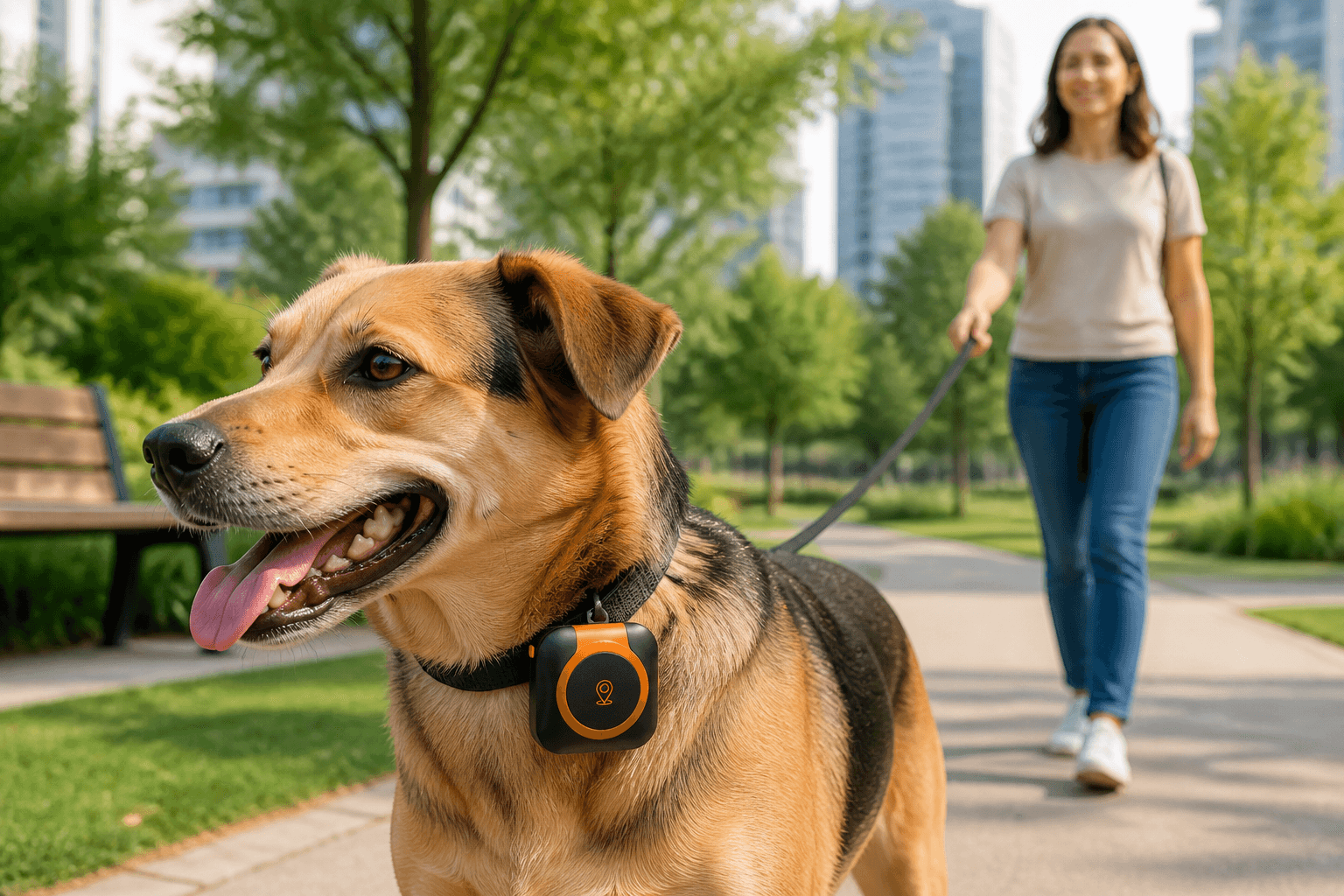
What B2B Buyers Need From a Pet GPS Tracker Manufacturer
A suitable pet GPS tracker manufacturer should connect product specifications with the buyer’s country, channel and service model. Before recommending a device, the supplier should confirm:
- Destination countries and supported cellular bands or local SIM requirements
- Dog, cat or multi-pet positioning and acceptable device weight
- GPS, LBS, Wi-Fi or Bluetooth-assisted positioning expectations
- App language, account management, server region and data retention needs
- Subscription, SIM card or buyer-managed data-plan model
- Real-time tracking, route history, geofence and activity-monitoring requirements
- Target waterproof rating and outdoor-use conditions
- Logo, color, packaging, manual and app-branding scope
- Trial quantity, forecast volume, warranty and spare-unit expectations
- Target launch date, certification requirements and destination-market documentation
Ask the supplier to identify the exact hardware version, firmware version, app platform and service-fee basis on every quotation. A low device price can become expensive when connectivity, cloud service, SIM management and warranty costs are added later.
Compare C08 and C09 Pet GPS Tracker Models
Haolinchen currently offers two formats for different pet sizes and sales programs. Buyers should confirm the final specification during sampling because network modules, firmware and accessories may vary by market.
| Model | Product format | Typical buyer focus |
|---|---|---|
| C08 Pet GPS Tracker | Compact detachable tracker | Flexible collar attachment, retail bundles and dog-tracking programs |
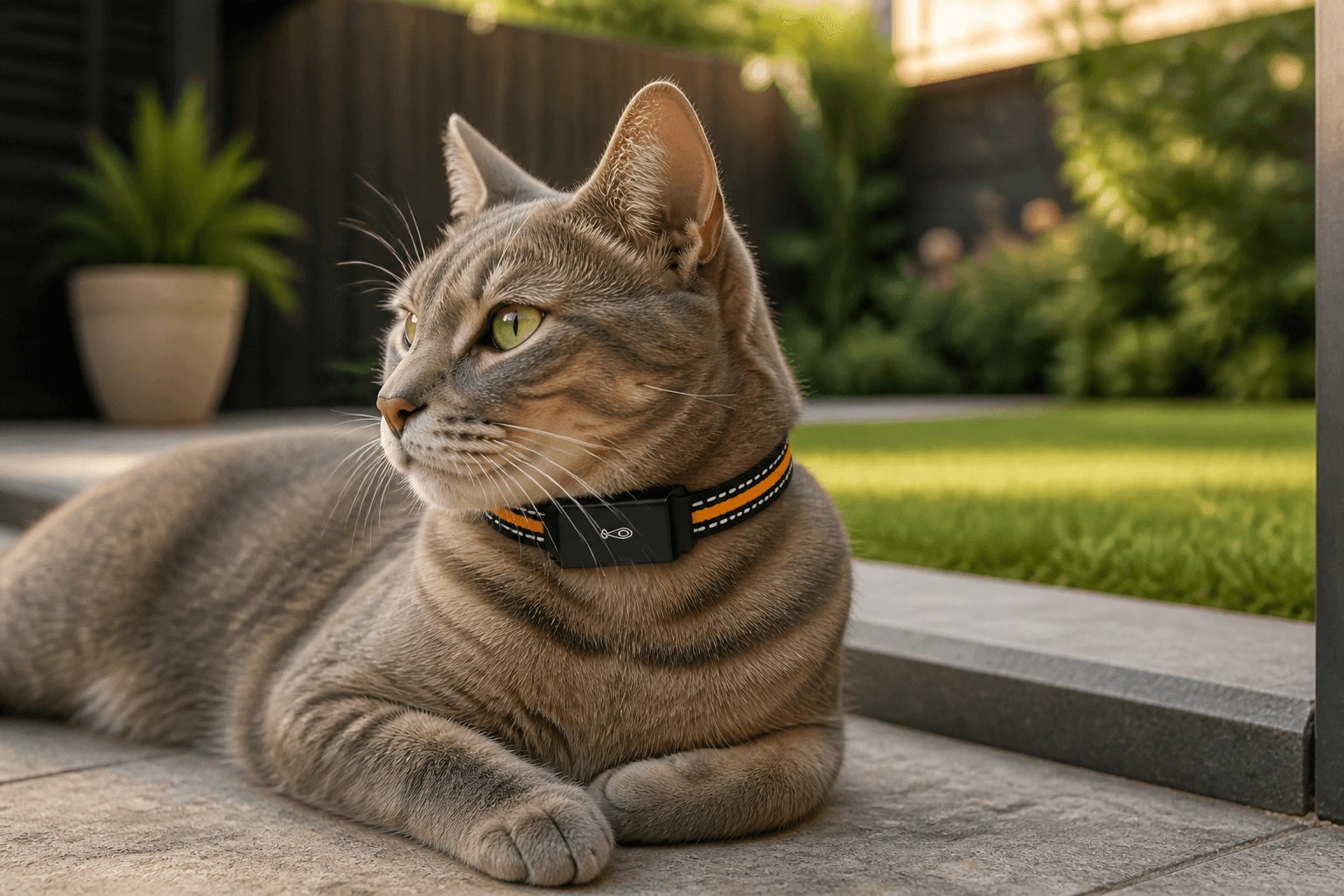
| C09 Pet GPS Tracker | Tracker integrated with a visible collar | Complete collar set, cat or dog positioning and ready-to-sell packages |
Confirm Network, SIM and Positioning Compatibility
Connectivity is one of the most important technical checks in pet GPS tracker sourcing. A sample that works in the supplier’s country may not work correctly in the buyer’s market. Request a written band list and confirm it with the intended mobile network before approving the order.
- Cellular bands: confirm the exact LTE, 4G or other supported bands for every sales country.
- SIM plan: identify whether the tracker includes a SIM, requires a local SIM or uses an eSIM/service package.
- Positioning modes: understand when GPS, Wi-Fi, LBS and Bluetooth assistance are used.
- Indoor limitations: GPS performance normally changes indoors, near tall buildings or under dense tree cover.
- Update interval: a shorter reporting interval can improve route visibility but may reduce battery life and increase data use.
Test the device in urban streets, open outdoor areas, indoor locations and weak-signal zones that resemble the customer’s real use. Record location delay, route accuracy, recovery after signal loss and the battery impact of each tracking mode.
Review the App, Server and Subscription Model
For a smart pet tracker, the app and cloud service are part of the product. Wholesale buyers should not approve hardware without reviewing the full user journey.
- iOS and Android availability in each destination market
- Account registration, device binding, family sharing and lost-device recovery
- Supported app languages and translation responsibility
- Map provider, server region, data storage and privacy documentation
- Geofence creation, alert delivery, route history and activity reporting
- SIM or subscription activation, renewal, refund and customer-support process
- Firmware and app update ownership after launch
- Options for standard app use, logo customization or deeper private-label development
Ask who pays recurring cloud, map, SMS, push-notification and cellular costs. These costs should be included in the commercial model before the buyer sets a retail price.
Evaluate Battery Life, Weight and Waterproofing
Battery claims should be linked to a test configuration. Standby time, normal-use time and continuous tracking time are different. Request the battery capacity, charging method, typical update interval and test conditions behind every claim.
For cats and smaller dogs, verify the complete wearing weight, collar width and tracker dimensions. The device must remain secure without restricting normal movement. For outdoor programs, inspect charging-port protection, sealing, enclosure fit and the supplier’s waterproof test method. If an IP rating is required for marketing or compliance, request the relevant report rather than relying only on a product label.
Private-Label Pet Tracker and OEM Customization Options
A private-label pet GPS tracker program can include hardware, packaging and digital-service elements. Confirm the scope, cost, MOQ and lead time for each requested change:
- Logo printing or laser marking on the tracker, collar or charging accessory
- Housing, collar, stitching and packaging color options
- Retail box, insert tray, barcode, warning label and carton mark
- User manual, quick-start card and localized safety information
- App name, icon, language, interface or server customization
- Firmware settings, alert logic and default tracking interval
- Accessory bundles, replacement collars and charging components
Simple logo and packaging work normally requires less development than a branded app or custom cloud deployment. Separate one-time engineering costs from recurring service fees and unit pricing.
MOQ, Wholesale Pricing and Cost Drivers
The minimum order quantity for an OEM pet GPS tracker depends on the model, network module, color, packaging, app scope and certification plan. Ask for separate quotations for:
- Standard sample and evaluation units
- Neutral-product trial order
- Logo plus standard packaging
- Full private-label packaging and localized manuals
- Firmware, app or cloud customization
- Spare units, replacement collars and charging accessories
Compare the total landed program rather than only the device price. Include tooling or engineering, packaging, certification, SIM or subscription, cloud service, freight, duties, warranty reserve and after-sales labor. See our private-label MOQ and sample guide for a fuller preparation checklist.
How to Approve a Pet GPS Tracker Sample
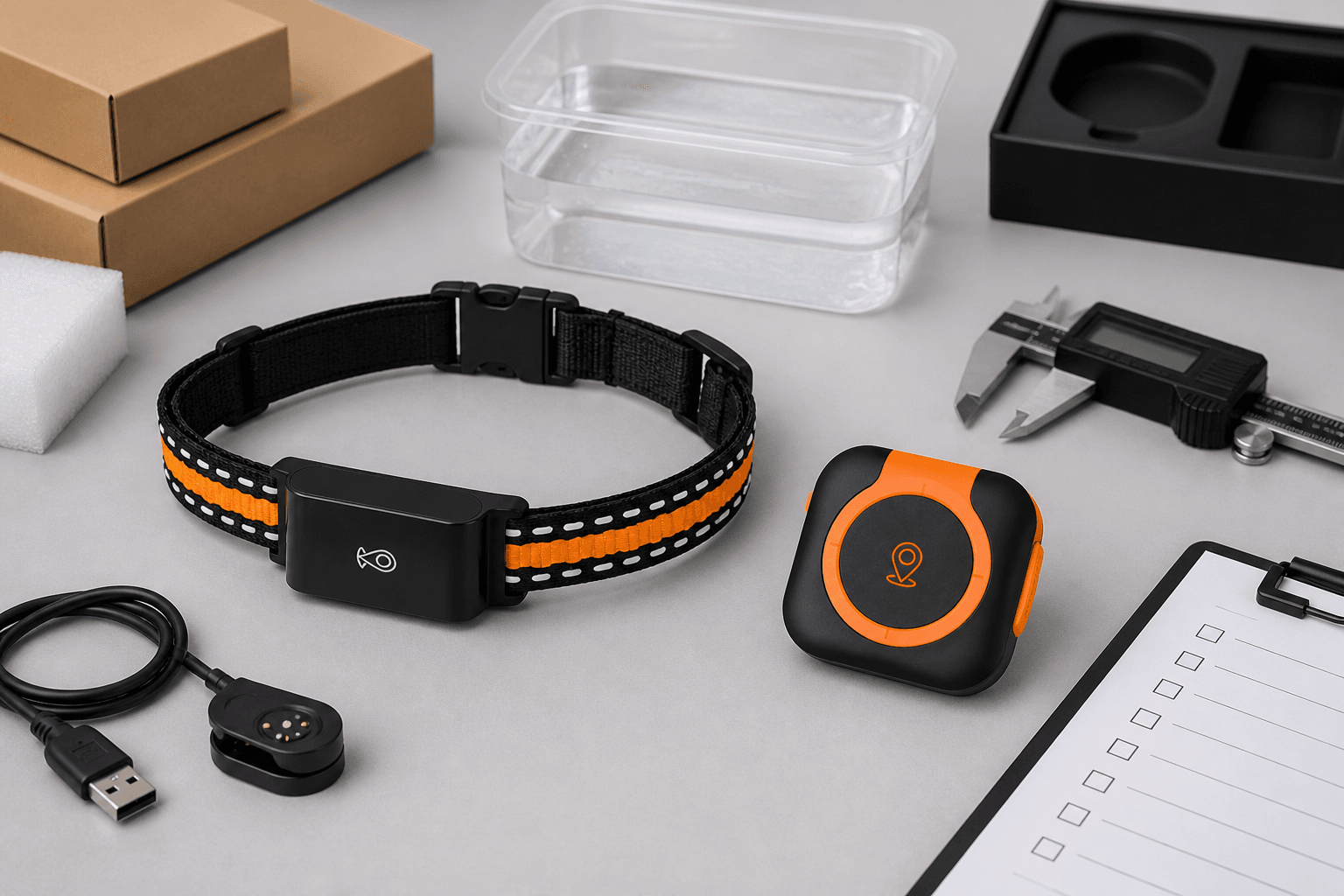
Use a written sample checklist and test the same version intended for production. A practical evaluation should cover:
- Identity: record model number, hardware version, firmware version, app version and accessories.
- Activation: test account creation, SIM or subscription activation, binding and reset.
- Positioning: compare location delay and accuracy across several real environments.
- Alerts: test geofence entry and exit, low-battery warnings and offline notifications.
- Battery: run a repeatable test using the intended reporting interval.
- Mechanical fit: inspect collar attachment, buckle, housing seams, buttons and charging contacts.
- Water resistance: follow the agreed test method and inspect the unit afterward.
- App experience: test translations, map display, history, family sharing and support links.
- Packaging: check barcode, labels, manual, accessories and unboxing sequence.
- After-sales: simulate reset, replacement, device transfer and account-recovery cases.
Keep one approved golden sample, signed specification and packaging file as the reference for mass-production inspection.
Compliance and Destination-Market Documents
Requirements depend on the radio module, battery, charger, destination and sales channel. Buyers may need to review radio, EMC, electrical safety, RoHS or other restricted-substance, battery transport and packaging documents. Marketplaces and retailers can also request their own evidence.
Share the exact destination countries and sales channels before sampling so the supplier can identify relevant documentation. Our smart pet product certification guide for US and EU buyers explains the planning process. Final legal and lab requirements should be confirmed for the exact product configuration.
Quality Control and Production Consistency
A pet tracker combines electronics, radio performance, sealing, charging, firmware and cloud connectivity. Production inspection should therefore include both physical and functional checks.
- Incoming inspection for housings, collars, buckles, batteries and electronic modules
- Assembly fit, sealing, charging and button-function checks
- Firmware version and device-ID traceability
- Activation, positioning and alert spot checks
- Battery and charging sampling
- Packaging completeness, barcode and label verification
- Pre-shipment inspection against the approved golden sample
Agree on inspection quantity, defect classification, acceptance standard and corrective-action process before production begins.
Packaging, Logistics and After-Sales Planning
Confirm the battery shipping documentation, carton size, gross weight, pallet plan and freight basis before issuing the purchase order. Packaging should protect the tracker, collar and charging contacts while keeping the retail presentation clear.
For after-sales planning, define warranty period, replacement workflow, spare-unit allocation, charging-accessory availability, firmware support and responsibility for SIM or subscription questions. Distributors should also prepare troubleshooting content for activation, weak signals, geofence alerts, battery drain and account transfer.
Pet GPS Tracker Supplier Scorecard
| Evaluation area | Evidence to request |
|---|---|
| Market compatibility | Band list, SIM plan, app availability and field-test results |
| Product performance | Battery conditions, positioning tests, waterproof method and sample record |
| OEM capability | Logo, packaging, firmware, app and server customization scope |
| Quality control | Golden sample, inspection checklist, traceability and corrective-action process |
| Commercial readiness | MOQ, lead time, recurring fees, warranty and spare-unit plan |
Frequently Asked Questions
Can one pet GPS tracker work in every country?
Not automatically. Cellular bands, SIM availability, roaming, app-store access and map services vary by market. Confirm compatibility country by country.
What is the difference between a GPS pet tracker and a Bluetooth tracker?
A cellular GPS tracker is designed for wider-area positioning when network service is available. A Bluetooth tracker normally depends more heavily on nearby phones or a device network. Buyers should match the technology to the intended range and service model.
Can I add my logo and private-label packaging?
Logo, packaging, manuals and accessory bundles may be available. App, firmware and cloud branding require a separate technical and commercial review.
What should I test before placing a bulk order?
Test activation, regional connectivity, location performance, geofence alerts, battery life, waterproofing, wearing comfort, app language, packaging and after-sales workflows using the intended production configuration.
Do pet GPS trackers require a monthly fee?
Many cellular tracking programs include SIM, data, cloud or map costs. The fee model varies, so confirm who pays, how renewal works and what happens when service expires.
Request a Pet GPS Tracker OEM and Wholesale Plan
For a useful quotation, share your destination countries, sales channel, target model, estimated quantity, launch date, logo and packaging needs, app or subscription expectations, compliance requirements and preferred shipping method.
Compare the C08 Pet GPS Tracker and C09 Pet GPS Tracker, review our smart pet product OEM/ODM service, or request a pet GPS tracker quotation for samples, wholesale pricing and private-label support.