
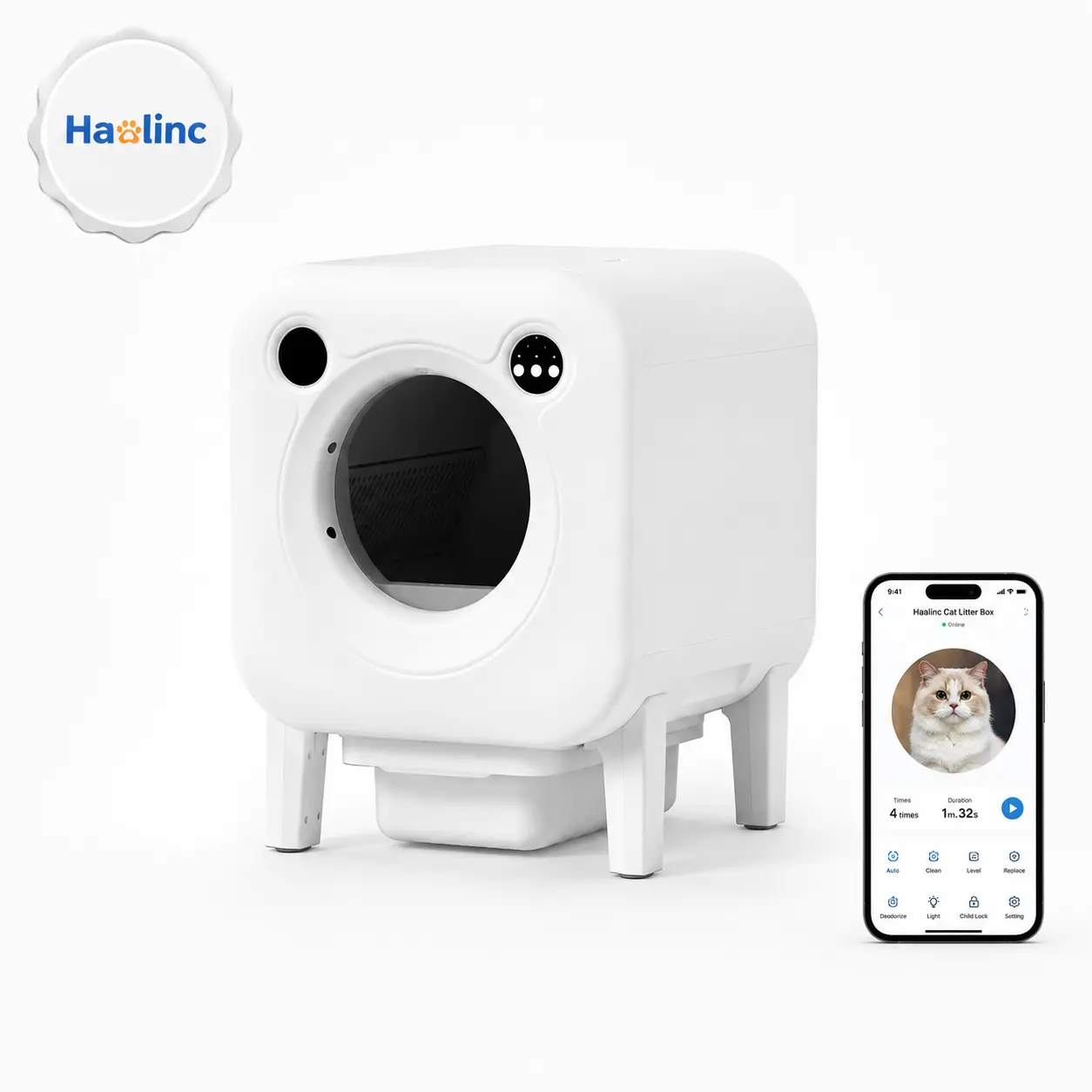
For wholesalers and distributors, an automatic litter box can look risky at first: it is bulky, freight is expensive on small orders, and after-sales support is more involved than with a traditional litter tray. But those factors do not automatically make the category a bad investment. The real question is whether the product, supplier, test order and local selling price create workable unit economics.
Over the past month, our sales team has discussed small trial orders with buyers in Malaysia, Australia and the United States. Several buyers considered purchasing 20–30 units with door-to-door delivery. The orders were paused mainly because freight costs were high at that quantity—not because demand for the product had disappeared. This article explains how wholesalers can assess shipping cost, returns, after-sales work and profit potential before committing to a larger order.
Why Smart Litter Boxes Can Look High-Risk
- Bulky packaging: a larger carton increases chargeable volume and small-batch freight cost.
- Higher product value: every return or damaged shipment costs more than a return on a basic litter tray.
- More customer education: users need clear setup, litter-selection and cleaning guidance.
- After-sales requirements: distributors need access to spare parts, troubleshooting material and a responsive supplier.
These are genuine risks, but they should be measured against the product’s retail price, customer value and long-term sales potential. A distributor should compare the total landed cost with the expected selling price and support cost—not judge the product only by its carton size.
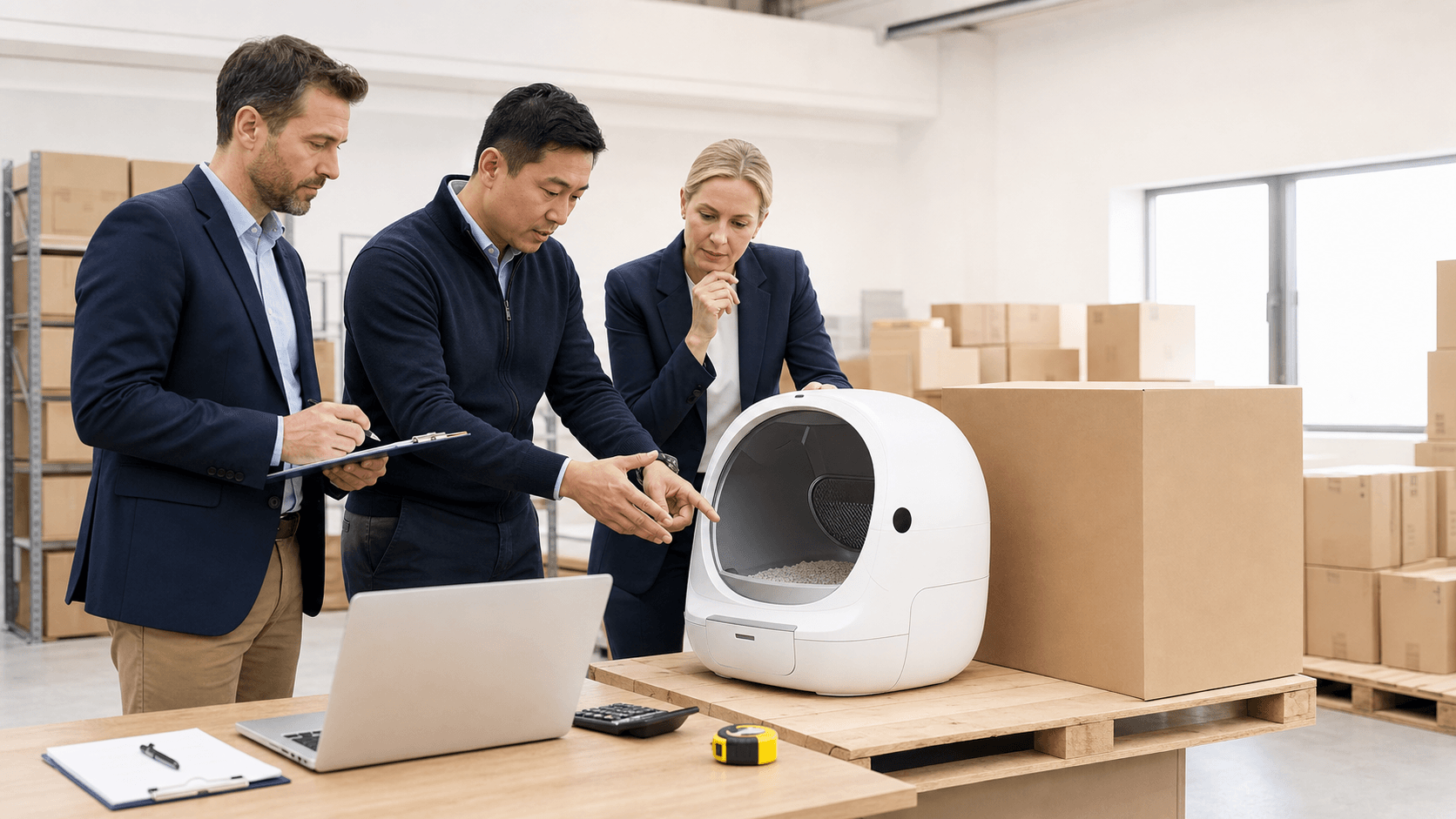
Does a Larger Product Automatically Mean a Poor Wholesale Choice?
No. A larger enclosure can serve several practical purposes. Protective packaging reduces the chance of damage during long-distance transport. Inside the product, enough room helps larger cats enter, turn and use the device comfortably. A larger waste drawer can also reduce how often the owner needs to empty it.
The correct target is not the smallest possible carton. It is the best balance among product usability, protection, shipping cost and retail positioning. This is why buyers should evaluate dimensions alongside the actual user experience. You can compare different open and closed designs in our automatic cat litter box range.
Returns Often Start With Poor Product Education
Many avoidable returns are caused by a mismatch between the product and the customer’s expectations. An automatic litter box is simple once it is set up correctly, but it still needs more explanation than a traditional tray. Retailers should give customers clear guidance on:
- cat size, age and suitability;
- compatible litter types and fill levels;
- initial setup, sensor checks and app connection;
- cleaning schedules and waste-bin maintenance;
- what to do if the cat needs time to adapt.
Before ordering, ask the supplier whether manuals, videos, spare parts and troubleshooting support are available. A reliable OEM/ODM manufacturing partner should help the distributor prepare these materials, not simply ship the units.
How to Evaluate Profit Instead of Freight Alone
Small trial orders have a higher freight cost per unit than container or consolidated shipments. That cost should be treated as part of market validation. When assessing a test order, calculate:
- factory price and customization cost;
- freight, duties, local delivery and payment fees;
- marketing, retailer margin and warranty reserve;
- expected return rate and after-sales labor;
- realistic local retail price and expected sales volume.
A trial order may have a modest margin, but it can answer the questions that matter before a larger purchase: Which model sells? Which features do customers value? What support questions appear most often? Once volume grows, consolidated shipping can improve the landed cost significantly.
A Practical Small-Batch Test Plan
1. Test Two Clearly Different Market Positions
Consider one straightforward model for price-sensitive buyers and one premium model with features such as a camera, multi-cat recognition or enhanced odor control. This makes the test more useful than ordering several products with nearly identical positioning.
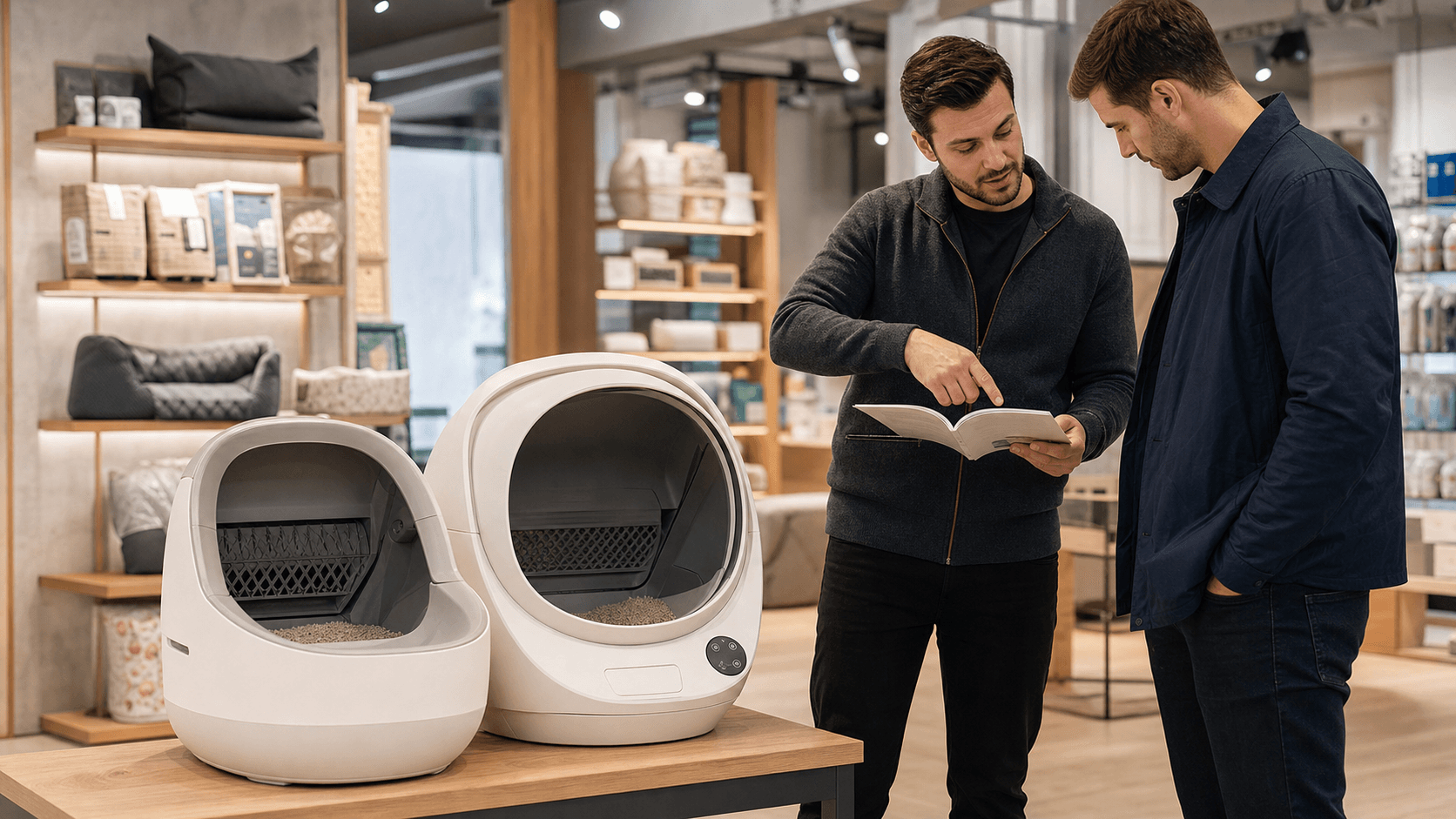
2. Compare Open and Closed Designs
Open models can be easier for cats to approach and may be simpler to demonstrate. Closed models can appeal to buyers who prioritize privacy and odor containment. The better choice depends on local preferences, household space and the target customer segment.
3. Learn the Product Before You Resell It
A qualified distributor should be able to explain how the cleaning cycle works, which cats the model suits, how it differs from competing products and how common issues are resolved. Keep at least one unit for internal training, photography, demonstrations and support testing.
4. Define the Pass/Fail Criteria in Advance
Before the shipment arrives, define the target retail price, acceptable return rate, expected monthly sell-through and the support response you require from the supplier. A test is only useful when the team knows what success looks like.
Supplier Checks That Reduce Wholesale Risk
- Request product specifications, carton dimensions and gross weight before calculating freight.
- Confirm the warranty process, spare-parts availability and response time.
- Review the supplier’s testing and quality-control process.
- Ask for samples and test the complete customer journey before placing a volume order.
- Clarify branding, packaging, manuals and local-language requirements at the quotation stage.
Final Verdict: High Risk or Manageable Opportunity?
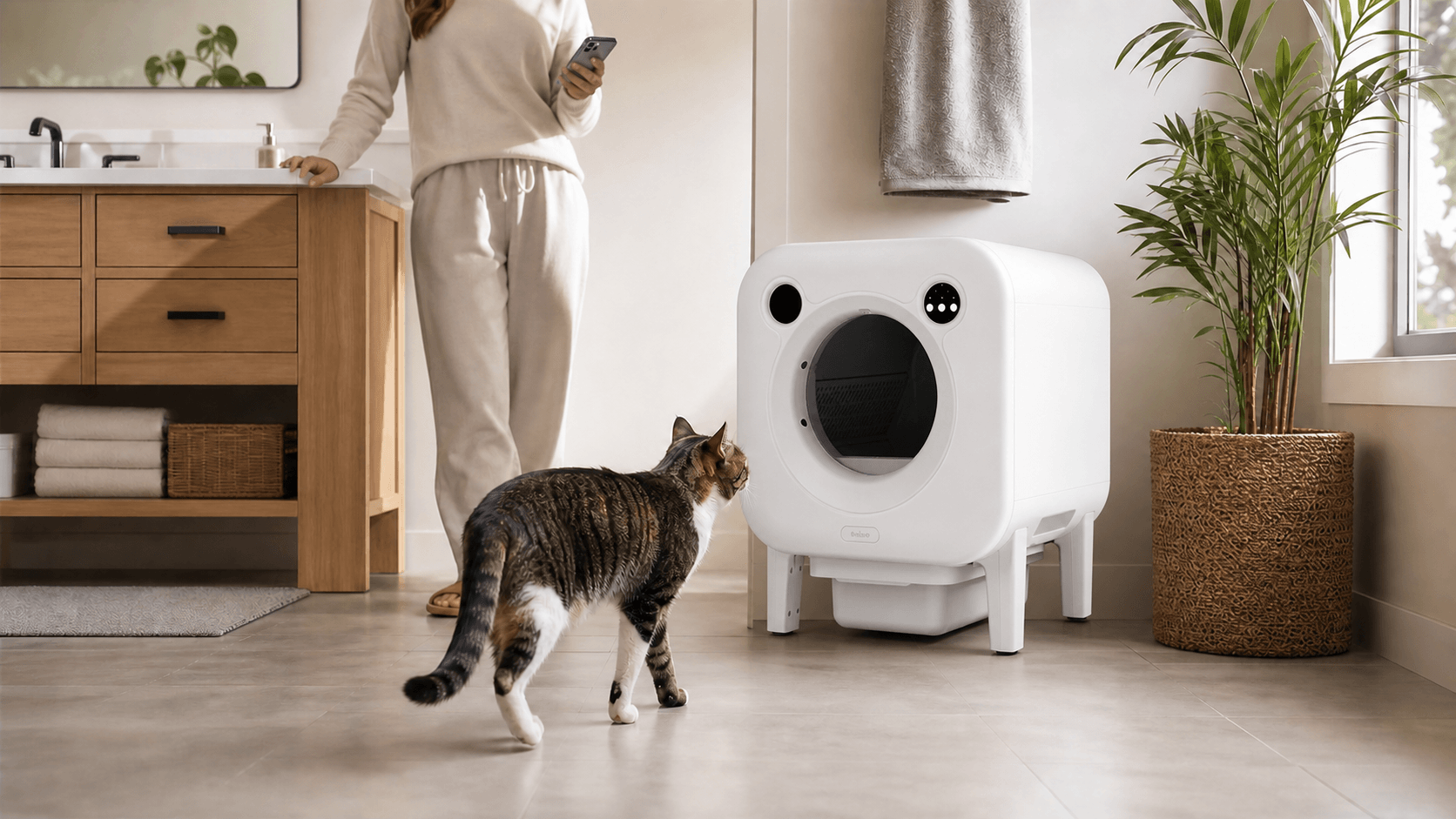
A smart litter box is not automatically a high-risk wholesale product. The risk becomes high when a buyer chooses an unsuitable model, ignores landed cost, provides weak customer education or works with a supplier that cannot support after-sales service. With a controlled trial order, clear unit economics and a reliable support plan, the category can be a manageable opportunity for pet brands, retailers and distributors.
Haolinchen develops and manufactures smart pet products for global B2B partners. We support samples, private-label packaging, product customization and after-sales planning. Our standard MOQ is 100 units, while sample availability and trial-order arrangements can be discussed by model.
Author: Linan Yao