

Distributors, Amazon sellers and private-label brands frequently ask three connected questions: How long should the pump last? Can customers clean every water-contact area? What will replacement filters cost over the useful life of the product?
These questions belong in the same sourcing decision. A quiet pump can still fail early if hair reaches the impeller. A stainless-steel drinking surface can still hide residue inside a narrow channel. A low-priced fountain can create support problems if filters become unavailable six months later. This guide shows what evidence buyers should request and how to compare platforms without relying on vague claims.
| Buyer Question | Evidence to Request | Business Risk if Unclear |
|---|---|---|
| What is the tested pump life? | Test duration, water conditions, duty cycle, sample size and failure definition | Returns, warranty replacements and poor reviews |
| Can the pump be fully cleaned? | Disassembly steps, tool requirements, cleaning video and replacement procedure | Noise, reduced flow, odor and premature failure |
| Is the filter proprietary? | Dimensions, media, supplier, MOQ and alternative-source plan | Stockouts, high lifetime cost and customer frustration |
| How long will consumables remain available? | Written supply period, lead time, pack format and forecast process | Abandoned installed base and loss of repeat sales |
| What happens at low water level? | Warning, shutdown, restart and dry-run protection test | Pump damage and safety complaints |
1. What Does “Pump Life” Actually Mean?
A pump-life claim is meaningful only when the test conditions are stated. Buyers should ask whether the pump ran continuously or intermittently, at what water level, with which filter, at what voltage and in what water quality. The report should identify the number of samples, inspection interval and failure criteria.
A supplier may define failure as a pump that stops completely. A retailer may experience failure much earlier when flow drops, noise rises or the pump no longer restarts after refilling. Your acceptance standard should therefore include flow stability, abnormal noise, restart reliability and visible wear—not only whether the motor still rotates.
Before bulk approval, use the step-by-step smart pet water fountain sample-testing checklist to test the exact production configuration.
2. Why Cleaning Access Changes Pump Reliability
Hair, mineral deposits and food residue increase pump load and restrict water flow. If customers cannot reach the impeller chamber or reinstall the pump correctly, the product may become noisy or stop circulating even when the pump itself is not defective.
Ask a first-time tester to disassemble, wash, dry and reassemble the fountain using only the proposed manual. Record the number of parts, time required, areas that cannot be reached and mistakes that affect operation. Check the pump cavity, inlet screen, cable route, water-level window, outlet channel, filter seat and seams below the drinking tray.

“Detachable” is useful only if the water-contact parts can be removed safely and the non-washable parts are obvious. Brands should also confirm whether dishwasher use is permitted and whether heat or detergent could deform seals or damage surface finishes.
3. Proprietary vs Standard-Size Filters: Which Is Better?
A proprietary filter can improve fit, sealing and recurring revenue. It also creates a dependency: the brand must forecast stock, support old customers and prevent compatibility confusion. A standard-size filter may simplify sourcing, but only if its thickness, flow resistance and media quality remain consistent.
| Filter Strategy | Advantages | Buyer Checks |
|---|---|---|
| Proprietary filter | Controlled fit, branded refill packs and stronger repeat-purchase opportunity | Tool ownership, supplier continuity, refill MOQ, pack lead time and backward compatibility |
| Standard-size filter | Easier replacement access and potentially lower customer cost | Actual interchangeability, media consistency, sealing and bypass risk |
| Reusable screen plus replaceable media | May reduce waste and separate hair capture from fine filtration | Cleaning burden, customer instructions and replacement-media availability |
Whichever strategy you choose, lock the filter dimensions, media layers and assembly direction in the purchase specification. Avoid promising a fixed replacement interval without stating water quality, pet count and cleaning frequency.
4. Calculate the Customer’s Lifetime Filter Cost
Retail price alone hides the ownership cost. Build a simple model using the planned replacement interval, filters per pack, landed refill-pack cost, fulfillment cost, retailer margin and expected product life.
Annual filter cost = replacement events per year × delivered cost per replacement. For the brand, calculate the margin after packaging, marketplace fees, storage and customer-service replacements. Test several usage scenarios rather than one ideal assumption.
Then compare the annual filter cost with the fountain’s retail price. If the consumables feel disproportionate, customers may delay replacement, use incompatible filters or leave negative reviews. A clear refill plan should be ready before the first fountain shipment—not after the installed base begins asking for replacements.
5. How Many Spare Pumps and Filters Should a Brand Plan?
The answer depends on warranty length, forecast volume, pump failure data, service policy and replenishment lead time. Ask the supplier to quote pumps, cables, adapters, seals and filter packs separately. Define whether warranty cases receive a component, a full replacement unit or credit.
- Keep launch stock for filters in the same destination warehouse as the fountains.
- Reserve pumps and electrical parts against verified failure data and lead time.
- Use part numbers that remain stable across product revisions.
- Require advance notice before a pump or filter supplier changes.
- Confirm whether replacement instructions can be branded and localized.
- Include after-sales parts in repeat-order forecasts.

6. Verify Low-Water, Dry-Run and Electrical Protection
A pump should not be evaluated only with a full reservoir. Reduce the water level gradually and record when the warning or protection activates. After refilling, confirm whether operation resumes automatically or requires user action. Repeat the test with a partially blocked inlet and an incorrectly seated pump.
Inspect splash paths, cable exits, charging contacts and separation between water and electrical areas. Rechargeable or cordless configurations need separate runtime, charging and protection tests. For example, the PTM-6131 thermostatic smart pet water dispenser is a different project type from a conventional continuously powered pump and should receive its own battery and charging acceptance criteria.
7. Which Fountain Platform Fits the Product Plan?
The table below summarizes the current product-page direction. Confirm the exact pump, filter, adapter, plug, packaging and compliance scope on the quotation and approved sample.
| Model | Current Platform Direction | Priority Buyer Questions |
|---|---|---|
| PTM-TL100 | 2.2 L reservoir, visible water level, circulation filtration, low-water reminder and dry-burn protection | At what level does protection activate, and how does the pump restart after refilling? |
| PTM-6131 | 2.5 L thermostatic platform with rechargeable and wireless UVC-pump configuration | What is runtime under each mode, and which pump/UVC parts require replacement? |
| TY08 | 304 stainless-steel drinking surface, quiet circulation pump and triple-stage filtration | Can the pump be fully cleaned, and what is the refill-filter supply plan? |
| TY09 | 2.2 L stainless-steel fountain with visible water-level window and detachable structure | How are the window seal, pump noise and residue traps tested? |
| TY10 | 3.2 L stainless-steel fountain with faucet outlet and round water-level window | How are splash, window sealing, flow stability and filter cost controlled? |
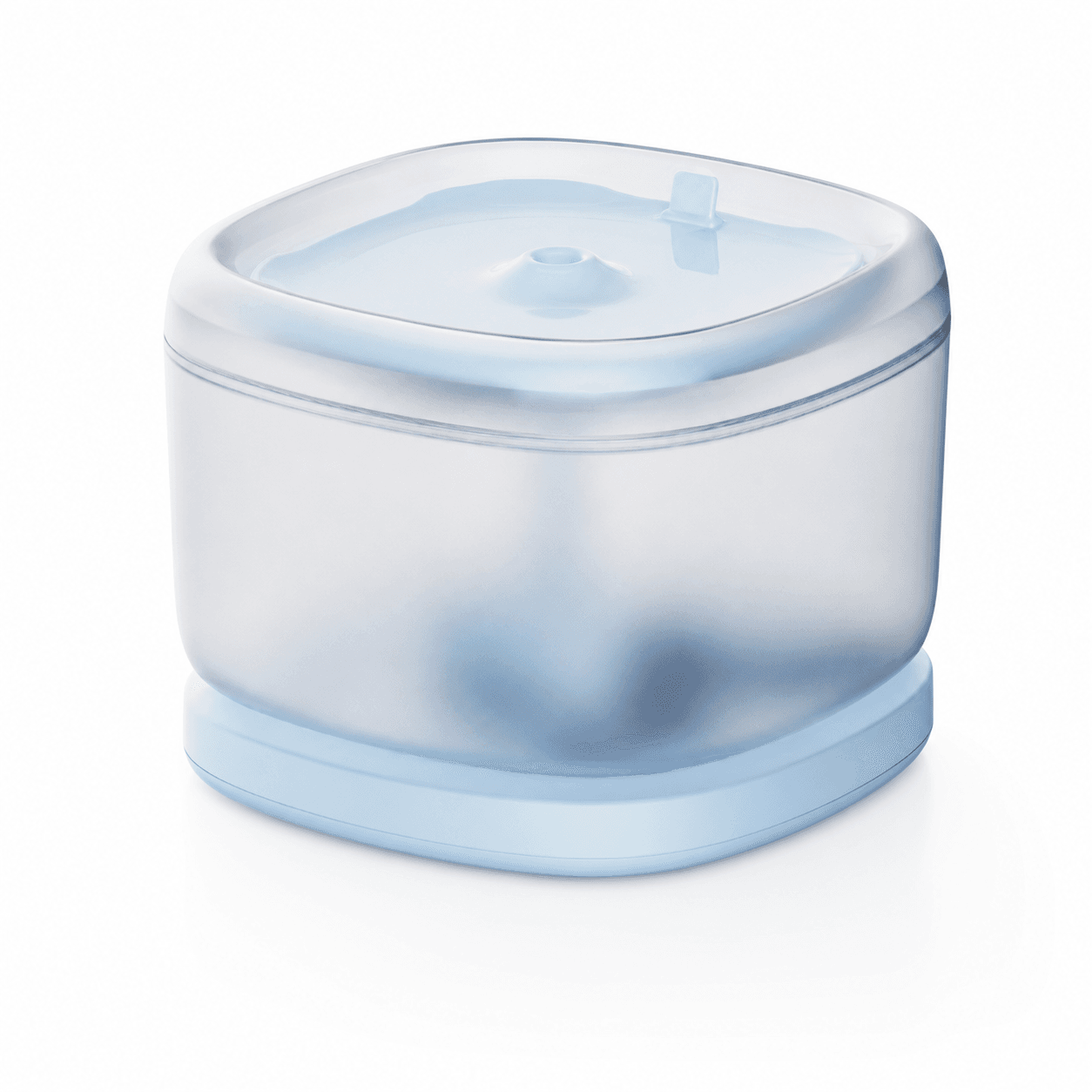
PTM-6131
Suitable for brands evaluating rechargeable operation, thermostatic water care and a differentiated pump configuration.

TY10
Suitable for a larger-capacity stainless-steel range where faucet flow, splash control and window sealing matter.
8. What Evidence Should Buyers Request?
Ask for model-specific evidence, not a generic factory statement. The minimum package should identify the approved pump and filter, production inspection points, life-test conditions, low-water behavior, material declarations, cleaning instructions, spare-part policy and change-control process.
- Pump specification and life-test summary
- Flow, noise, restart and low-water test method
- Water-contact material declarations
- Filter dimensions, media and replacement-pack specification
- Leak and electrical inspection method
- Incoming, assembly and final inspection records
- Warranty, spare-part and discontinued-component procedure
- Destination-market compliance documents for the exact configuration
Review Haolinc’s factory and quality-control process, OEM/ODM service and US and EU certification guide when preparing the RFQ.
9. Buyer FAQ
Can a pump-life number guarantee the retail warranty?
No. A laboratory duration must be interpreted with its test conditions and failure definition. Warranty planning also needs field-failure data, cleaning behavior, water quality and spare-part logistics.
Is stainless steel automatically easier to keep hygienic?
It can support cleanability and premium positioning, but the pump cavity, filter seat, window, seams and non-removable channels still determine the complete hygiene experience. See the stainless steel pet water fountain buying guide.
Should a brand choose a proprietary filter?
Choose it only when controlled fit and refill revenue justify the supply obligation. Document tooling, lead time, MOQ, backward compatibility and an alternative plan.
What usually causes pump complaints?
Common contributors include hair or mineral buildup, low water, air locks, incorrect assembly, vibration against the housing and damaged cables. A failure investigation should separate maintenance problems from component defects.
When should filters and spare pumps be ordered?
Approve and forecast them with the first production order. The brand should be ready to support customers as soon as the fountains enter the market.
10. Turn the Questions into a Purchase Specification
A strong specification connects the retail promise to measurable controls. Identify the exact pump and filter, acceptable flow and noise behavior, low-water logic, cleanable parts, material requirements, refill-pack format, warranty method and long-term supply expectations. Keep an approved golden sample and require written approval before critical components change.
For a broader sourcing workflow, continue with the cat water fountain OEM and private-label guide. The objective is not to choose the fountain with the longest feature list. It is to build a product line whose pump, cleaning design and consumable system remain supportable after the first sale.
