
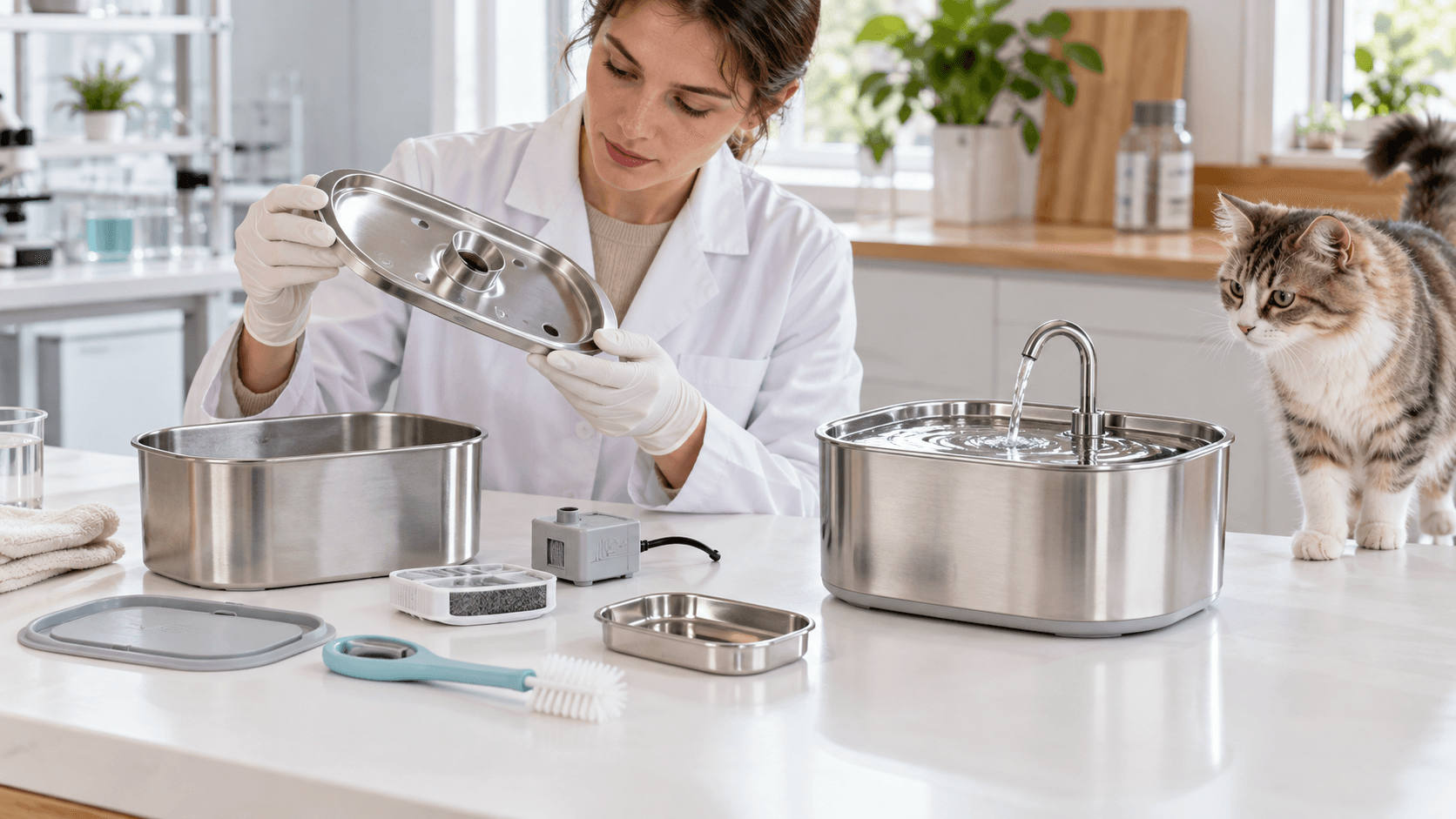
For importers, distributors, retail chains and private-label brands, pet fountains can generate repeat sales and complement feeder ranges. They also remain in continuous contact with water, pet saliva, hair, dust and food particles. If owners cannot see, reach, wash, rinse, dry and correctly reassemble the wet parts, support cases and negative reviews can grow even when the pump still runs.
| Review area | What the buyer should confirm | Evidence before approval |
|---|---|---|
| Materials | Every water-contact component, coating, seal, adhesive and colorant | Bill of materials plus applicable supplier/compliance documents |
| Disassembly | Steps, force, tools, loose parts and incorrect-assembly risks | First-time-user cleaning trial and approved instructions |
| Water path | Pump chamber, inlet, outlet, filter seat, seams and window access | Visual inspection after repeated use and cleaning |
| Drying | Drainage, trapped water and parts that remain wet after washing | Timed drain/dry observation under a defined condition |
| Consumables | Filter specification, replacement guidance and long-term availability | Approved filter sample, pack plan and reorder terms |
| Claims | Material, noise, filtration, sterilization and cleaning wording | Configuration-matched test evidence and legal review |
1. Map Every Water-Contact Material
“304 stainless steel” may describe a tray or reservoir, but a complete fountain can also contain plastic housings, silicone seals, pump components, filter media, cable jackets, adhesives and printed or coated surfaces. Ask the supplier to identify every component that contacts circulating or stored water on the quoted model.
Request documentation appropriate to the destination market and intended use. Do not assume that a certificate for one steel sheet proves the compliance of the full assembly, and do not reuse another model’s document without checking materials, supplier, revision and scope. Start with the smart pet product certification guide for US and EU buyers, then confirm the exact requirements with a qualified laboratory or compliance professional.
| Material question | Why it matters | Buyer action |
|---|---|---|
| Which parts are actually stainless steel? | Marketing images may not show hidden plastic or coated parts. | Use an annotated component list and approved sample. |
| Are materials or suppliers changing? | A visually identical substitution can change odor, fit or evidence. | Require engineering-change notification and approval. |
| Which parts can be washed? | Electrical components and seals may have different limits. | Define hand-wash, immersion and dishwasher claims separately. |
| How are seals and windows assembled? | Joints can trap residue or create leak paths. | Inspect seams before and after repeated cleaning cycles. |
The stainless-steel pet water fountain buying guide explains why surface material and complete hygiene design must be evaluated separately.
2. Test Disassembly With a First-Time User
A product engineer already knows where clips, cables and seals are located. A retail customer does not. Give the production-equivalent sample and proposed manual to someone unfamiliar with the fountain. Ask them to empty, disassemble, wash, rinse, dry and reassemble it without coaching.
- Count the steps and loose parts.
- Record parts that require excessive force or an unlisted tool.
- Watch for contact between wet hands and electrical connectors.
- Identify parts that can be installed backward, incompletely or in the wrong order.
- Repeat operation, leakage, noise and low-water checks after reassembly.

3. Inspect the Pump Cavity and Cable Route
The pump chamber is a common place for hair, mineral residue and food particles to collect. Confirm whether the owner can remove the pump, open the parts intended for cleaning and reach the inlet, impeller area and surrounding reservoir surfaces. Check the cable route, suction cups, retaining clips and connector protection after repeated removal.
Do not claim a fixed pump-cleaning interval for every household. Water hardness, pet count, hair, food debris and operating mode can change the need. Instructions should give observable triggers—reduced flow, increased noise or visible residue—alongside the brand’s validated routine.

For reliability and replacement planning, use the separate pet water fountain pump and filter cost guide.
4. Find Dead Zones in the Complete Water Path
Trace water from the reservoir through the pump, filter, internal channel, outlet and drinking surface, then back to the reservoir. Look below decorative covers, around level windows, inside faucet tubes, under filter frames and at seam transitions. A clean top plate does not prove that hidden channels are clean.
- Use the intended water and representative hair/food contamination under a defined test.
- Operate for the planned test period, documenting refill and cleaning events.
- Disassemble without pre-rinsing and photograph every wet surface.
- Clean using only the included tools and instructions.
- Inspect for inaccessible residue, trapped water, discoloration, odor and damaged finishes.
- Reassemble and repeat circulation, noise and leakage checks.
Biofilm can develop on persistently wet surfaces, but a B2B article should not turn that general risk into a medical or “bacteria-free” claim. The commercial response is practical: reduce inaccessible wet zones, specify cleaning, validate materials and avoid unsupported sterilization language.

5. Treat the Filter as Part of the Hygiene System
A “three-stage” or “multi-stage” description is not enough for buyers. Confirm filter dimensions, orientation, media containment, flow resistance, bypass paths, initial rinsing instructions, storage conditions and reorder availability. Test the fountain with the filter fully seated, incorrectly seated where reasonably foreseeable, and approaching the brand’s defined replacement condition.
Replacement guidance should be based on the validated product and use assumptions, not copied from a competitor. Clearly state that household conditions can change the interval. Before the first hardware shipment, approve retail filter packs, barcode and compatibility text, landed cost, reorder MOQ and supplier-change controls.
The cat water fountain OEM and private-label guide helps connect filters, pumps, packaging and after-sales supply to the original sourcing plan.
6. Turn Cleaning Evidence Into Customer Instructions
Good instructions reduce preventable returns. Use numbered steps, photographs or diagrams and the same names that appear on parts and support scripts. Separate daily actions, routine cleaning, deeper pump cleaning and filter replacement. State which components must remain dry and how to verify correct reassembly before power is connected.
| Instruction block | What it should answer | Common omission |
|---|---|---|
| Before cleaning | How to unplug, empty and move the product safely | Wet handling around the connector |
| Disassembly | Order, clips, cable route and loose components | Forcing a hidden latch |
| Washing | Approved soap, brush, immersion and temperature limits | Calling the whole fountain dishwasher safe |
| Pump care | Which pump parts open and how residue is removed | Cleaning only the visible inlet |
| Drying/reassembly | What must dry and how seals, filters and trays sit | Starting with a misaligned pump or window seal |
Translate and test instructions before mass printing. Include warning and disposal language appropriate to the destination market, and keep editable source files within the OEM/ODM project.
7. Balance Cleanability With Noise, Splash and Pet Acceptance
A hygienic structure still needs to encourage normal drinking. Observe approach, posture, whisker contact, paw interaction, movement of the fountain and splash around the outlet. Test near-full, mid and low water levels because pump noise and splash can change as water falls.
Any numeric noise claim needs a mode, distance, room and measurement method. “Whisper quiet” should not be treated as proof that every pet will accept the product. Provide gradual introduction guidance and do not force an animal to continue if it shows distress.
The smart pet water fountain sample test provides a broader test plan covering flow, dry-run behavior, leakage, noise and packaging.
8. Compare Hygiene Questions by Product Platform
| Model | Confirmed product direction | Hygiene questions for buyers |
|---|---|---|
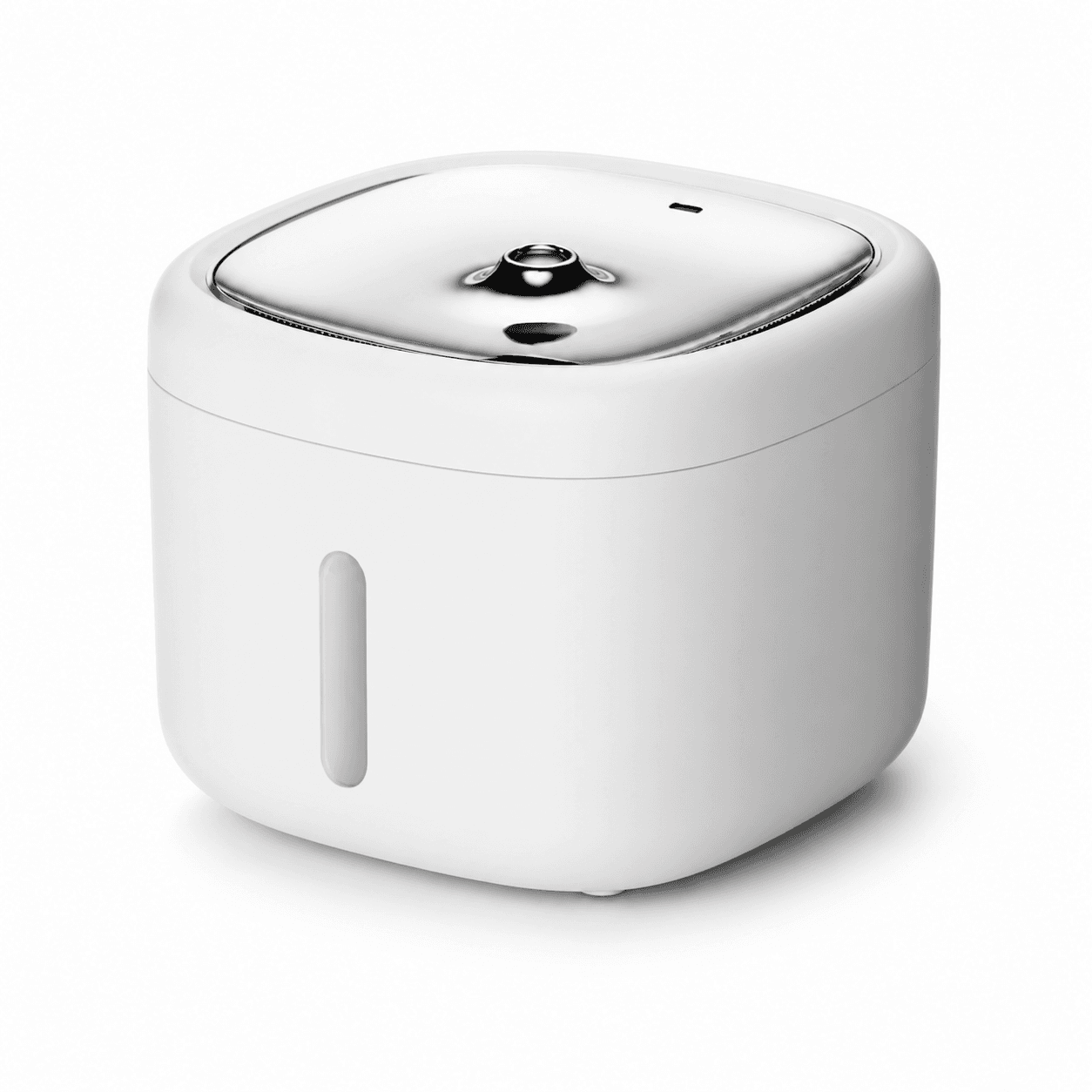
| PTM-TL100 | 2.2 L reservoir, continuous filtration, visible min/max level, low-water reminder, intelligent dry-burn protection and detachable design | Can users see low water, remove the pump and clean every circulation surface after dry-run events? |
| PTM-6131 | 2.5 L translucent reservoir, thermostatic water care, wireless UVC sterilization pump, circulation filtration, water-electricity separation and 4400 mAh rechargeable configuration | How are the cordless pump, charging interface, temperature function and UVC-related claims verified and cleaned? |
| TY08 | 304 stainless steel drinking surface, ultra-quiet circulation pump, detachable design, triple-stage filtration and cleaning brush in the confirmed configuration | Which surfaces are 304 stainless steel, and can the filter seat, pump chamber and seams be reached? |
| TY09 | 2.2 L capacity, 304 stainless steel, visible water-level window, quiet circulation pump, triple filtration and detachable cleaning | Can the water-level window seal and surrounding channel be inspected, washed and leak-tested repeatedly? |
| TY10 | 3.2 L capacity, 304 stainless steel, faucet outlet, round water-level window, quiet pump, triple filtration and detachable design | How are the faucet tube, round window, splash path, filter frame and pump cavity cleaned? |
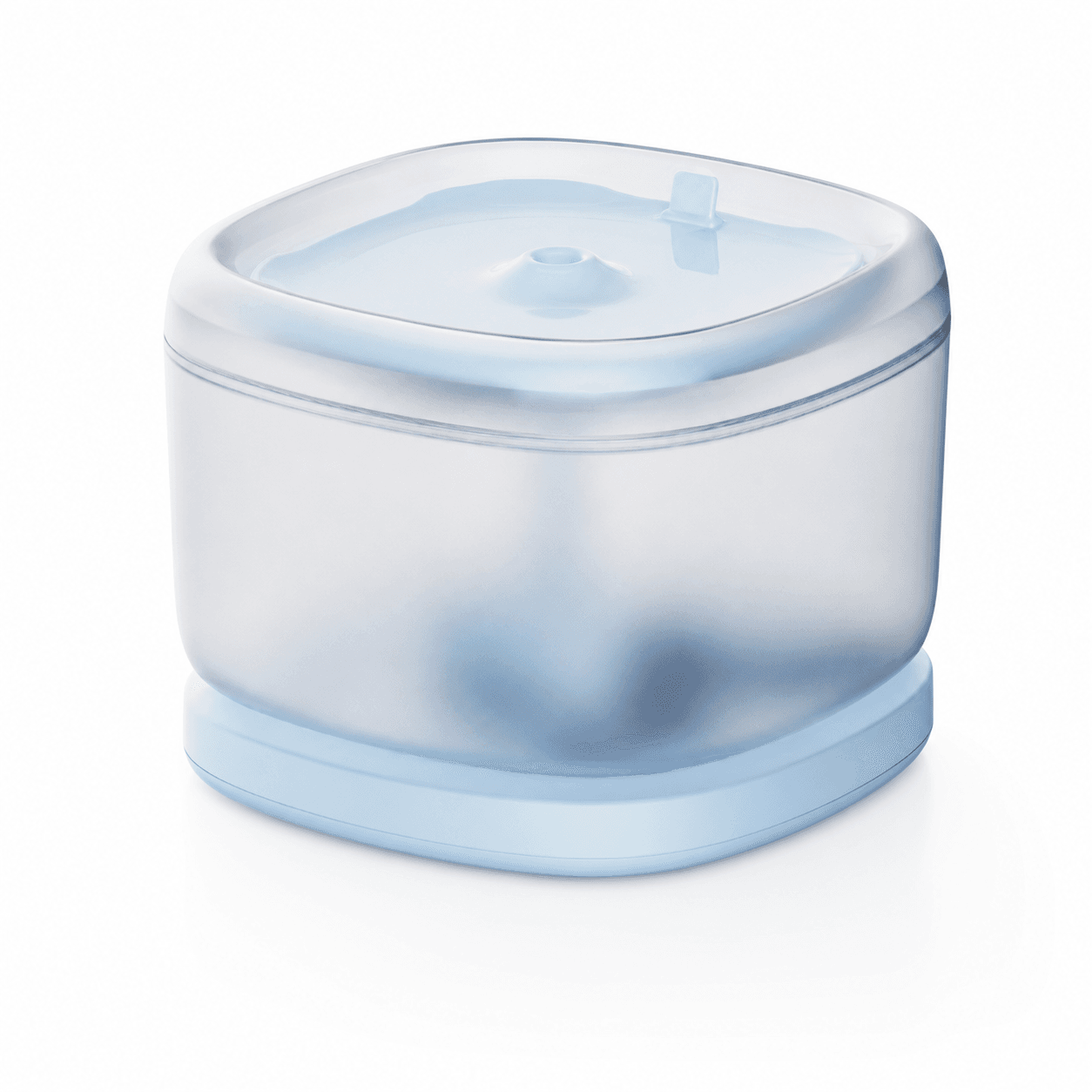
PTM-6131
For rechargeable and thermostatic functions, add charging, water-electricity separation, pump-module and claim-specific cleaning checks.

TY10
For a faucet outlet and round water-level window, pay extra attention to tube access, window seams, splash and trapped water.
9. Lock OEM Scope, Claims and Packaging Together
Logo, color, stainless-steel finish, window, pump, filter, adapter, manual and retail carton can all affect the approved configuration. Ask for MOQ and one-time charges by workstream; do not assume one low minimum covers custom material, packaging and structural changes.
Use the private-label MOQ and customization guide and smart pet product manufacturer checklist. Confirm factory capability through Haolinc’s factory information, quality and compliance process and company profile.
Package the final fountain with its pump, filter, adapter, cleaning tool and instructions. After the agreed drop, vibration or compression test, inspect dents, windows, seams, connectors and pump seating; then run a leak and circulation test. Packaging damage can create hidden hygiene problems if a seam opens or a component shifts.
10. Put Cleanability Into the Bulk-Order Acceptance Plan
Freeze the reference
Signed product specification, annotated material list, pump and filter identification, golden sample, approved packaging and manual revision.
Define repeatable checks
Disassembly/reassembly, residue inspection, pump access, filter seating, leak, flow, noise, low-water behavior and post-cleaning operation.
Control production
Incoming material and pump checks, seal/window inspection, assembly cleanliness, functional sampling, pack-out completeness and change notification.
Prepare after-sales
Cleaning videos, troubleshooting tree, replacement pumps and filters, model-specific part numbers, warranty evidence and customer-contact ownership.
A useful acceptance record says what was tested, on which model and revision, under which condition, with what result and who approved it. It does not merely say “easy to clean.” Additional sourcing material is available in the Haolinc resource center.
