
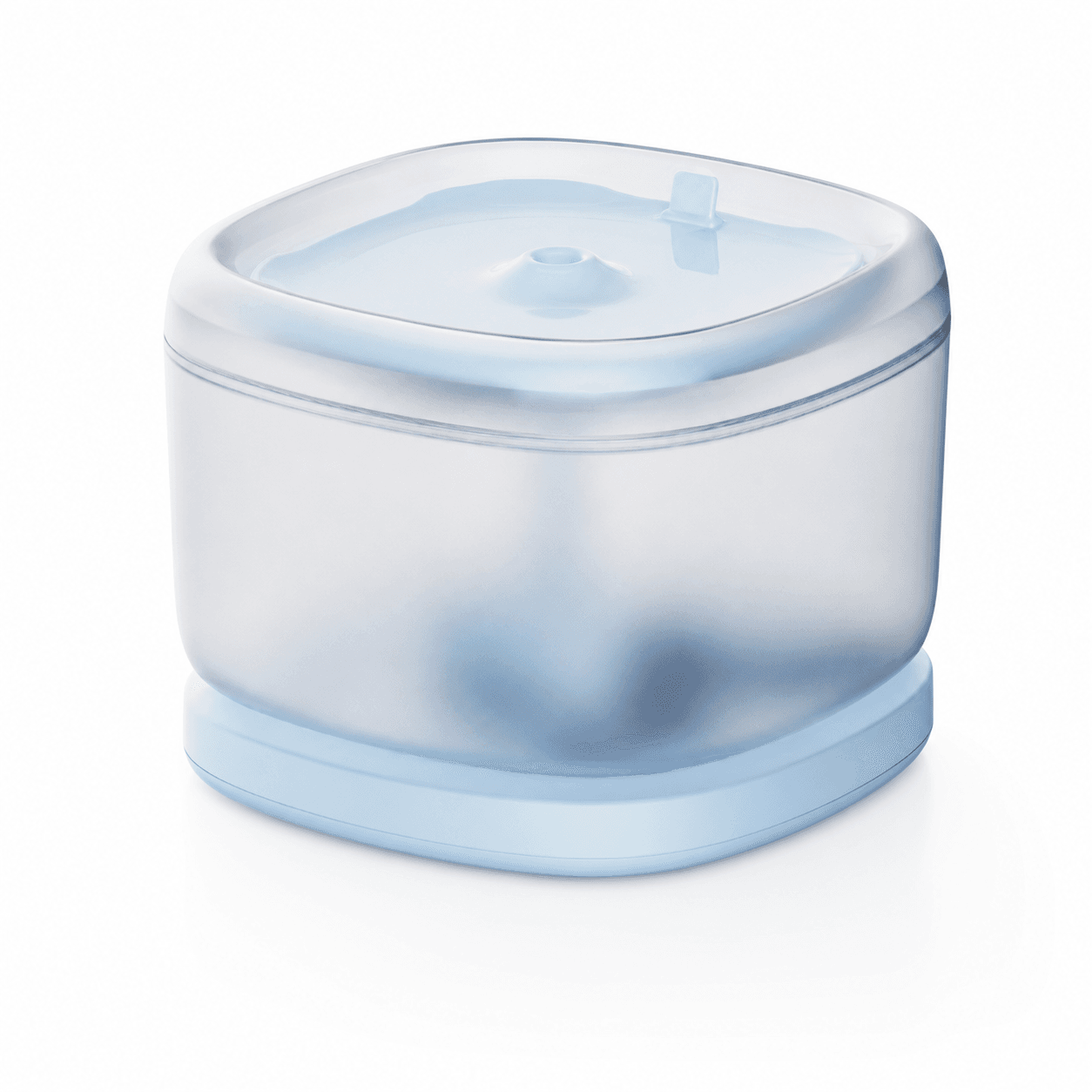
“Wireless pet fountain pump” can describe two different features. The pump may receive power without a cable crossing the removable reservoir, while the fountain itself still connects to mains power. Alternatively, the complete fountain may run from a rechargeable battery. Those designs have different failure points, cleaning procedures and customer expectations.
This guide compares the three main water-delivery architectures for distributors, retail chains, Amazon sellers and private-label brands. For filter cost and long-term pump planning, read the pet water fountain pump and filter lifecycle guide. For MOQ, packaging and branding, use the Cat Water Fountain OEM, Wholesale and Private Label Guide.
| Architecture | Main Advantage | Main Tradeoff | Best-Fit Positioning | Evidence to Request |
|---|---|---|---|---|
| Wireless pump | Cleaner reservoir removal and fewer exposed cable paths in the water area | Power-transfer alignment, contacts, controller and pump must work as one system | Premium hygiene, easy refilling and differentiated smart features | Misalignment test, wet-contact inspection, restart, cleaning and pump replacement method |
| Wired pump | Mature continuous circulation with a straightforward powered architecture | Cable routing and pump removal can add cleaning and assembly steps | Value, stainless-steel and continuous-flow product lines | Cable-seal inspection, strain relief, pump life, dry-run protection and noise test |
| Pumpless gravity dispenser | No motor noise, no pump wear and water remains available without electricity | Normally lacks active circulation and may offer simpler filtration | Simple, quiet and low-maintenance water availability | Flow control, refill hygiene, stagnation risk, valve life and spill test |
1. Define “Wireless,” “Cordless” and “Pumpless” Before Comparing Quotes
Ask the supplier for a block diagram showing the power source, controller, pump, reservoir, filter and charging parts. A wireless pump may use contactless or separated power transfer so the upper reservoir can be lifted away without unplugging a cable. That does not automatically mean the entire fountain can operate away from a wall outlet.
A cordless fountain uses stored battery energy for at least part of its operation. It may circulate continuously, at intervals or after a sensor detects the pet. A pumpless dispenser does not circulate water. Gravity or a valve replenishes an open bowl as the level falls.
2. What Buyers Should Check in a Wireless-Pump Fountain
A wireless-pump architecture can make reservoir removal easier and reduce the need to thread a pump cable through the water container. The commercial benefit is strongest when a first-time user can lift, wash and reinstall the water-contact parts without touching a plug or routing a cable incorrectly.
The added interfaces also need testing. Verify pump alignment at minimum and maximum assembly tolerance, wet-contact behavior, restart after refilling, scale buildup, accidental off-center placement and repeated removal. If the fountain is rechargeable, test the complete battery, charging and pump-control chain under the intended mode.
- Run repeated remove-and-reinstall cycles with wet hands and normal household handling.
- Record whether the pump starts when the reservoir is slightly misaligned.
- Inspect contacts, coils, seals and non-washable electronic parts after cleaning cycles.
- Measure flow and noise at high, medium and low battery states.
- Confirm the pump and charging components are available as separate spare parts.
- Lock the approved pump, controller and firmware in the production specification.
3. What Buyers Should Check in a Wired-Pump Fountain
A conventional wired pump is familiar, widely serviceable and well suited to continuous circulation. Its quality depends on the pump, cable exit, strain relief, adapter, reservoir design and the customer’s ability to remove and reinstall the assembly.

Pulling, twisting or pinching the cable during cleaning can damage a good pump. Buyers should inspect cable routing at every assembly stage, confirm the pump can be removed without excessive force and test the fountain after repeated cleaning. Ask whether the adapter and pump model will remain stable during repeat orders.
4. When a Pumpless Gravity Fountain Makes Sense
A pumpless dispenser avoids motor noise, electronic pump failure and dependence on electricity for basic water availability. That can fit a simple value proposition or a customer who prioritizes quiet operation and low component count.
The tradeoff is that standing water is not the same as continuously circulated and filtered water. Buyers must evaluate bowl exposure, refill hygiene, valve sealing, air-lock behavior, water freshness, cleaning access and spill risk. A pumpless product should not inherit circulation, filtration or freshness claims from a powered fountain.
| Pumpless Test | Method | Failure to Watch |
|---|---|---|
| Gravity refill | Observe the bowl from full reservoir to near empty | Air lock, intermittent refill or overfilling |
| Valve life | Repeat removal, refill and installation cycles | Drips, seal wear or valve sticking |
| Tip and spill | Use representative pet contact on approved surfaces | Reservoir movement or uncontrolled release |
| Cleaning | Time complete disassembly, washing, drying and reassembly | Residue inside the bottle neck, valve or bowl joint |
| Water availability | Test during power outage and near-empty conditions | Inaccessible reserve water or unclear level indication |
5. Compare the Whole Failure Chain, Not Only the Pump
Removing a cable does not remove every failure mode, and removing a pump does not remove every hygiene risk. Build a failure-mode table for the complete architecture. Include the pump or valve, power source, controller, charging parts, seals, filter, water-level detection and user assembly.

| Failure Event | Wireless Pump | Wired Pump | Pumpless |
|---|---|---|---|
| Power outage | Depends on whether the full unit has battery support | Circulation stops; bowl access depends on the physical design | Gravity delivery normally continues |
| Incorrect reassembly | Misalignment can stop power transfer or flow | Cable or pump may be routed incorrectly | Valve or reservoir may not seal correctly |
| Scale and residue | Can affect pump, contacts, channels and sensors | Can affect impeller, inlet and channels | Can affect valve, bottle neck and bowl |
| Service part shortage | Pump, base, controller or battery may be architecture-specific | Pump and adapter may be easier to standardize | Valve, gasket and reservoir remain critical spares |
6. Power Failure, Battery Runtime and Noise Need Separate Claims
For a rechargeable unit, document usable runtime in each operating mode, charging time, low-battery warning, behavior while charging and battery-replacement policy. Motion-triggered or intermittent operation can extend runtime but changes how often the water moves. Test the mode customers will actually receive.
For noise, measure the complete fountain on several common surfaces. A wireless or wired pump can transmit vibration into the base. A pumpless product removes motor noise but can still create refill bubbling or valve sounds. Publish test conditions with any decibel claim.
Use the smart pet water fountain sample-testing checklist to record pump restart, low-water protection, leaks, noise, cleaning and packaging results.
7. Cleaning and Hygiene Depend on the Entire Water Path
Wireless pump removal may simplify washing, but buyers must still identify every wet surface and every non-washable component. Wired designs need a clear cable and pump-removal procedure. Pumpless designs need access to the valve, bottle neck and bowl joint where residue can remain.
- Give the final manual to a tester who has not seen the product.
- Time disassembly, washing, drying and reassembly.
- Photograph inaccessible areas and residue after repeated use.
- Confirm dishwasher permissions for each removable part.
- Check whether seals, contacts or finishes change after repeated cleaning.
- Verify that customers cannot install a wet part onto an unsafe electrical area.
Material choice remains separate from architecture. Review the stainless-steel pet water fountain buying guide when comparing water-contact surfaces and cleaning claims.
8. Match the Architecture to the Sales Channel
| Buyer or Channel | Likely Priority | Architecture Direction to Evaluate | Required Sales Content |
|---|---|---|---|
| Amazon/private-label seller | Low setup friction, clear claims and fewer avoidable returns | Wired or wireless pump with a proven assembly and spare-part plan | Cleaning video, pump type, runtime if cordless, filter cost and troubleshooting |
| Pet retail chain | Easy staff explanation and visible feature differentiation | Wireless pump for premium differentiation or wired pump for familiar value | One-page comparison, demo steps, warranty and replacement-pump process |
| Subscription/filter program | Long-term consumable supply and repeat purchase | Powered circulation with a controlled filter platform | Filter schedule, compatible models, pack SKU and supply commitment |
| Travel, backup or simple-value channel | Water availability without mains power | Pumpless gravity or verified rechargeable architecture | Capacity, refill method, runtime where relevant and cleaning limits |
9. Haolinc Product Directions for Different Projects
The following directions use information shown on current product pages. Confirm the final pump, battery, adapter, filter, plug, package and market-specific compliance scope on the quotation and approved sample.
PTM-6131
2.5 L thermostatic platform with a wireless UVC pump direction and 4400 mAh rechargeable configuration. Prioritize runtime, charging, alignment, pump/UVC operation and water-electricity separation tests.
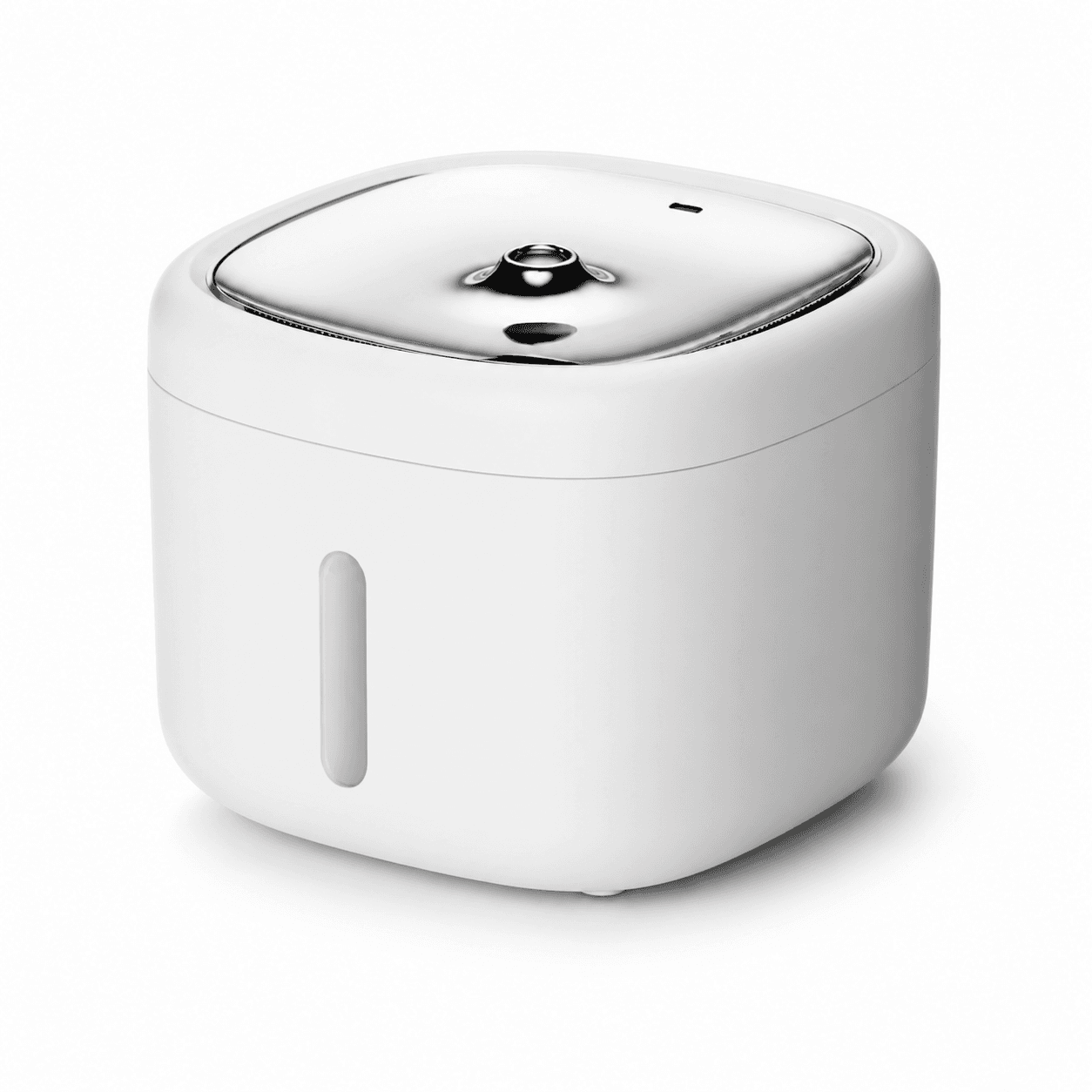
PTM-TL100
2.2 L platform with continuous filtration, visible water level, low-water reminder and dry-burn protection. Prioritize shutdown level, restart logic, pump access and cleaning.
TY09
2.2 L stainless-steel platform with a water-level window, circulation pump, filtration and detachable cleaning. Prioritize window sealing, noise, cable route and residue traps.

TY10
3.2 L stainless-steel platform with faucet outlet, round water-level window and filtration. Prioritize flow, splash, pump noise, window sealing and carton protection.
Browse the full pet water fountain product range and use the pump-life and filter-cost guide to complete the ownership-cost comparison.
10. RFQ and Sample-Test Checklist
Which pump architecture is used?
Request the pump model, power-transfer method, cable route, controller, operating mode and diagram of the complete water and electrical path.
Is the pump wireless, or is the complete fountain cordless?
State each feature separately. If battery powered, require runtime and charging data for every intended operating mode.
What happens after power loss, low water or incorrect assembly?
Test shutdown, water availability, alarm, restart and error recovery. The manual should describe the exact behavior.
Which parts must remain available after launch?
List pump, controller/base, adapter, battery, filter, valve, seals and reservoir. Set warranty stock, price, lead time and change-notice rules.
What should be locked before the bulk order?
Lock the golden sample, pump or valve, power system, filter, materials, firmware, labels, cleaning instructions, carton and acceptance limits.
Review Haolinc’s factory and quality-control process, OEM/ODM service and US and EU certification guide before approving a market configuration.
