

Consumers often ask whether a pet fountain is “easy to clean.” That description is too broad for product approval. A fountain may have a smooth bowl but still retain residue behind a water-level window, inside the pump cover, below the filter tray or around a cable seal.
For distributors and private-label brands, pet water fountain hygiene should be converted into a design review, timed cleaning trial and repeat-use inspection. This guide shows where hygiene dead zones appear, how to test them and what evidence to request before a bulk order.
| Area | Why Residue Can Remain | What the Buyer Should Check | Likely Customer Complaint |
|---|---|---|---|
| Pump and impeller chamber | Narrow cavities, removable covers and continuous wetting | Tool-free access, part identification and complete drying | Noise, reduced flow, odor or visible buildup |
| Filter housing | Edges, mesh, media dust and trapped food or hair | Water bypass, fit, removal and cleaning around the tray | Dirty filter area or weak filtration |
| Spout and return channel | Long narrow passages and corners | Brush access, disassembly and visible inspection | Slime or discoloration inside the outlet |
| Water-level window | Joint between window, reservoir and seal | Internal edge, leak test and drying after washing | Residue line, leak or cloudy appearance |
| Cable or power interface | Seal geometry and restricted washing | Safe removal, strain relief and cleaning instructions | Difficult disassembly or fear of wet electronics |
| Gaskets and seams | Moisture can remain below removable or compressed parts | Removal frequency, orientation, spare parts and reassembly | Persistent odor or incorrect installation |
1. Draw the Complete Water Path Before Approving the Design
Start where water enters the reservoir. Follow it through the pump or gravity valve, filter, outlet, drinking surface and return channel. Mark every surface that stays wet, every part the customer must remove and every area that cannot be submerged.
A useful drawing identifies materials, joints, seals, electrical boundaries and cleaning tools. It should also show what happens at minimum and maximum water level. Areas above the normal waterline can still collect splash, dust, hair and food particles.

2. The Pump Chamber Is a Common Cleaning Bottleneck
Pump covers and impellers can trap hair, mineral residue and small debris. A customer may rinse the visible pump body without opening the chamber. Flow then falls, vibration increases and the product appears defective even when the motor still operates.
Ask an unfamiliar tester to remove the pump, open the approved covers, access the impeller, clean the inlet and reassemble everything using only the final manual. Record the time, required tools and risk of installing a part backward.

- Confirm which pump parts are removable by the customer.
- Check whether an impeller tool or brush is included.
- Inspect sharp edges, small loose parts and reversed assembly.
- Measure flow and noise before and after repeated cleaning.
- Define replacement-pump compatibility and supply period.
The pump-life and filter-cost guide explains how cleaning access, replacement parts and consumables affect long-term ownership cost.
3. Filter Housings and Spouts Need Their Own Inspection
The filter tray can create a hidden wet area below the cartridge or around a poorly fitted edge. Water may bypass the filter, while media dust or hair remains in the housing. Inspect the tray with and without a cartridge, at several flow rates and after the filter begins to load.
Spouts and return channels should be wide enough for the specified cleaning tool or detachable for direct washing. Decorative flowers, faucets and multi-level waterfalls create different cleaning paths. Do not assume that visible water movement proves every channel is flushed.
Simple tracing test
Use a safe, visible test method approved for engineering evaluation to follow water through the system. After draining and rinsing, inspect where colored or suspended test material remains. This identifies low-flow pockets and joints that need closer cleaning review. Do not convert this into a microbiological claim without an appropriate laboratory method.
4. Seams, Windows and Gaskets Can Hide Residue
Water-level windows improve usability, but the interface between transparent plastic, metal or reservoir material needs inspection. Look for internal ledges, seal gaps, trapped water and areas that cannot dry. Repeat filling, washing and reassembly before judging the joint.
Removable gaskets must have a clear orientation and replacement plan. Fixed seams should withstand the intended cleaning method without opening or trapping moisture. Examine the underside of trays, feet, handles and cable pass-throughs after the fountain is moved while full.

5. Stainless Steel Does Not Make Every Wet Part Stainless
A stainless-steel reservoir or tray can provide a smooth, durable water-contact surface, but the pump, filter frame, spout, window, seals and base may use other materials. Buyers should request a part-by-part material declaration rather than applying one material claim to the complete fountain.
Geometry and finish matter alongside material. Deep corners, rough welds, folded edges and inaccessible joints can be harder to clean than a smooth removable part made from another suitable material. Confirm the stainless grade and food-contact scope for the target configuration.
Use the stainless-steel pet water fountain buying guide for material and positioning questions. Use the smart pet product certification guide to organize target-market documentation without treating certification as proof of daily cleanability.
6. Run a Timed Cleaning and Reassembly Test
- Operate the fountain with the intended filter, pump and water level.
- Give the proposed manual to a person unfamiliar with the product.
- Time draining, disassembly, pump opening, washing, rinsing, drying and reassembly.
- Record every surface the tester cannot see or reach.
- Check whether wet electrical parts are handled incorrectly.
- Refill and verify flow, noise, leak protection and correct filter seating.
Repeat the process with long hair or simulated household debris around the inlet. Test the brushes and tools that will actually ship. If dishwasher cleaning is permitted, state exactly which parts, rack position and cycle conditions are approved. Do not label the whole fountain dishwasher-safe when the pump or base must remain dry.

7. A Clean Sample Does Not Reveal Long-Term Dead Zones
Visual inspection of a new unit is only the first step. Run the fountain through repeated fill, operate, drain, wash and dry cycles. Use the target market’s expected water conditions or define the laboratory water profile. Hard-water scale, filter loading and repeated handling can expose problems that are absent on day one.
Track flow reduction, pump noise, seal condition, discoloration, residue location and time required for cleaning. Photograph the same areas at each interval. If a component cannot be restored using the approved procedure, decide whether the design, maintenance interval or replacement policy must change.
| Repeat-Use Check | Evidence | Decision |
|---|---|---|
| Flow stability | Flow or practical outlet comparison at each interval | Cleaning frequency and pump/filter acceptance |
| Residue map | Photos of pump, tray, outlet, seams and window | Design revision or cleaning-tool requirement |
| Reassembly errors | Leak, noise, no-flow or loose-part observations | Keying, labels and manual improvements |
| Drying | Time and trapped moisture after approved cleaning | Ventilation, disassembly or storage guidance |
| Wear parts | Gasket, filter, impeller and cable condition | Spare-part kit and warranty plan |
The pet water fountain sample-testing checklist adds leakage, noise, low-water protection, packaging and electrical-function tests.
8. Cleaning Instructions and Spare Parts Are Part of Product Quality
A product can be mechanically cleanable but commercially difficult if instructions omit the pump cover or show the wrong model. The final package should include a short first-clean guide, full maintenance schedule, filter orientation, pump-cleaning diagram and QR code to a model-specific video.
Plan replacement pumps, impellers, filters, gaskets, spouts, brushes and adapters before launch. Confirm part numbers, minimum order, lead time and compatibility across revisions. A silent component change can make old replacement stock unusable.
For recurring filter planning and pump responsibilities, review the Cat Water Fountain OEM, Wholesale and Private Label Guide and the wireless vs wired vs pumpless comparison.
9. Haolinc Product Directions and Hygiene Test Priorities
The table uses current product-page directions. Confirm final materials, pump, filter, power system, dishwasher permissions, accessories and cleaning procedure on the approved quotation and sample.
| Model | Product Direction | Priority Hygiene Review |
|---|---|---|
| PTM-6131 | Wireless UVC pump and rechargeable direction | Inspect pump alignment, charging interfaces, channels and every removable wet part |
| PTM-TL100 | 2.2 L filtration platform with low-water reminder and dry-burn protection | Test low-water residue, sensor access, pump chamber, restart and filter housing |
| TY08 | 3 L quiet stainless-steel circulation direction | Map the complete water path, cable route, pump inlet and stainless/plastic interfaces |
| TY09 | 2.2 L stainless-steel platform with strip water-level window | Inspect the window seal, internal edges, faucet path, pump and reassembly |
| TY10 | 3.2 L stainless-steel platform with round water-level window and faucet outlet | Test the larger reservoir, window joint, outlet, filter tray and cable path |
| PTM-663 | 3 L filter-free smart water-dispenser direction | Verify how the filter-free structure controls debris, cleaning frequency and replaceable wear parts |
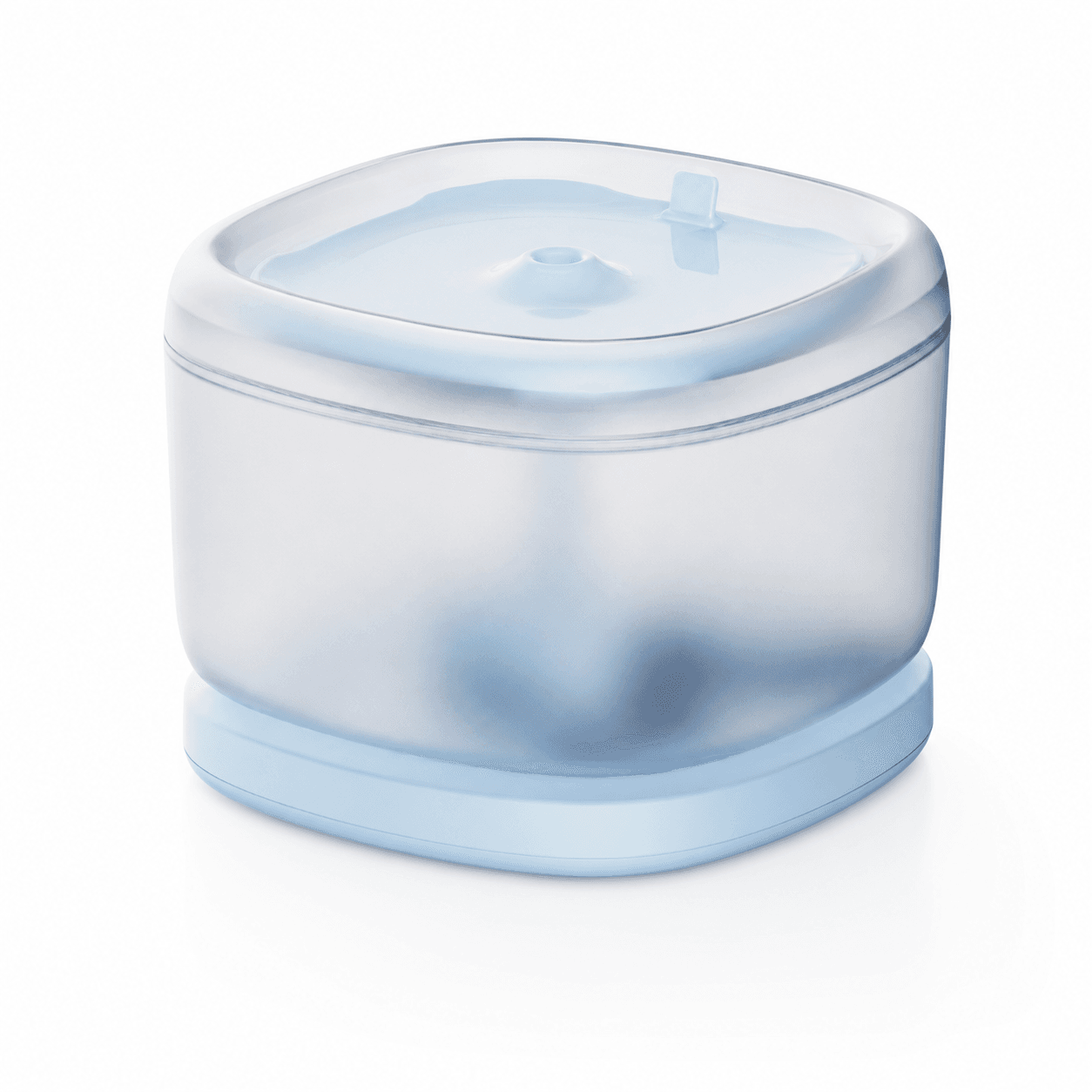
PTM-6131
Review reservoir removal, pump alignment, UVC-pump interfaces, charging parts and complete drying.
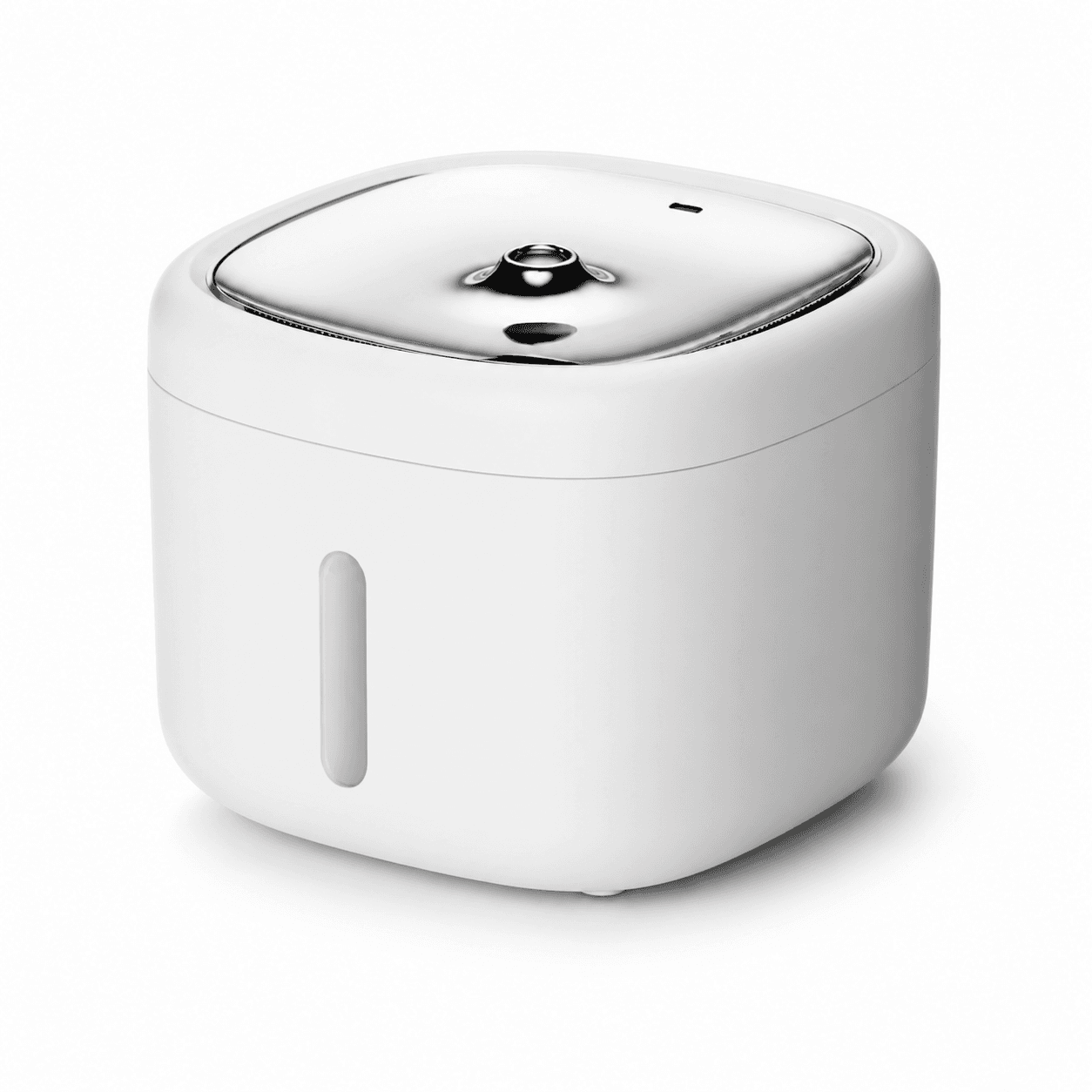
PTM-TL100
Inspect the filter path, low-water area, sensor access, pump protection and restart after cleaning.

TY09
Focus on the strip-window joint, faucet channel, cable route, filter tray and pump chamber.

TY10
Test reservoir handling, round-window seal, outlet cleaning, filter access and post-wash assembly.
10. Convert Hygiene Into an OEM Acceptance Standard
Approve a written water-path diagram, part-level material list, cleaning procedure and golden sample. Define what the factory checks on every unit and what is verified by sampling. Include leak testing, pump operation, cable routing, filter fit, surface finish, accessory completeness and model-specific instructions.
During pilot production, repeat the cleaning and reassembly study on randomly selected finished units. Confirm that tooling, seals and component tolerances have not created new traps. Add traceability for pump, reservoir and filter revisions.
| Approval Item | Required Evidence | Bulk-Order Control |
|---|---|---|
| Water path | Diagram and component list | Locked structure and change notification |
| Cleanability | Timed disassembly, wash, dry and reassembly trial | Approved manual, tools and inspection sample |
| Materials | Part-level declaration for water-contact surfaces | Incoming material controls and supplier traceability |
| Repeat use | Residue, scale, flow, noise and seal observations | Durability sample plan and wear-part policy |
| Support | Maintenance video and spare-part matrix | Inventory, compatible part numbers and service process |
Review Haolinc’s factory and quality-control process and OEM/ODM service before freezing the private-label configuration.
Conclusion: Hygiene Is a System Property
A smooth bowl is useful, but it is not a complete hygiene design. The real product includes the pump, impeller, filter housing, outlet, seals, window, cable interface, tools, manual and replacement parts. Each can improve or weaken the customer’s cleaning experience.
Map every wet surface, test the final unit after repeated operation and convert the results into clear instructions and production controls. That gives buyers better evidence than a generic “easy to clean” claim and reduces avoidable odor, noise and support complaints.
