

One of the most important questions buyers ask an automatic pet feeder manufacturer is: “Will replacement tags, motors and dispensing parts remain available after the first order?” The answer affects warranty cost, customer ratings, reorder confidence and the useful commercial life of a product line. This guide shows importers, distributors and private-label brands how to evaluate that answer without relying on vague promises.
| Part class | Examples | Recommended buyer control |
|---|---|---|
| Customer accessory | RFID tag, bowl, lid, adapter, desiccant holder | Retail-ready SKU, compatibility label and reorder price |
| Wear or food-path part | Rotor, paddle, seal, chute or removable insert | Cleaning instructions, material record and change control |
| Field-replaceable module | Motor/gear module, control panel, camera or power board | Diagnostic rule, trained replacement process and serial trace |
| Factory repair part | Internal harness, calibrated sensor or structural assembly | Return/credit route rather than uncontrolled customer repair |
1. Start With the Service Promise
The correct stock level depends on what the distributor promises. A marketplace seller that replaces complete units uses a different plan from a retailer with a local repair center. Define the warranty period, first-response time, acceptable downtime and who pays freight before asking for a spare-parts ratio.
- Which issues can customer support solve by cleaning, reset or app guidance?
- Which accessories can the pet owner safely replace?
- Which modules can a trained technician replace without recalibration?
- Which faults require a whole-unit exchange or factory analysis?
Align this policy with the supplier’s quality and compliance process and your own channel obligations. A “two-year supply” promise is incomplete unless it specifies compatible revisions, forecast rules and discontinued-part handling.
2. Map Customer Symptoms Before Ordering Parts
Do not translate every complaint into a motor replacement. “No food dispensed” may come from kibble bridging, a blocked chute, incorrect assembly, a schedule issue, a power interruption or an actual drive failure. Create a symptom-to-action tree using results from the portion accuracy and anti-jam test and offline and power-failure test.
| Reported symptom | First checks | Possible service outcome |
|---|---|---|
| Missed meal | Schedule, power, food shape, hopper level, chute and logs | Guidance, cleaning part or verified drive module |
| Wrong portion | Food density, rotor installation, calibration and repeated measurement | Usage correction, rotor or controlled replacement |
| RFID access fails | Tag pairing, tag position, battery/power, reader zone and lid obstruction | New tag, pairing support or technical escalation |
| Abnormal noise | Foreign object, food jam, fastener, rotor contact and gearbox | Cleaning, food-path part or motor/gear unit |
3. Build a Four-Level Spare-Parts List
Ask the supplier for a bill of service parts linked to the exact feeder model and version. For each line, record the part number, photo, compatible serial range, unit cost, lead time, minimum reorder quantity, shelf/storage condition and replacement authority. Review the list again whenever hardware, firmware, adapter or tooling changes.
The manufacturer evaluation guide and 12 supplier questions can be used during due diligence. A strong supplier should explain what is field replaceable and what is not—not merely send a box of mixed parts.
4. Treat RFID Tags as Configured Components
Replacement RFID tags are not automatically universal. Confirm operating technology, programming or identity format, pairing logic, permitted number of pets, user reset procedure and the product revision. Test a replacement tag against a production-equivalent feeder and app account before creating a retail accessory SKU.
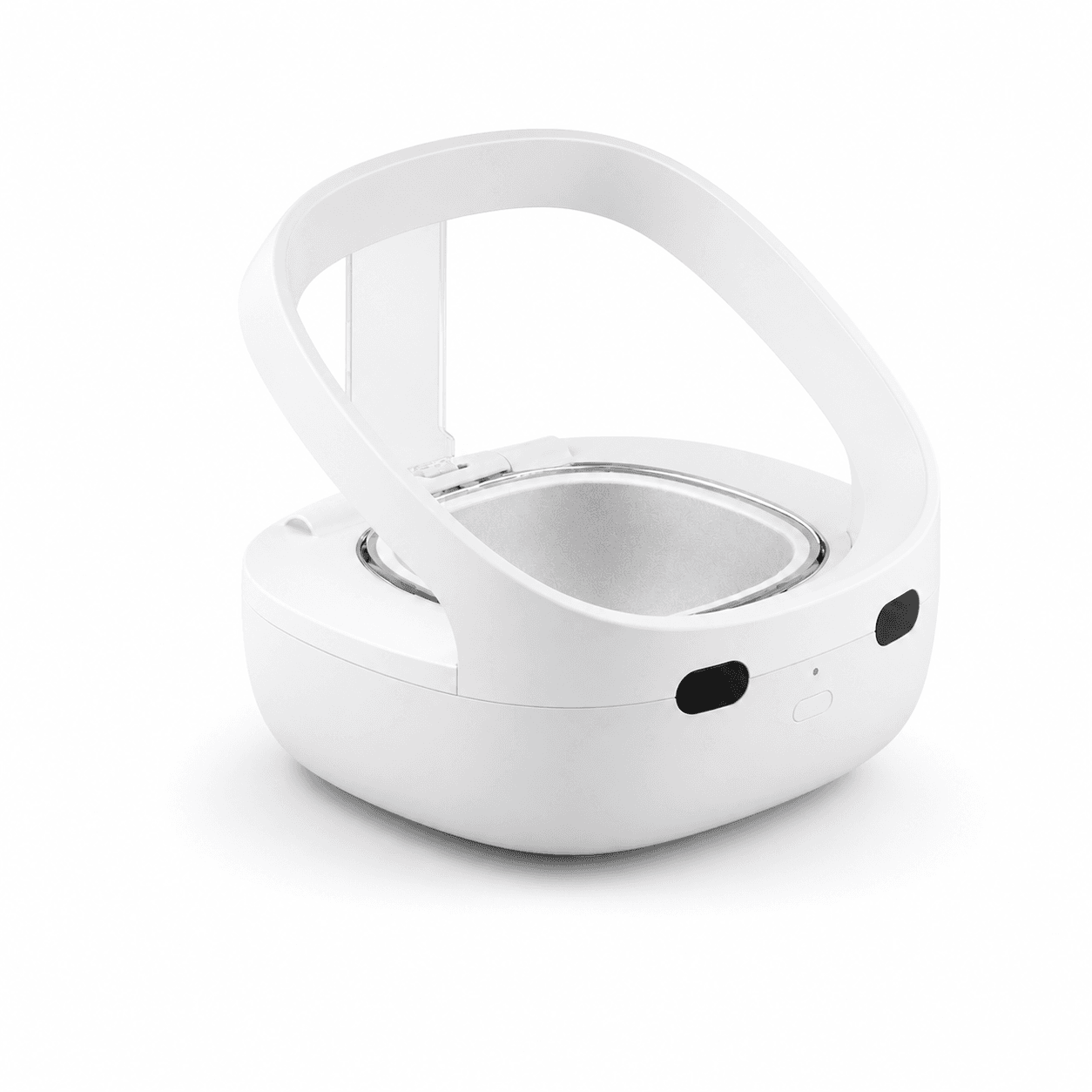
Packaging should identify the compatible model family without exposing confidential pairing data. Support scripts must also distinguish a lost tag from a reader, lid or account issue.
5. Decide Whether to Replace a Motor, a Drive Module or the Unit
A bare motor may be inexpensive but difficult to install consistently. A preassembled motor/gear/rotor module can reduce service time and assembly errors, while a whole-unit exchange may still be safer for sealed, calibrated or high-risk failures. Compare total resolution cost: part, labor, diagnostic time, two-way freight and repeat-failure risk.
Require photographs or video for the diagnostic workflow, connector identification, fastener control and post-repair feeding test. Keep mains-powered or battery-safety work within authorized procedures.
6. Keep Food-Contact Parts Available and Traceable
Bowls, lids, hoppers, rotors and removable chutes are often requested because of loss, damage or hygiene—not a manufacturing defect. They can become profitable accessory SKUs while reducing whole-unit returns. Confirm food-contact material documentation, dishwasher claims where applicable, cleaning method and fit after repeated assembly.
If the brand changes color or finish, decide whether service parts must match cosmetically. Include replacement bowls and accessories in the custom pet feeder project and private-label packaging plan.
7. Calculate Stock From Evidence, Not a Universal Percentage
A practical planning formula is: installed base × verified part-specific failure rate × replenishment lead time, then add a launch buffer for uncertainty and channel response. Use cohort data by model and production batch. Remove support cases solved without parts, or the forecast will be inflated.
- Start with pilot and sample-test observations.
- Track every case by symptom, root cause, part used and resolution.
- Review stock monthly during launch and less often after the rate stabilizes.
- Set reorder points from actual supplier lead time and shipping time.
- Age or scrap incompatible stock after an approved design change.
Do not let one ratio cover all parts. Tags and bowls may have customer-loss demand; motors and boards should follow verified technical failure demand.
8. Control Versions, Serial Numbers and Engineering Changes
A physically similar rotor, board or tag may not work with another revision. The supplier should connect finished-unit serial or batch records to hardware, firmware and critical component versions. A change notice should state compatibility, reason, implementation date, remaining old stock and service impact.
Review these controls during an automatic pet product factory assessment. For regulated markets, also confirm whether a changed wireless module, adapter or material affects the evidence described in the US and EU certification guide.
9. Match the Service Plan to Each Feeder Platform
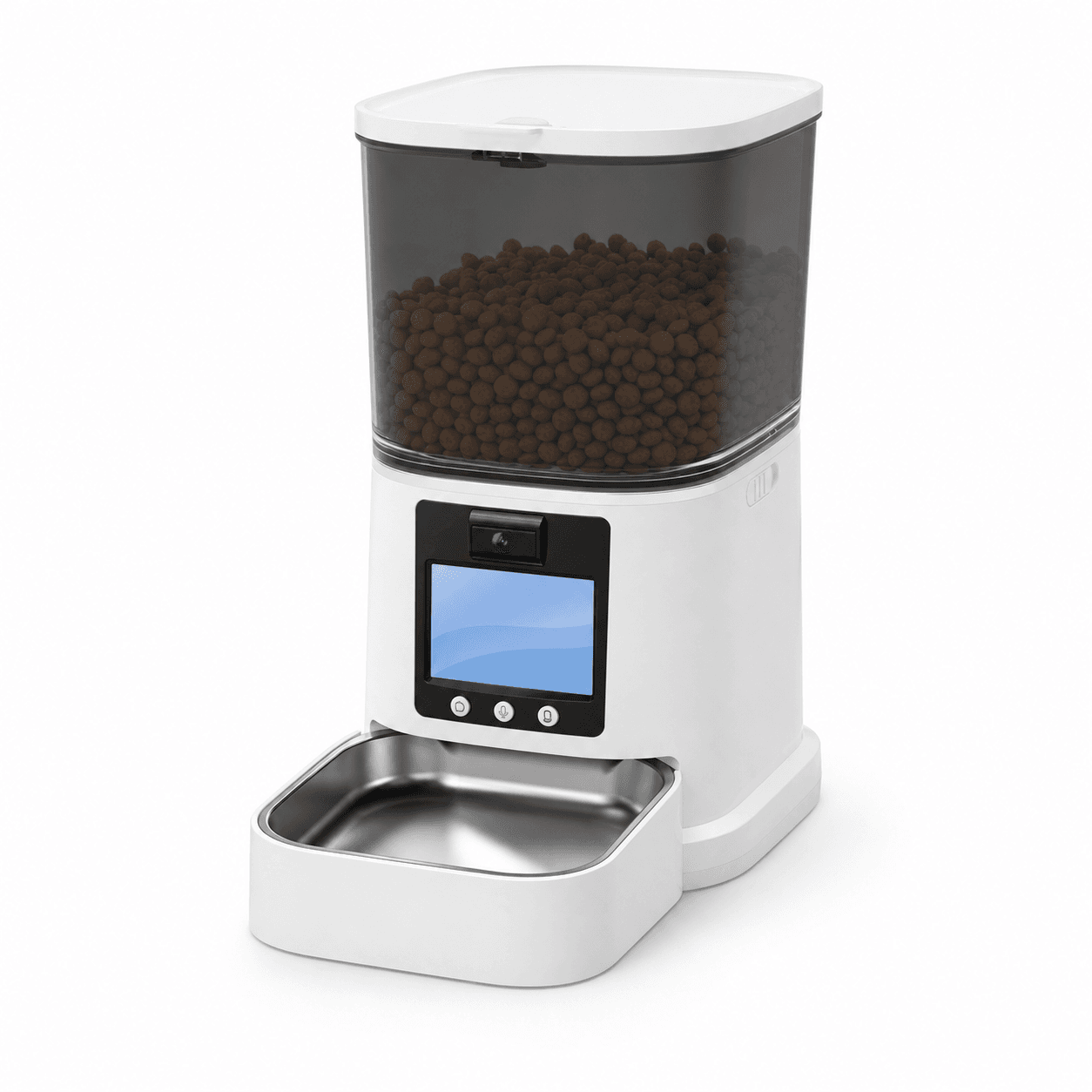
RFID controlled-access feeder
Prioritize compatible tags, lid and access components, bowl/food-contact parts and pairing diagnostics.
PTM-90A1 4 L RFID platform
Confirm the exact RFID, Wi-Fi, app, adapter and dispensing revision before assigning service SKUs.
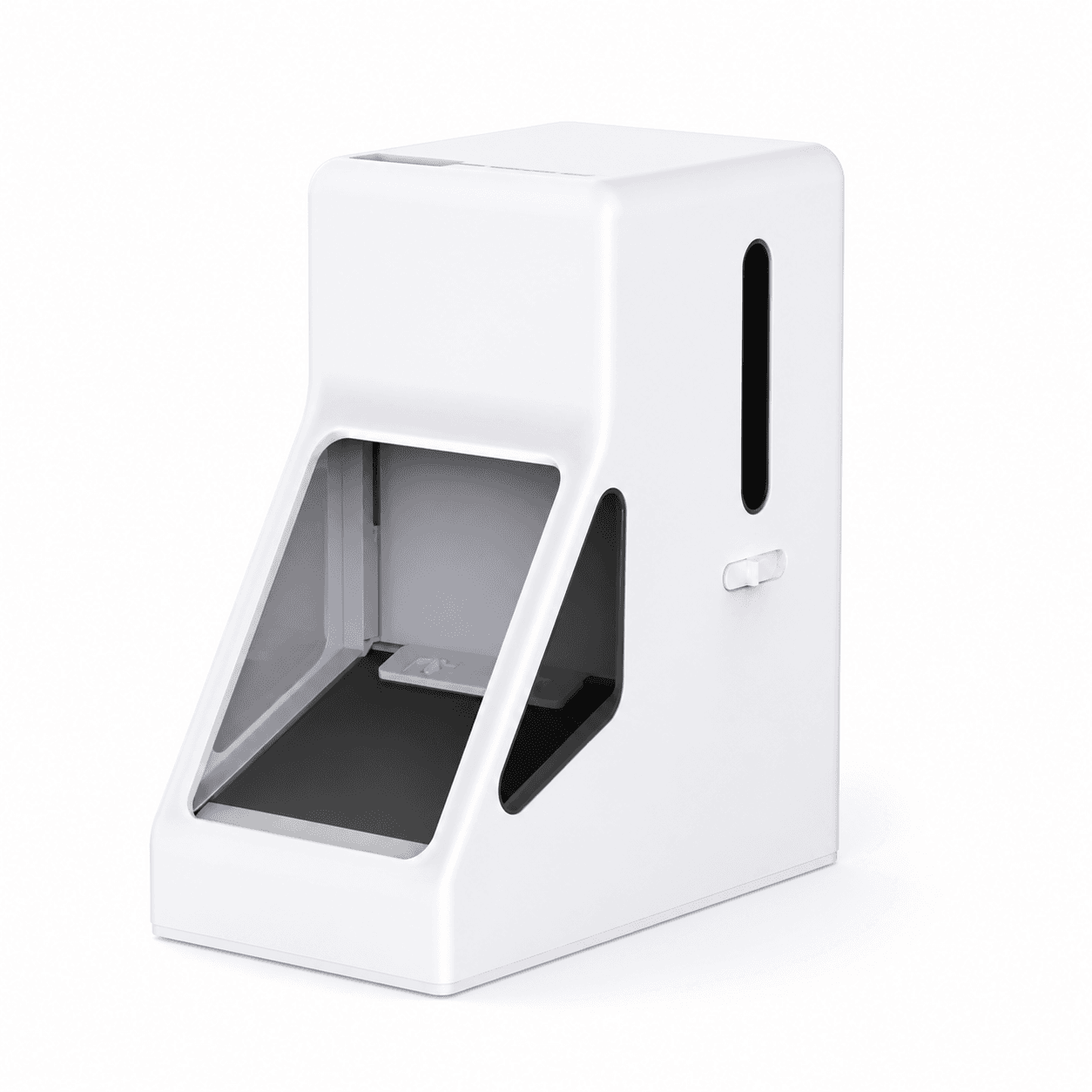
PT03S camera feeder
Add camera, connectivity and account diagnosis to the physical food-path service process.
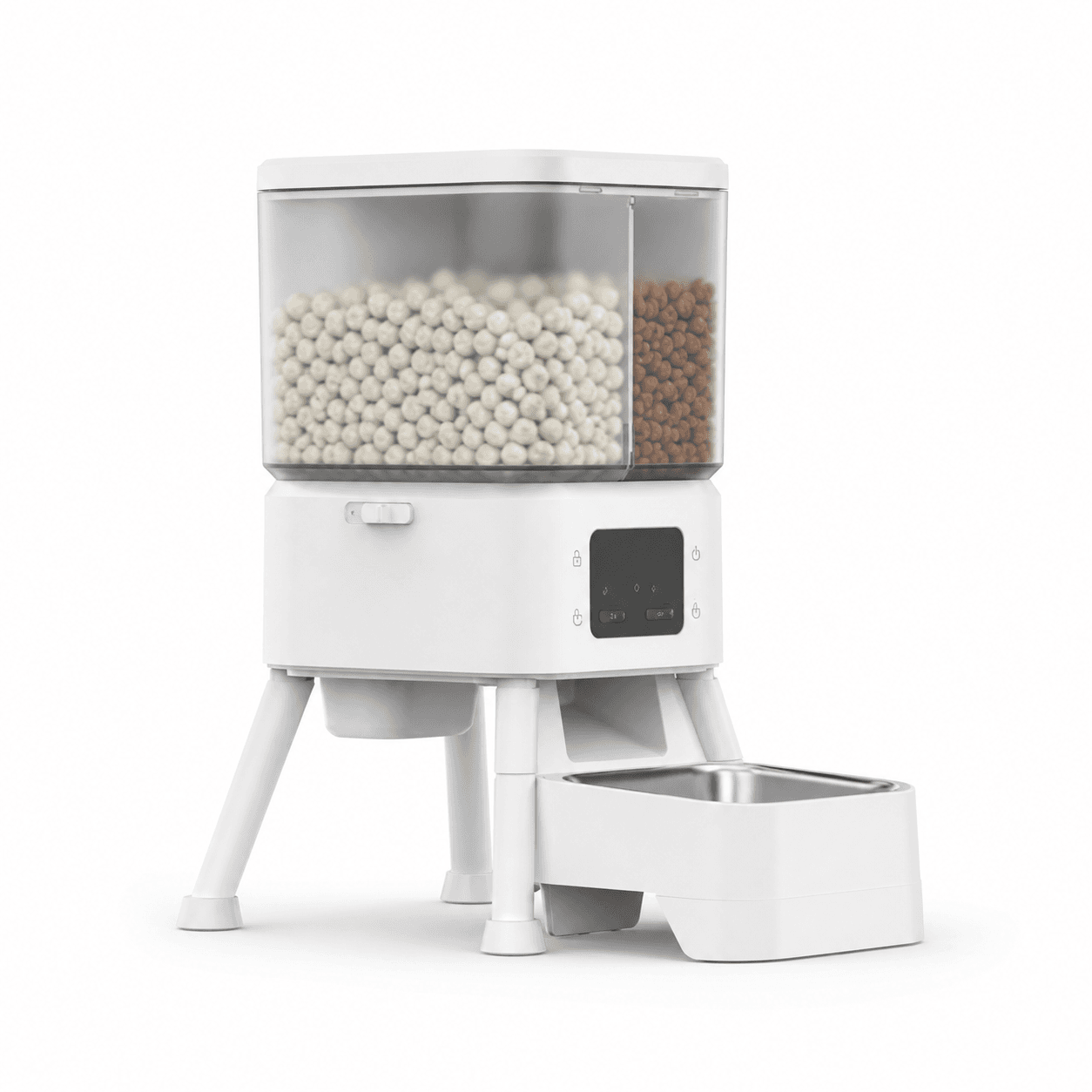
PTM-20 dual-grain platform
Identify each hopper, dispensing path and accessory separately to prevent incorrect replacements.
Review the full automatic pet feeder range before combining models under one after-sales policy.
10. Put Long-Term Support in the Supplier Agreement
The agreement should list supported models, part numbers, current prices or price-review mechanism, reorder MOQ, forecast process, normal replenishment lead time, compatibility notices, documentation, warranty responsibility and end-of-life notice. Include a final-buy opportunity when a critical part is discontinued.
For a new program, approve service parts with the golden sample and include them in pre-shipment inspection. Connect the plan to your private-label launch process and OEM/ODM workstream.
