

This guide answers a common distributor question from our buyer-question library: What are the MOQ, sample test, lead time and tiered prices for an automatic pet feeder wholesale order? It shows how to build an RFQ that suppliers can quote consistently and how to avoid costs that appear after sample approval.
| Cost layer | What the buyer should confirm | Evidence to request |
|---|---|---|
| Product | Model, capacity, control method, power, bowl, food range and accessories | Signed specification and approved sample |
| Customization | Logo process, color, packaging, manual, voice, firmware and app scope | Itemized quotation and artwork approval |
| Compliance | Target country, exact wireless module, adapter and document scope | Model-matched reports and label files |
| Quality | Inspection level, portion test, anti-jam test, aging and pre-shipment checks | Acceptance criteria and inspection record |
| Logistics | Carton dimensions, gross weight, units per pallet and shipping term | Packing list and packaging specification |
| After-sales | Warranty, spare parts, failure evidence and compensation process | Written support terms and spare-parts list |
1. MOQ Changes With the Configuration
The MOQ for a neutral stock configuration can differ from the MOQ for a custom color, printed housing, retail box or white-label app. Ask for a separate minimum quantity for each customization layer. This prevents a low headline MOQ from being combined with an unplanned packaging or component minimum later.
| Configuration | Main MOQ driver | Buyer decision |
|---|---|---|
| Neutral standard product | Available production plan and standard components | Useful for early channel testing |
| Logo only | Printing method, setup and placement | Confirm durability and sample appearance |
| Custom retail packaging | Carton-printing and insert quantities | Freeze language, barcode, warnings and dimensions |
| Custom color or tooling | Material batch, painting, mold or component change | Require color standard and engineering approval |
| White-label app or firmware | Development, account, server and maintenance scope | Treat software as a separate project workstream |
For broader sourcing preparation, review the private-label MOQ and customization guide and the automatic pet feeder manufacturer evaluation guide.
2. Use Samples to Close Technical and Commercial Gaps
A sample order should test the exact platform you may purchase, not a visually similar unit. Record hardware version, firmware, app version, adapter, accessories and packaging. Test local kibble because particle size, shape, oil level and fragility affect dispensing.
- Measure single-feed and daily cumulative portion variation.
- Run low, medium and high hopper levels.
- Test the approved kibble range and controlled obstructions.
- Interrupt Wi-Fi and power before, during and after a meal.
- Wash and reassemble every food-contact component.
- Confirm the sample fee, freight, modification rounds and whether a later bulk order changes those charges.

Use the portion-accuracy and anti-jam test method and the Wi-Fi and power-failure test guide as acceptance references.
3. Compare Tiered Prices on the Same Basis
Ask every supplier to quote the same quantity bands, Incoterm, currency, payment terms and validity period. A tier may fall because of production efficiency, packaging quantity or component purchasing. It may also exclude an adapter, RFID tags, printed manual, app fee or inspection that another quote includes.
For each tier, request the unit price, one-time charges, expected lead time, carton data and spare-parts allowance. Keep optional features in separate rows so the buying team can see the incremental cost of Wi-Fi, camera, RFID, dual hoppers or custom packaging.
4. Calculate Landed Cost and the After-Sales Reserve
A distributor margin model should start with landed cost: product, customization, packaging, inspection, certification work, freight, insurance, duty, local delivery and payment charges. Then add a realistic support reserve for replacement accessories, returns, customer service and warranty logistics.
| Cost group | Typical questions | Common omission |
|---|---|---|
| One-time project cost | Artwork, tooling, firmware, app setup, testing | Allocated across too few first-order units |
| Per-unit cost | Feeder, adapter, bowl, tag, printed materials | Optional accessories quoted separately |
| Logistics cost | Carton volume, pallet plan, route and import charges | Using product weight instead of packed volume |
| Operating cost | Server, app maintenance, consumables and support | Evaluating only the first purchase |
| Risk reserve | Defect handling, spare parts and returns | Assuming every failure requires a whole-unit replacement |
5. Lead Time Is a Critical Path, Not One Number
Separate sample preparation, sample testing, modification, artwork approval, material purchasing, production, inspection and shipping. The longest dependent activity controls the launch date. Custom packaging can delay a project even when the feeder itself is ready.
Ask which date starts the clock: deposit, specification approval, artwork approval or material confirmation. Add buyer review time and transport time to the production estimate. For seasonal launches, reserve time for rework after inspection instead of scheduling shipment immediately after assembly.
6. Price Customization by Workstream
Logo, color, packaging, manual, voice prompts, accessories, firmware and app branding are different workstreams. The automatic pet feeder customization guide explains the choices. Your quotation should identify ownership of artwork, tooling, firmware and software accounts, plus change limits and recurring fees.
Confirm whether packaging affects carton volume and whether a branded accessory increases the service-parts MOQ. Require a signed golden sample or an approved visual standard before mass production.
7. Separate App, Server and Compliance Costs
Connected feeders may include app account setup, cloud services, updates, privacy work, regional hosting or third-party platform charges. Ask who owns the developer account, user data and admin access, and what happens if the supplier or platform changes service terms.
Compliance also depends on the exact configuration and market. A button feeder, Wi-Fi feeder, RFID feeder and camera feeder may not share the same document scope. Use the US and EU certification guide, then ask for reports that match the quoted model, wireless module, power supply and brand labeling.
8. Match the Platform to the Channel Before Requesting Price
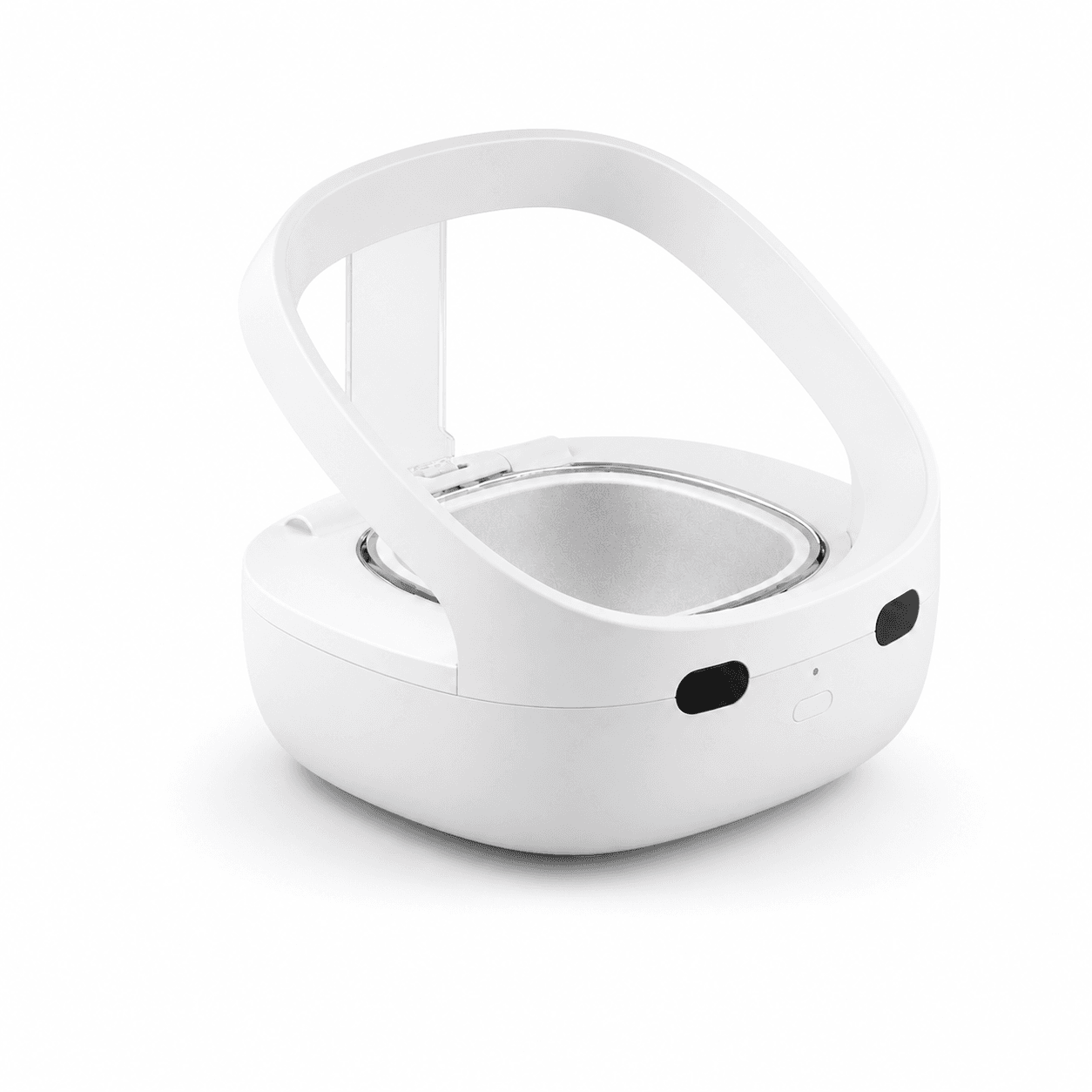
RFID controlled-access feeder
Evaluate tag logic, lid response, food access, cleaning parts and the number of included tags. Suitable when individual diet access is central to the product story.
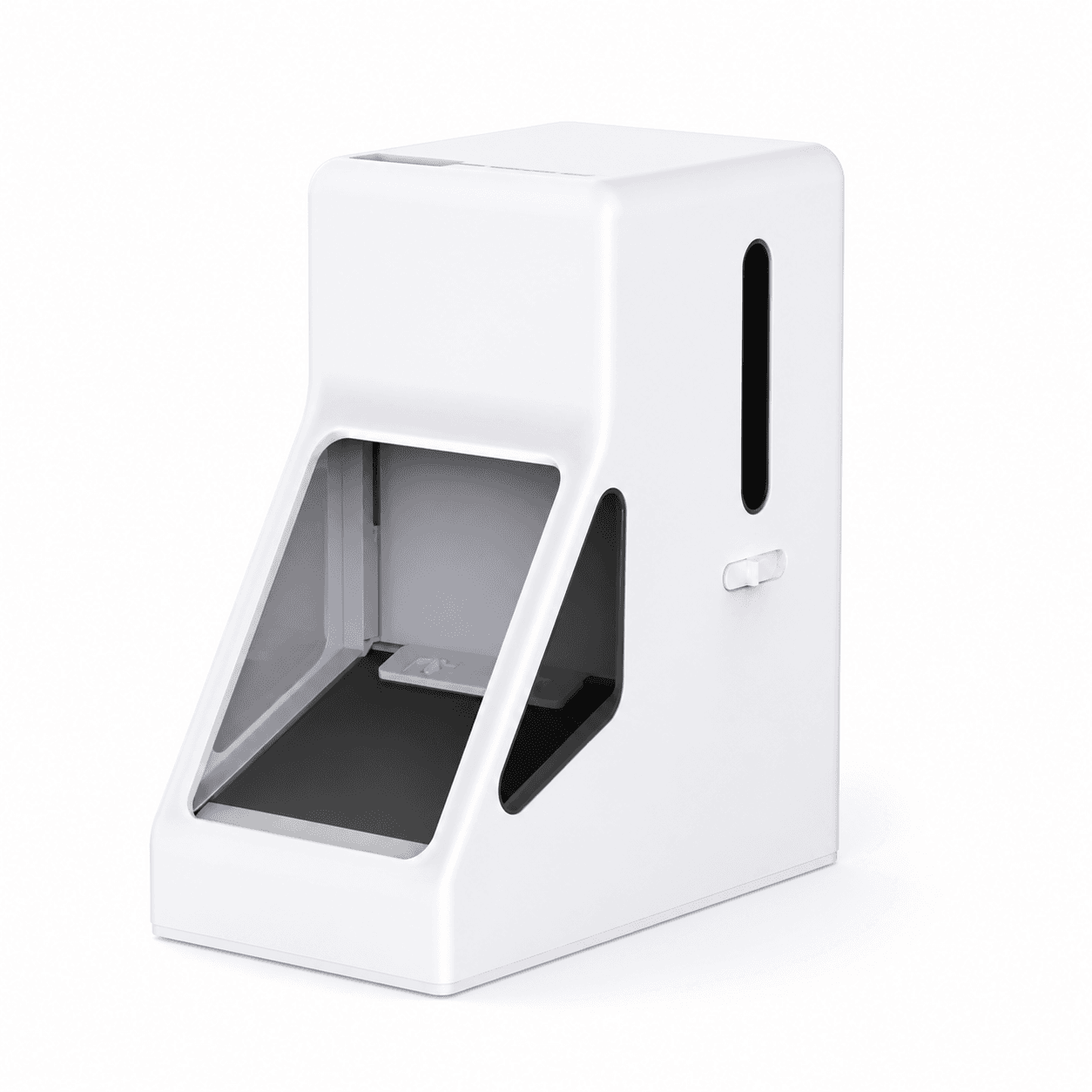
PTM-90A1
A 4 L Wi-Fi and RFID direction. Quote the approved app, tag, power and packaging configuration together.
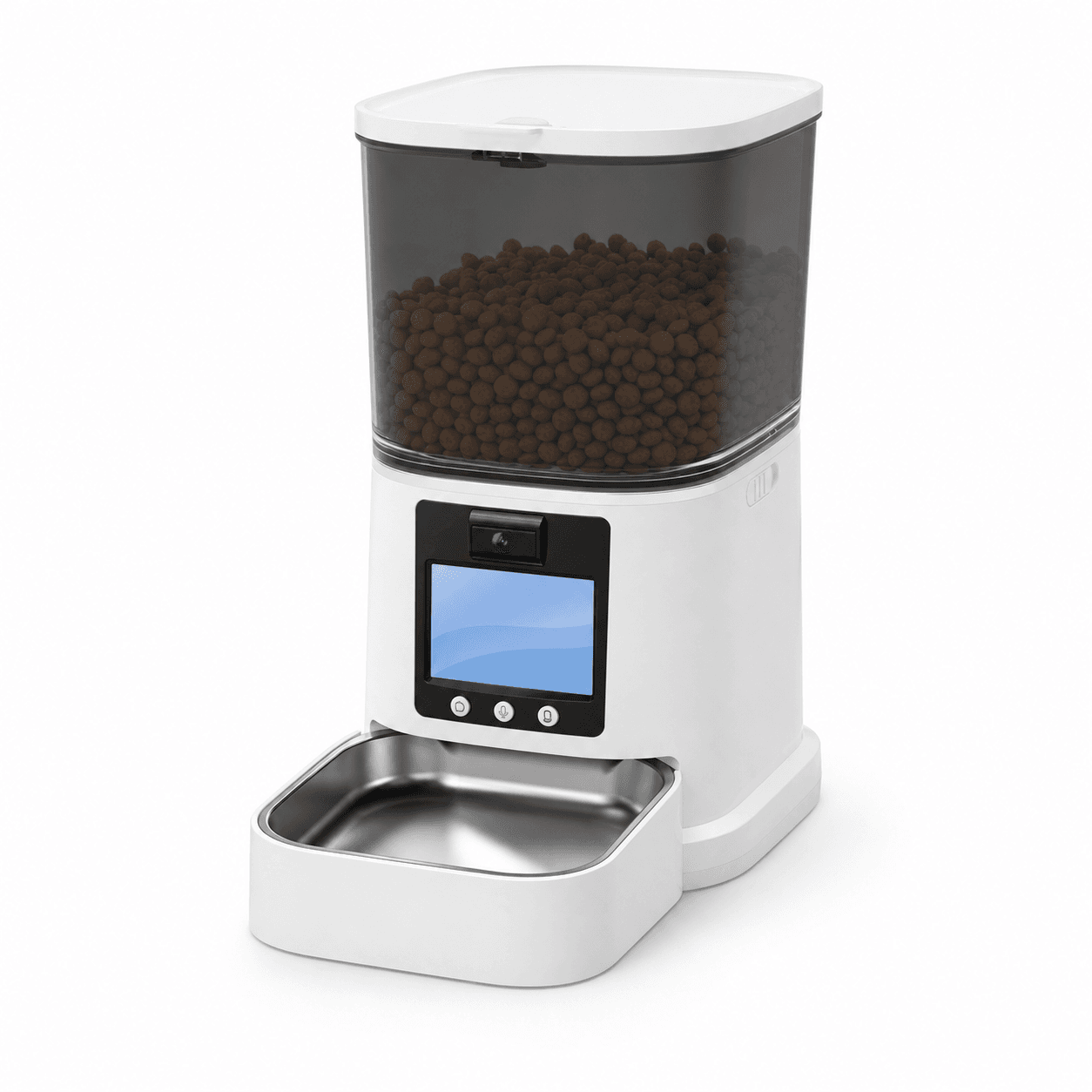
PT03S camera feeder
A 5 L camera platform with app interaction. Include camera, privacy, server and support scope in the cost model.
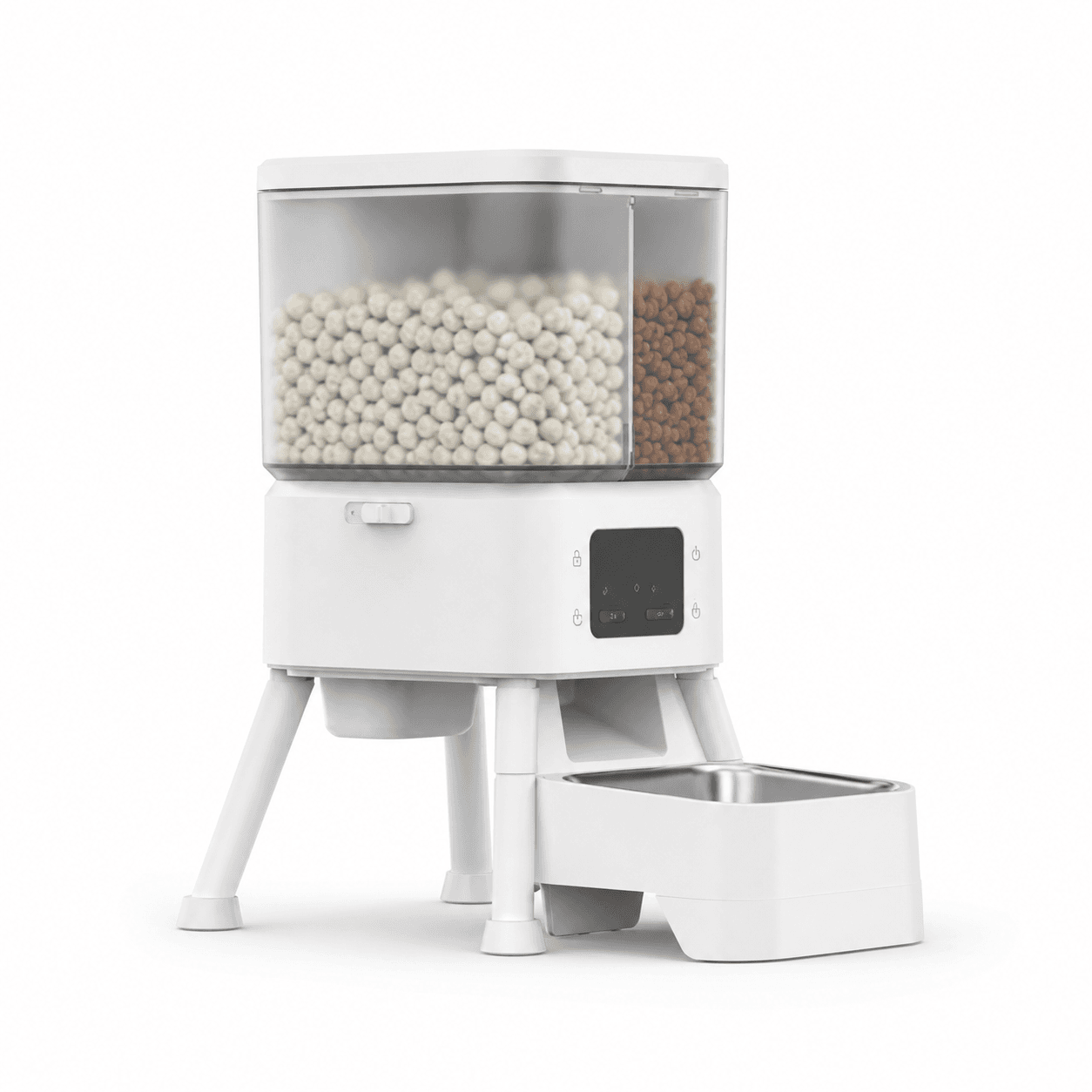
PTM-20A1 / PTM-20A3
Two 2 L food paths with button or Wi-Fi directions. Verify independent dispensing, packaging accessories and channel fit.
Browse the full automatic pet feeder wholesale range before freezing the shortlist.
9. Protect Reorders From Silent Changes
First-order price is less important if the next order changes materials, adapter, motor, firmware or packaging without approval. Ask the supplier to lock critical specifications, retain an approved sample and notify the buyer before substitutions. Confirm reorder MOQ, lead time, component availability and the planned support period for tags, motors, bowls and dispensing parts.
Connect these controls to the supplier’s quality and compliance process and factory capability.
10. RFQ Checklist for a Comparable Wholesale Quote
Product and market
Target country, channel, model, capacity, food type, control method, power, quantity bands and expected launch date.
Customization and compliance
Logo, color, packaging, languages, app scope, adapter, label, test reports and buyer-owned artwork.
Quality and support
Sample tests, inspection standard, warranty, spare-parts ratio, failure evidence, response time and change notification.
Commercial terms
Incoterm, payment, quote validity, tooling ownership, one-time fees, recurring fees, production lead time and reorder conditions.
For additional supplier due diligence, use the 12 questions to ask an automatic pet feeder manufacturer.
