

Pet GPS tracker buyers often ask for one “global” SKU covering the United States, the European Union and the United Kingdom. That request sounds efficient, but radio hardware is usually sold in regional variants. Bands used by operators differ, carrier approvals differ and the SIM may roam through different partner networks in each country.
This guide explains how to build a defensible compatibility matrix before selecting a modem or approving a sample. For hardware, packaging, MOQ and branding, start with the Pet GPS Tracker OEM, Wholesale and Private Label Guide. For connectivity fees and service ownership, use the pet GPS tracker subscription and cloud cost guide.
| Compatibility Layer | Question | Evidence | Risk if Missing |
|---|---|---|---|
| Radio hardware | Which exact LTE bands and technologies does the production modem support? | Module part number, datasheet, hardware revision and antenna specification | No service or weak coverage on target networks |
| SIM and network | Which home and roaming operators can the SIM use in each country? | Country/operator matrix, APN profile, roaming rules and commercial agreement | A supported band exists, but the SIM cannot register |
| Certification | Which approvals cover the final tracker configuration? | Device-level reports, certificates, IDs, model names and variants | Launch delay, operator rejection or compliance exposure |
| Firmware | How are bands, network selection, power saving and reconnect logic configured? | Release note, configuration record and failed-connection logs | Battery drain, delayed recovery or inconsistent regional behavior |
| Field performance | Does it connect and report reliably in the intended use areas? | Production-SIM tests across urban, indoor, rural and weak-signal routes | Returns despite a technically compatible datasheet |
1. GPS Finds the Position; LTE Delivers It
GNSS receivers use satellite systems such as GPS, Galileo, GLONASS or BeiDou to calculate a position. LTE is the cellular communication layer that sends device data to the server and the owner’s app. A tracker can obtain a satellite fix but still fail to report it when cellular registration, data service or cloud communication is unavailable.
This distinction changes testing. Record GNSS time to first fix, position accuracy, LTE registration time, data-session success, server receipt and phone notification as separate events. A map pin appearing eventually does not prove that geofence or live-tracking alerts meet the promised timing.
2. Why Regional LTE Modem Variants Exist
An official 2026 specification for the Quectel EC25 series provides a useful illustration. Its EC25-AF North American variant lists LTE-FDD bands B2, B4, B5, B12, B13, B14, B66 and B71. Its EC25-EU and EC25-EUX EMEA variants list LTE-FDD B1, B3, B7, B8, B20 and B28A, plus LTE-TDD B38, B40 and B41.
Those numbers are an example of regional product planning, not a statement that Haolinc C08 or C09 uses that module. The lesson is that two modules in one family can share dimensions and software concepts but support different bands, operators and certifications. Buyers must obtain the exact modem specification for the quoted tracker.
| Illustrative Module Variant | Supplier Region Label | LTE Bands Listed in the 2026 Specification | Buyer Lesson |
|---|---|---|---|
| EC25-AF | North America | FDD B2/4/5/12/13/14/66/71 | A North American band set is materially different from an EMEA set. |
| EC25-EU / EC25-EUX | EMEA / Thailand | FDD B1/3/7/8/20/28A; TDD B38/40/41 | An EU-oriented variant must still be checked against each target operator and country. |
| Production pet tracker | Buyer-defined | Confirm from the actual modem and approved BOM | Never copy an example-module table into product claims without verification. |
3. United States Compatibility Requires More Than a Band List
Start with the intended network and SIM partner, then identify the operator bands needed in urban, suburban and rural use. Confirm that the final device supports the operator’s current technology profile and that the SIM is authorized to register. A technically supported band does not create a commercial roaming agreement.
North American buyers should ask whether the module is PTCRB certified, whether the finished IoT device follows the applicable certification path, whether an FCC authorization covers the final radio configuration and whether the chosen operator requires additional acceptance. The PTCRB IoT Network Certified program specifically addresses cellular-enabled IoT devices and leverages certification of embedded modules.

4. EU and UK Planning Needs Separate Market Records
For the European Union, the Radio Equipment Directive establishes requirements covering safety and health, electromagnetic compatibility and efficient use of the radio spectrum. Buyers should link every certificate and test report to the final product name, hardware revision, antenna, battery, charger, firmware and supported radio functions.
The UK should remain a separate row in the launch matrix. Confirm the current conformity route, importer labeling, radio documentation, operator/SIM service and any country-specific instructions at the time of launch. Do not assume that a European SIM profile, a CE-marked module or a successful test in one EU country automatically closes the UK workstream.
Use the smart pet product certification guide for US and EU buyers to organize the document request, then have the target-market compliance scope reviewed for the actual configuration.
5. LTE Band Support and SIM Coverage Are Different Checks
A multi-network or global IoT SIM can simplify contracts, but it cannot add a radio band that the hardware does not support. Conversely, a tracker may support a carrier’s band yet fail to connect because the SIM profile, roaming agreement, APN, authentication or data plan does not permit registration.
| SIM Question | Evidence to Request | Commercial Impact |
|---|---|---|
| Which networks are home versus roaming? | Country/operator list and preferred-network policy | Coverage, cost and reconnection behavior |
| Can the SIM switch networks automatically? | Steering rules, timeout and failed-registration logs | Weak-signal recovery and battery use |
| What happens when roaming changes? | Notice period, alternative operator and migration process | Service continuity for sold devices |
| Who owns the SIM account? | Contract, portal access, data export and termination terms | Pricing control and supplier dependency |
| How are inactive or replacement devices billed? | Activation, suspension and transfer rules | Recurring cost and warranty handling |
The SIM, subscription and cloud cost guide explains how these technical decisions affect the per-device business model.
6. A Certified Module Does Not Automatically Certify the Final Tracker
Module certification can reduce work, but the completed tracker adds an antenna, enclosure, battery, charging circuit, firmware and user-accessible functions. Changes to antenna gain, radio layout, mechanical design or software configuration can affect the applicable assessment.
GCF states that its certification program supports interoperability with networks and covers regional or operator-specific band requirements. PTCRB publishes technical and band-testing requirements for its program. Buyers should therefore request both the module evidence and the device-level path used for the finished SKU.
- Match certificate model numbers to the quotation and packaging.
- Confirm whether reports cover every regional hardware variant.
- Record antenna supplier, type, gain, cable and placement.
- Require written approval before modem, antenna or firmware changes.
- Separate regulatory conformity, network certification and operator acceptance.
- Check destination-market labels, manuals and importer information.
7. More Bands Do Not Automatically Mean Better Battery Life
Battery performance depends on signal quality, registration time, location-update interval, live-tracking use, retry logic, roaming behavior, temperature and cloud message frequency. A device searching several networks in weak coverage may consume more energy than the same hardware in a strong home network.
Ask for normal-mode, geofence and live-tracking results under named signal conditions. Log time spent searching, registered, transmitting and sleeping. If the tracker switches among LTE, Wi-Fi, LBS and Bluetooth positioning, document the priority and fallback logic rather than describing the result as one battery-life number.

8. Build a Regional Field-Test Matrix Before Bulk Approval
Test at least one final-configuration sample in each launch region with the intended production SIM and backend. Select routes that represent the actual retail promise: dense urban streets, indoor transitions, suburban areas, rural roads, parks and weak-signal zones.
| Test | Record | Acceptance Question |
|---|---|---|
| Cold start and activation | SIM activation, LTE registration and first app report time | Can a first-time customer complete setup without support? |
| Normal tracking | Location interval, gaps, battery use and network identity | Does routine performance match the retail description? |
| Live mode | Update interval, data use, temperature and battery drain | Can the owner follow a moving pet for the claimed period? |
| Geofence | Boundary crossing, device report, server receipt and phone alert times | Is the complete alert chain fast and repeatable? |
| Loss and recovery | Offline start, retry pattern, reconnection time and queued data | Does the tracker recover without manual reset? |
| Cross-border/roaming | Network change, downtime, app status and charges | Does travel behavior match the service promise? |
Use the full pet GPS tracker sample-testing checklist and retain test logs, firmware, hardware revision and SIM identifiers with the approved golden sample.
9. Questions for C08 and C09 Regional OEM Projects
C08 and C09 provide project starting points, but regional compatibility must be confirmed on the final quotation. Buyers should not infer LTE bands or approvals from the product name, app screenshot or enclosure alone.
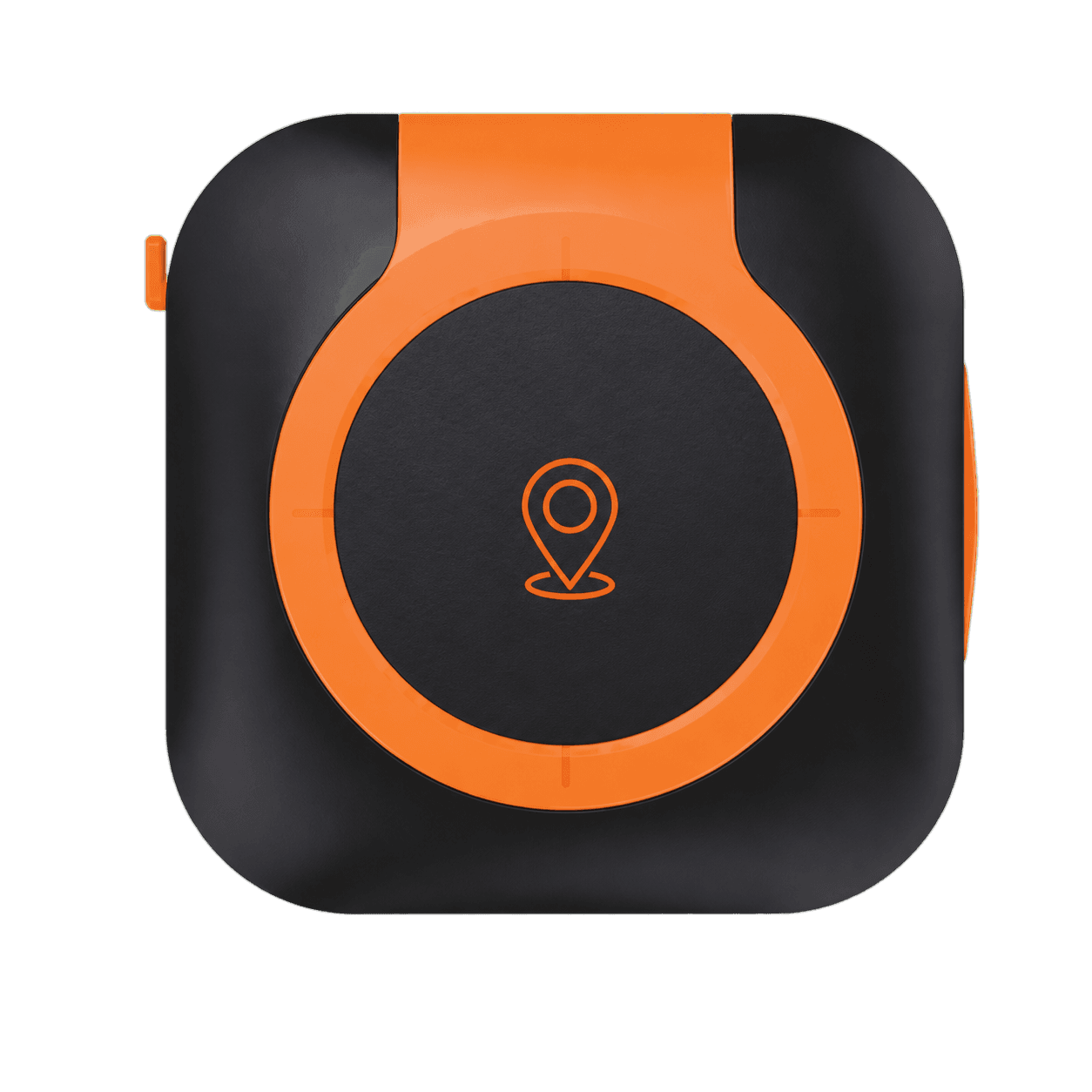
C08 Pet GPS Tracker
Confirm the exact modem variant, country list, SIM owner, antenna, enabled functions, firmware, app/cloud service and regional certification package.
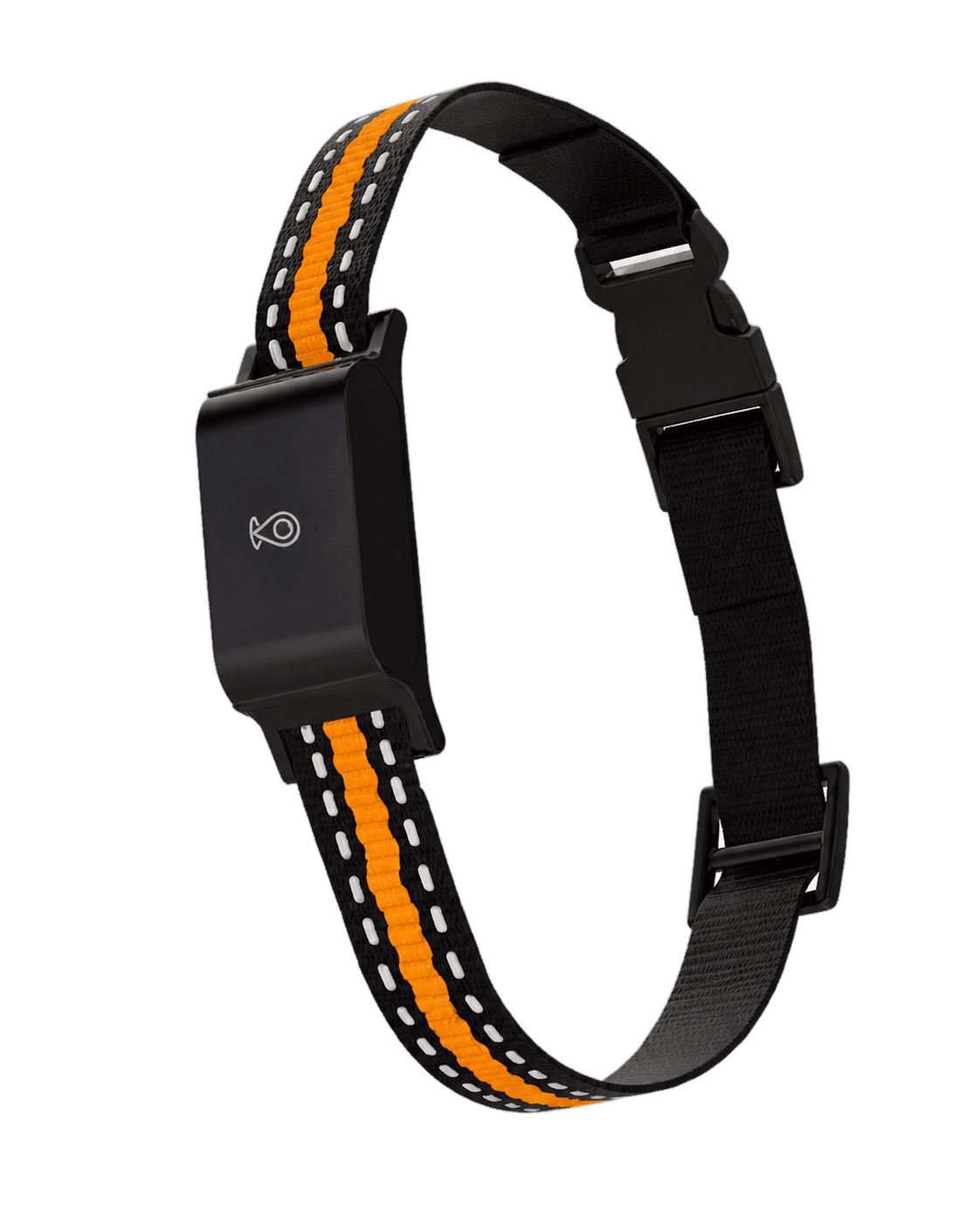
C09 Pet GPS Tracker
Confirm regional LTE support, production SIM, live-mode performance, geofence latency, IP65 evidence, charging configuration and service plan.
Review the GPS, Bluetooth and radio tracker comparison before selecting the communication architecture, and use the pet GPS tracker return-reduction guide before finalizing customer claims.
10. Buyer FAQ and RFQ Checklist
Can one hardware SKU cover the US, EU and UK?
Possibly, but only when the exact modem, antenna and firmware cover the required bands and the SIM, certifications and operator acceptance support every target market. Confirm this with a country-level matrix and field tests.
Does a “global SIM” guarantee global tracking?
No. The hardware still needs the correct bands, the SIM needs an eligible partner network and the device must register and exchange data under the local conditions.
Is module certification enough?
Do not assume so. Ask which module evidence is reused and which device-level, regulatory, network and operator steps apply to the final tracker.
Should buyers request every supported LTE band?
Request the bands needed for the intended countries and operators, plus a sensible roaming and change plan. Unused technologies can add validation scope without improving the customer experience.
What belongs in the RFQ?
List countries, operators or SIM partner, sales channel, forecast volume, update modes, roaming needs, modem and antenna evidence, app/cloud model, certification scope, field-test locations and service-life expectations.
Before ordering, request a signed matrix covering country, operator, radio technology, bands, modem part number, antenna, SIM profile, certification, firmware, sample result and responsible party. Review Haolinc’s OEM/ODM service, factory and quality process and app and cloud evaluation guide with the hardware quotation.
